
Reviewed · ANURADHAPURA TOURS
Delve Into Ancient Anuradhapura with Optional Visit to Mihintale
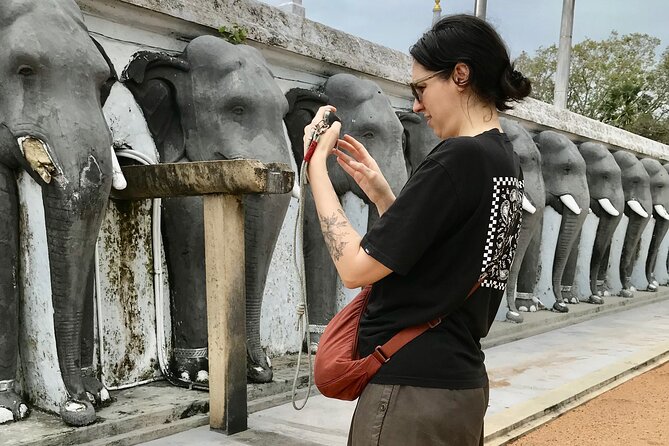
Anuradhapura is easiest to understand when someone connects the scattered stones, giant stupas, old reservoirs, and sacred trees into one story. This private tour does that well, moving from the quiet Vessagiriya Forest Monastery to the grand Ruwanwelisaya stupa and the finely carved moonstone at Abhayagiri.
I like the chance to question your own guide instead of following a fixed group script, and I like the route’s mix of famous monuments and less obvious remains such as the steam bath and Elephant Pond. The main drawback is cost clarity: the $30 tour price does not include the $30 UNESCO site entrance fee or private transport, and the published morning hours do not quite match the stated six-hour duration.
Key points at a glance
- Twelve major stops in about six hours: The route covers sacred sites, royal buildings, monastery facilities, baths, ponds, and sculpture.
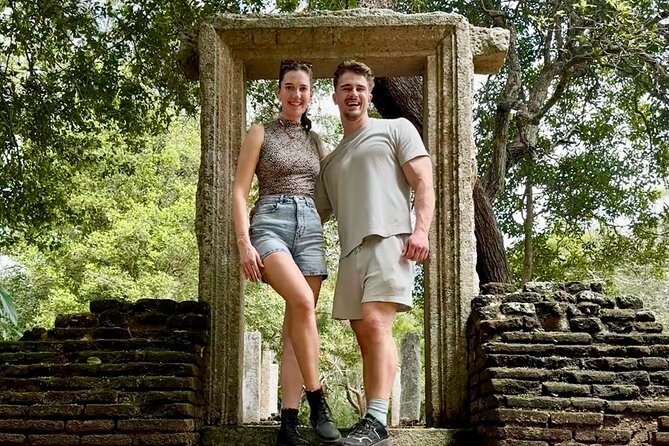
- Private guiding by Lucky: You can ask questions throughout the visit, and the guide is praised for detailed explanations, enthusiasm, and taking the route beyond the most familiar monuments.
- Vessagiriya begins the story: This forest monastery gives you a quieter introduction before the larger shrines and stupas.
- The Abhayagiri section rewards close attention: Kuttam Pokuna, Janthagara, the refectory, Rathna Prasadaya, Eth Pokuna, and the moonstone reveal how a huge monastic center functioned.
- Budget for another $30 admission charge: Entry to the UNESCO World Heritage area is listed separately from the tour price.
- The schedule needs confirmation: Pickup is listed between 7:30 and 10:30 AM, while the experience is advertised as approximately six hours.
Why this tour makes Anuradhapura easier to read
Anuradhapura was an ancient capital and a major center of Buddhism in Sri Lanka. Its remains are spread across a large area, so the challenge is not finding impressive monuments. The challenge is understanding what each one did and how the parts fitted together.
A private guide helps with that problem. Instead of only seeing a giant stupa as a grand photo stop, you can ask why it mattered, who built it, and how it fitted into religious life. The tour also gives attention to practical features, including water storage, bathing, meals, medical treatment, and carved entrances.
That balance is important. Anuradhapura is not only a collection of sacred buildings. It was also a working capital supported by engineering, food service, water management, skilled stonework, and large religious communities.
The experience is private for your group, so you are not tied to the pace or questions of strangers. The description says most people can participate and that the meeting point is near public transportation. Pickup and return are arranged at Pothanagama Junction, at 2 Kanuwa Junction on D. S. Senanayake Mawatha.
Guide Lucky receives especially strong praise for being thorough, enthusiastic, and willing to explain the less obvious archaeological details. One useful sign is that the tour is not limited to the standard highlights. It includes modest ruins that can look like piles of stone until someone explains their original purpose.
Other Anuradhapura days worth booking alongside this:
- Private City Day Tour in Anuradhapura
★ 5.0 · 383 reviews - Minneriya National Park Elephant Jeep Safari Private Tour
★ 5.0 · 68 reviews - Explore & Ride the history of anuradhapura with Vogel Tours
★ 5.0 · 62 reviews
Vessagiriya gives you a quiet opening
The first stop is Vessagiriya Forest Monastery, described as one of the island’s two oldest Buddhist monk dwellings. The setting provides a calmer start than beginning with Anuradhapura’s largest stupa.
Here, you begin thinking about monastic life rather than royal display. The name Rajarata, meaning the King’s County or Land of Kings, places the site in the wider story of the old kingdom. The stop lasts about 90 minutes, making it the longest single visit on the route.
That extra time is useful at the beginning. You can ask Lucky to establish the basic timeline and explain what you are looking at before the tour becomes a faster sequence of monuments. Admission is listed as free for this stop.
Sakwala Chakraya and the question of ancient design
The Sakwala Chakraya, also called the Star Gate, is tucked beside a boulder at Ran Masu Uyana, the Royal Goldfish Park. It lies between Tissa Wewa and the Isurumuniya Rock Temple.
This is one of the tour’s more unusual stops because it is not as visually dominant as a huge stupa. You are looking at a distinctive carved object and the setting around it, with the guide helping you consider its possible meaning.
The visit lasts about 35 minutes. That is enough time for an explanation and photographs without allowing one unusual feature to take over the entire morning. Since interpretations of ancient objects can be debated, use the private format to ask Lucky what is established and what remains uncertain.
Sri Maha Bodhi and the Brazen Palace
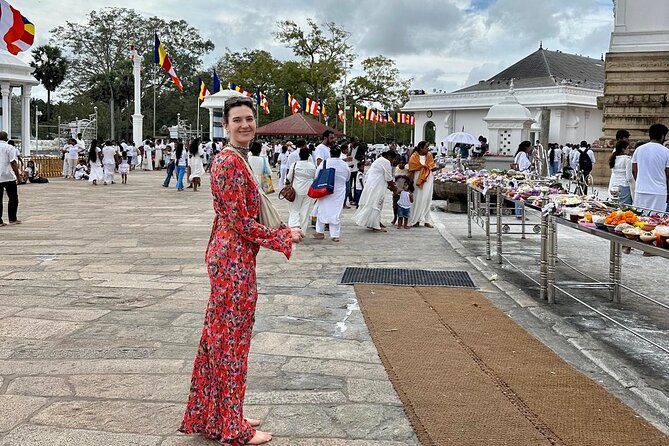
The Sri Maha Bodhi Temple is one of Anuradhapura’s most important sacred places. The Sri Maha Bodhi tree, a sacred fig or pipal tree, is regarded as the first of the eight sacred places in Anuradhapura.
The planned visit is only about 20 minutes, so expect a focused stop rather than a long visit to every part of the temple grounds. Dress and behave respectfully at this religious site, and allow extra patience if the area is busy with worshippers. The tour information does not give a specific dress code, but this is a place where quiet, modest conduct is plainly appropriate.
Nearby, the Lovamahapaya, or Brazen Palace, is represented by a large collection of granite pillars. The building once served a major purpose near the sacred tree, but now much of what you see is the surviving stone framework.
The stop lasts around 15 minutes. It is a quick lesson in how little may remain of a once-important building, and why a guide matters. Without context, the pillars can be hard to read. With context, they suggest the scale and organization of the old religious center.
Same island, a completely different kind of day:
- Minneriya National Park | Private Safari
★ 5.0 · 59 reviews - Sigiriya Hike & Minneriya Safari Private Full Day Tour
★ 5.0 · 56 reviews - Sigiriya & Habarana: Sunrise Hot Air Balloon Ride Experience
★ 5.0 · 47 reviews - Minneriya National Park Safari – Private Jeep with Hotel Pickup
★ 5.0 · 44 reviews
Ruwanwelisaya brings the grand scale
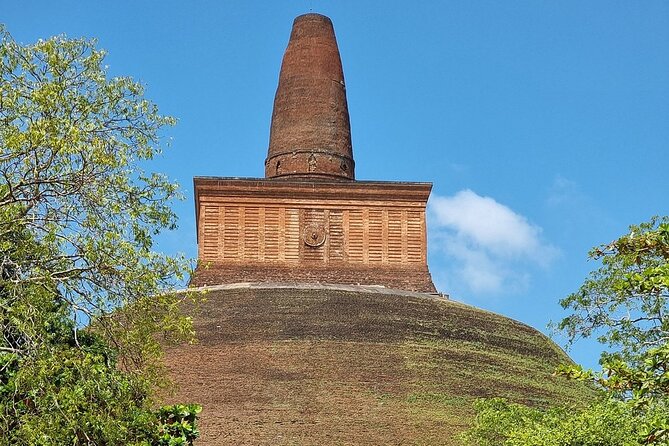
Ruwanwelisaya, also known as Ratnamali or the Mahathupa, is the route’s major monumental stop. It was constructed under King Gamini Abhaya in the second century BC.
The visit lasts about 25 minutes. That gives you time to take in the stupa, hear its place in Sri Lankan Buddhist history, and appreciate the contrast between the massive white structure and the more fragmentary remains seen elsewhere.
I would not rush this stop, even though the schedule is compact. Large sacred monuments can become repetitive if you simply collect photographs, but Ruwanwelisaya is a useful point for pulling together the earlier discussion of kingship, religious devotion, and Anuradhapura’s role as a capital.
The route lists no separate entrance fee at this stop, but the overall UNESCO World Heritage admission is not included in the $30 tour price. Confirm how the area ticket is handled before you arrive so the total cost does not surprise you.
Gedige Ruins show the practical side of a monastery
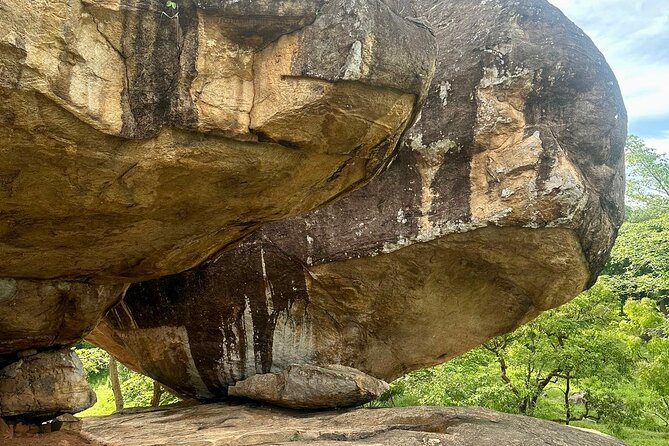
At the Gedige ruins, the tour visits the remains connected with the Mahapali Alms Hall. The largest building here is identified as the Mahapali Refectory, where meals were supplied to Buddhist monks through royal support.
This is a valuable change of focus. Stupas and sacred trees show the spiritual side of Anuradhapura, while a refectory shows the daily work needed to support a large monastic population.
You have about 25 minutes here. Ask Lucky to point out which remains belonged to food service and how the buildings may have worked together. The supplied description does not provide a separate included admission charge for this group of stops, so keep the overall site entry fee in mind.
Kuttam Pokuna and ancient water skill
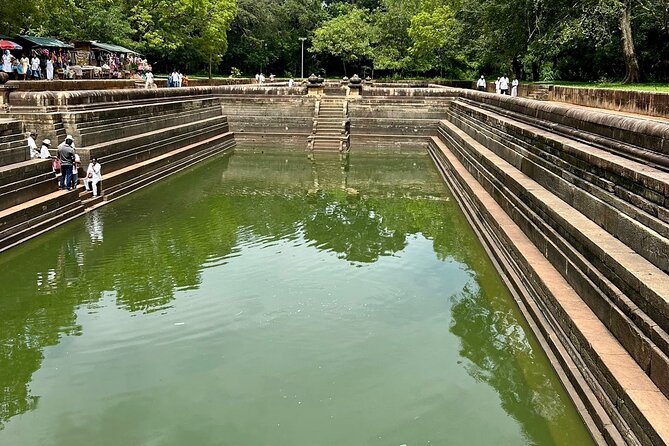
The Twin Baths, or Kuttam Pokuna, are a pair of carefully built ponds set on lower ground. They are presented as fine examples of design and water engineering.
The planned visit is 15 minutes, which is short but workable if the main goal is to understand the construction and layout. You will want to look beyond the surface appearance. These were not simply decorative pools. Their place in the monastic complex points to the importance of managing water for hygiene and daily life.
The tour listing marks admission here as not included. Since the route covers several sites in the wider archaeological area, ask in advance whether one general heritage ticket covers the stops or if any separate charge applies.
Janthagara connects bathing with medicine
The Janthagara building is described as a steam bath. Its purpose went beyond comfort, linking warm-water bathing with a developed Sinhalese medical practice from around the fourth century AD onward.
This is one of the stops I find most useful for understanding the old city as a functioning community. It suggests organized care and treatment, not only worship and ceremony.
The visit takes about 15 minutes. The remains may not have the instant impact of Ruwanwelisaya, but the idea behind them is memorable. You can ask questions about how the building may have been used and why it belonged in a major monastery complex.
Abhayagiri’s refectory and the carved guardstone
The Main Refectory of Abhayagiri Monastery contains a large granite trough shaped like a canoe. The carved detail inside the refectory grounds is another reminder that the monastery served many people and needed systems for preparing and distributing food.
The Chinese monk Fa-hsien is connected with the site through his study there, adding an international dimension to Anuradhapura’s Buddhist world. The scheduled stop is about 15 minutes, so keep your attention on the trough, the building remains, and Lucky’s explanation rather than expecting a long walk.
Rathna Prasadaya and its guardstone receive only about 10 minutes. The guardstone is described as one of Sri Lanka’s finest works of art, dating to about the eighth century AD. This is a quick stop, but it rewards close looking.
Guardstones often sit beside entrances, and their position matters as much as their carving. Take time to examine the details before moving on. If you enjoy sculpture, ask Lucky to explain what makes this example important rather than treating it as another brief photograph stop.
Eth Pokuna is the route’s great engineering surprise
Eth Pokuna, or Elephant Pond, is described as possibly the largest man-made pond in Asia. It was built in the third century AD and lies southwest of the refectory.
The name gives you an immediate sense of scale, but the important point is its relationship to the monastery. A pond of this size reflects the planning and resources required to support a major community.
The visit lasts about 15 minutes. That may feel brief at such a large site, especially if you want to walk around it, so listen carefully to the guide’s explanation and keep the compact schedule in mind. If your group is especially interested in water systems, this may be one place where you want to ask how much time can be adjusted elsewhere.
The moonstone ends the archaeological sequence
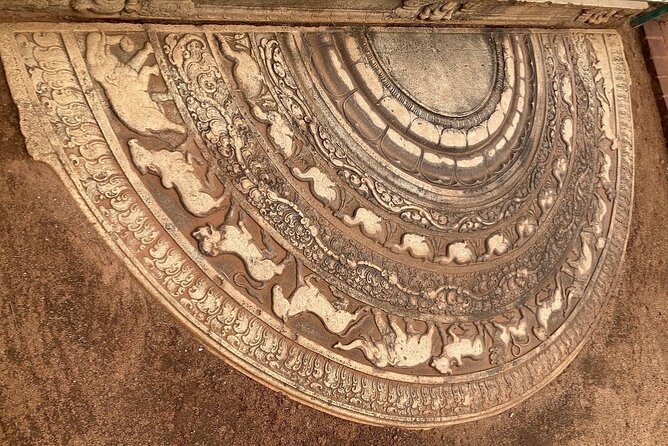
The final listed stop is the moonstone, or Sandakada Pahana. It sits at the foot of steps leading to a Buddhist shrine and turns what might otherwise be a simple threshold into a highly detailed work of art.
This is an excellent way to end the main route because it shifts your attention from scale to detail. After seeing stupas, pillars, ponds, and refectory remains, you finish by studying a carved stone beneath your feet.
The scheduled visit is about 15 minutes. Look carefully at the pattern and placement, and ask Lucky how the moonstone fits into the design of a shrine entrance. The tour’s strongest feature is this combination of large monuments and small details. You get the broad story, then the craft that makes the old city personal.
What the $30 price really covers
The advertised price is $30 per person. It covers the professional licensed guide, bottled water, and a soda or king coconut. Most importantly, it buys a private format, so your group can ask questions and work at a shared pace.
The entrance fee is another $30 per person for the UNESCO World Heritage sites. Private transport is also not included. That means the real cost can be considerably higher than the headline price, depending on how you reach the meeting point and how transport is arranged during the tour.
For a person traveling alone, the total may feel high. For a small group, the private guide cost can make better sense, especially if everyone wants detailed explanations rather than a basic drive past the ruins. Group discounts are listed, but the exact terms are not provided, so ask for the group rate before booking.
The tour currently carries a five out of five rating from 43 reviews, with a 100 percent recommendation figure. The strongest praise focuses on Lucky’s detailed, intelligent, enthusiastic explanations and his willingness to show important archaeological sites away from the usual path. That is the part of the price I would value most.
Timing, transport, and practical planning
The experience is listed as approximately six hours, but its opening hours are shown as Monday through Sunday from 7:30 AM to 10:30 AM. Since a six-hour tour cannot fit entirely inside that three-hour window, confirm the exact pickup time and finish time with Lucky Lanka Expedition before you go.
The start and end point is Pothanagama Junction, 2 Kanuwa Junction, D. S. Senanayake Mawatha, Anuradhapura. The tour returns to the same meeting point. There is no private transportation included, so ask how the group should move between stops and budget for that separately.
Bottled water and king coconut are included, which is useful during a morning of outdoor sightseeing. The route has many short stops, and the heat can make a compact schedule feel more demanding than the clock suggests. Wear practical clothing and shoes suitable for ancient grounds, but the supplied details do not specify accessibility conditions at individual sites.
The title also refers to an optional visit to Mihintale, but the supplied stop information does not explain its price, duration, transport arrangement, or whether it fits within the six-hour schedule. If Mihintale matters to you, confirm all four points before paying.
Free cancellation is available up to 24 hours before the start time for a full refund. Changes or cancellations within 24 hours are not accepted for a refund, and poor weather may lead to a new date or full refund.
Who will get the most from this experience
I would choose this tour if you want Anuradhapura explained rather than simply photographed. It suits people who enjoy asking questions, want the major sites covered in one outing, and appreciate the difference between a stupa, a monastery facility, a water system, and a carved entrance.
It is also a good fit for a small private group with mixed interests. One person can ask about Buddhist history, another about engineering, and another about sculpture without holding up a large coach group.
You may prefer a different arrangement if you need private transport included, want a slow photography tour, or dislike tightly timed stops. Twelve locations in roughly six hours means the route is efficient. It does not leave unlimited time at every monument.
Should you book the Anuradhapura tour?
Book it if Lucky’s detailed guiding is the main reason you are visiting Anuradhapura. The strongest feature is not the number of stops alone. It is the way the route links sacred places with food halls, baths, ponds, medicine, sculpture, and royal planning.
Before booking, confirm the exact schedule, the total transport cost, the $30 heritage admission fee, and the optional Mihintale arrangement. If those details work for your budget, this private tour offers a useful first look at one of Sri Lanka’s most important archaeological areas, with enough variety to keep the ruins from blurring together.
FAQ
How long does the Anuradhapura tour last?
The experience is advertised as approximately six hours. Its published opening hours show Monday through Sunday from 7:30 AM to 10:30 AM, so confirm the exact start and finish time before booking.
What is included in the tour price?
The price includes a professional licensed tour guide, bottled water, and soda or king coconut. Private transportation and UNESCO World Heritage site admission are not included.
How much is the entrance fee?
Entry admission to the UNESCO World Heritage sites is listed as $30 per person, separate from the $30 tour price.
Where does the tour begin and end?
The tour begins at Pothanagama Junction, 2 Kanuwa Junction, D. S. Senanayake Mawatha, Anuradhapura. It ends back at the same meeting point.
Is this a private tour?
Yes. Only your group participates in the activity, and the private format allows you to ask the guide questions throughout the visit.
Can I cancel for a full refund?
You can cancel at least 24 hours before the experience start time for a full refund. Cancellations or changes made within 24 hours are not refunded, and poor weather may result in a different date or a full refund.
Just added around Anuradhapura
- Private Round Tour in Sri Lanka with Vehicle★ 5.0 · 6 reviews
- Kaudulla National Park Shared Safari★ 5.0 · 7 reviews
- Rangiri Jeep Safari Sigiriya Lion Rock & Evening Jeep Safari★ 4.0 · 3 reviews
- Wild Elephant Safari in Minneriya National Park★ 3.5 · 3 reviews
- Minneriya National Park Safari from Habarana★ 5.0 · 23 reviews
- Visiting the Historical Polonnaruwa Ruins and Minneriya Safari★ 5.0 · 16 reviews
- Minneriya National Park Safari | Jeep with Tickets★ 5.0 · 3 reviews
- Hurulu Eco Park Half Day Safari★ 5.0 · 18 reviews
Anuradhapura Tours, compared.
Minneriya National Park Elephant Jeep Safari Private Tour
Read our review →
Explore & Ride the history of anuradhapura with Vogel Tours
Read our review →
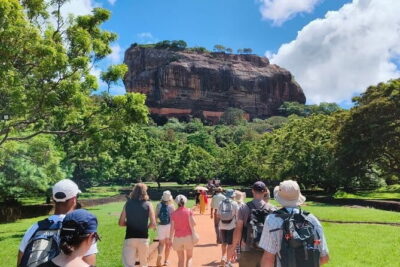
Sigiriya Hike & Minneriya Safari Private Full Day Tour
Read our review →
Sigiriya & Habarana: Sunrise Hot Air Balloon Ride Experience
Read our review →
Minneriya National Park Safari – Private Jeep with Hotel Pickup
Read our review →
Browse the lists this tour appears in