
Reviewed · HISTORICAL TOURS
Anuradhapura Heritage Mountain bike / bicycle Tour
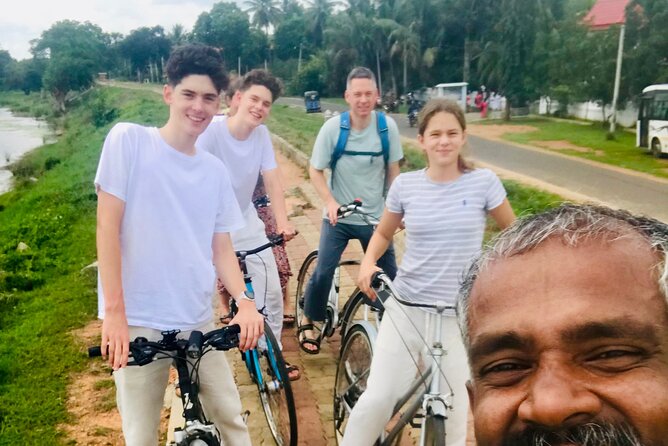
Anuradhapura is far easier to understand from a bicycle than from a car. With guide Saranga, you follow a gentle 10-kilometer loop through enormous stupas, old monastery grounds, quiet forest tracks, rice fields, and sacred places that can blur together when seen too quickly. I love the slow pace and the way the route reaches peaceful corners beyond the main roads. I also like the personal guide service, since this is a private tour and Saranga can explain Buddhist customs as well as the stones and dates.
The main catch is the extra UNESCO entrance fee: $30 per adult, or $15 for a child under 13. You also need moderate fitness, modest clothing for temple visits, and a cloth wrap if your knees are uncovered. The cycling distance is not huge, but four and a half hours in Sri Lanka’s heat can still feel like a proper outing.
Key points at a glance
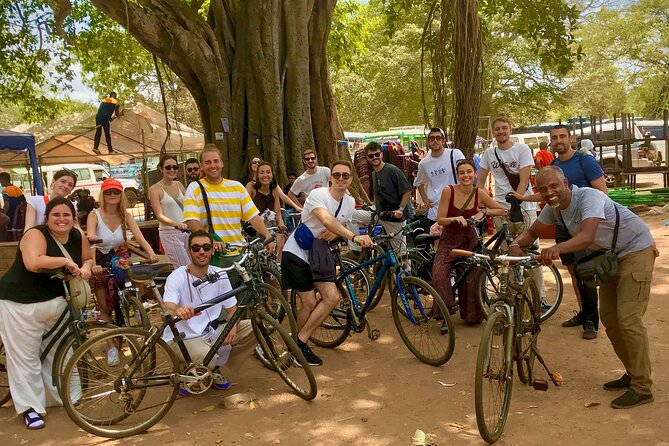
- A 10 km private cycling loop: You spend about 4½ hours visiting Anuradhapura’s major sacred and archaeological sites.
- Saranga adds cultural context: His English-speaking guidance includes Buddhism, local customs, and the meaning behind the monuments.
- Quality bicycles are supplied: Bikes may come from brands such as Giant, Trek, or Louis Garneau.
- Quiet routes balance the big sights: Forest paths, rice fields, and old tanks give you breathing room between major monuments.
- Lunch is part of the day: A vegetarian meal is prepared by local people at Hela Bojun.
- The UNESCO ticket costs extra: Budget another $30 per adult, or $15 for children under 13.
Anuradhapura covers a wide area, and its ancient sites are spread among trees, tanks, monasteries, and modern roads. Walking from one major monument to the next can take much of your day. A bicycle gives you a useful middle ground: you cover ground quickly, but you still notice birds, village life, shrine details, and the changing feel of the old city.
This experience is operated by Rides Hub and led by Saranga, an English-speaking guide from the Anuradhapura area. It is a private activity, so only your own group takes part. That matters here. The sacred sites are not just photo stops, and a guide who can explain Buddhist practice and local traditions adds meaning that a route map cannot.
What the 4½-hour ride is really like
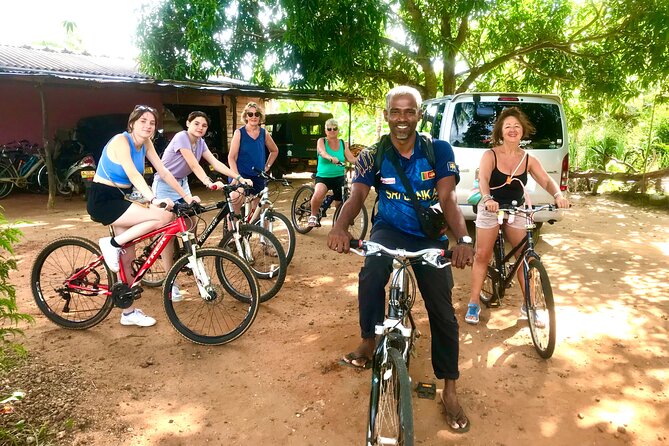
The advertised route covers about 10 kilometers, with stops at ten important places. That works out to a relaxed pace rather than a race. The listed visits alone add up to several hours, before allowing for the cycling between them, so expect a full half-day rather than a quick spin around the ruins.
You are using a mountain bicycle, but this is not described as a hard technical ride. The tour requires a moderate fitness level, and the pace is intended for sightseeing. Still, Sri Lankan sun, warm weather, and repeated stops can make the outing tiring. Bring sensible clothing, drink the supplied bottled water, and take the day at a comfortable speed.
The route also includes quieter paths through forest and rice-field areas. These sections are part of the appeal. The great stupas are impressive, but the pauses between them help you see Anuradhapura as a living place rather than a line of isolated monuments.
A few more Anuradhapura trips to weigh up
- Half-Day Lagoon and Village Cycling Tour in Galle
★ 5.0 · 90 reviews - Ella, Sri Lanka Cycle Zone Bike Tour
★ 4.7 · 8 reviews - Polonnaruwa: Private Guided Cycling Tour with Hotel Pickup
★ 4.9 · 5 reviews
Jetavanaramaya begins with serious scale
The first stop is Jetavanaramaya, the huge brick stupa built by King Mahasena between 273 and 301. At about 122 meters, or 400 feet, it was once the tallest stupa in the world and one of the tallest structures anywhere.
You have about 15 minutes here. That is enough for a first look and an explanation of its place in Anuradhapura’s past, though it is not a long archaeological visit. The bicycle makes a practical difference: you can approach the monument, pause, and move on without spending time looking for a vehicle or walking across a large site.
The Samadhi Statue brings the focus inward
After the scale of Jetavanaramaya, the Samadhi Buddha offers a quieter stop. The statue shows the Buddha in the meditation posture associated with the Dhyana Mudra. You have roughly 20 minutes to look closely and listen to Saranga explain its Buddhist meaning.
This is one of the places where a guide can add real value. A statue like this may appear simple at first, but posture and hand position carry religious meaning. The visit is included in the tour’s site schedule, although the wider UNESCO admission charge remains separate.
Abhayagiri reveals the size of the ancient monastery city
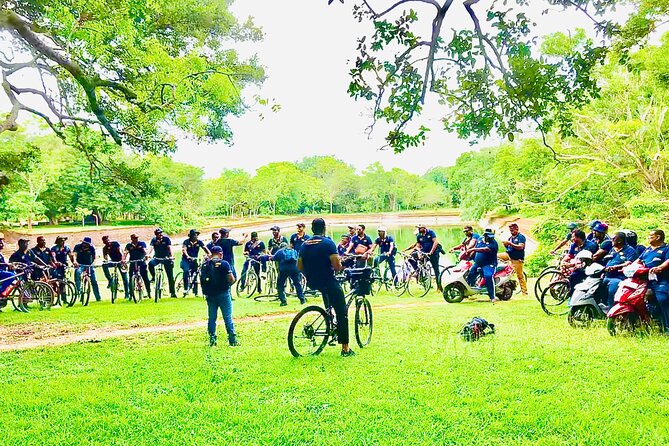
Abhayagiri Stupa is more than a single monument. Abhayagiri Vihara was a major monastery complex connected with Mahayana, Theravada, and Vajrayana Buddhism. The ruins extend across a broad area, giving you a better sense of how large Anuradhapura’s religious center once was.
The stop lasts about 20 minutes. That is enough to see the main area, but not enough to inspect every ruin. You should think of this tour as a carefully chosen introduction, not a complete archaeological study. If you want every inscription, foundation, and museum display, you would need extra time beyond this half-day ride.
Same island, a completely different kind of day:
- Private City Day Tour in Anuradhapura
★ 5.0 · 383 reviews - Minneriya National Park Elephant Jeep Safari Private Tour
★ 5.0 · 68 reviews - Explore & Ride the history of anuradhapura with Vogel Tours
★ 5.0 · 62 reviews - Minneriya National Park | Private Safari
★ 5.0 · 59 reviews
Kuttam Pokuna shows ancient skill in stonework
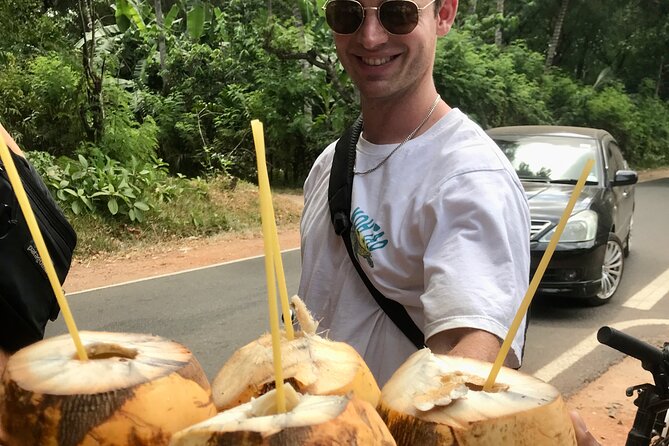
The Twin Baths, or Kuttam Pokuna, are two carefully built bathing pools associated with the Abhayagiri monastery. Their clean lines and well-preserved stonework make them one of the most visually satisfying stops on the route.
You spend about 20 minutes here. Look at the steps, edges, and water design rather than treating the pools as ordinary ponds. Their purpose gives you a glimpse of daily monastic life and the practical planning behind the religious complex.
Eth Pokuna puts ancient water management into view
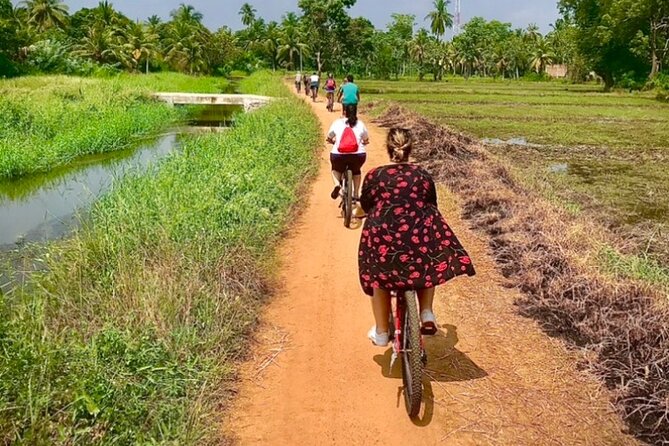
Eth Pokuna, known as the Elephant Pond, is a huge ancient reservoir. It measures about 159 meters long and 52 meters wide, so the scale is easy to appreciate even during a short stop.
The name and size make this a memorable break from stupas and statues. Anuradhapura depended on sophisticated irrigation and water systems, and this stop helps connect the sacred city with the practical work that supported it. You have about 20 minutes, enough to take in the scale and hear how water shaped the old kingdom.
The Moonstone rewards a slower look
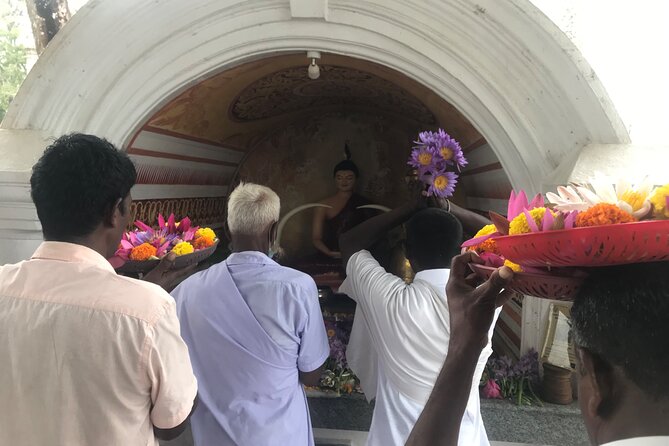
The Sandakada Pahana, or Moonstone, is a carved semicircular stone slab placed at the foot of stairs and entrances. It is a distinctive feature of ancient Sri Lankan architecture, and the detailed carving deserves more than a quick photograph.
The tour gives you around 25 minutes here, one of the longer pauses. Use it to study the design and ask Saranga about its symbolism and setting. This is a good example of why cycling with a guide works well: you are not simply moving from one famous building to another. You are also stopping for smaller details that are easy to miss.
Basawkkulama Tank connects the ruins to daily life
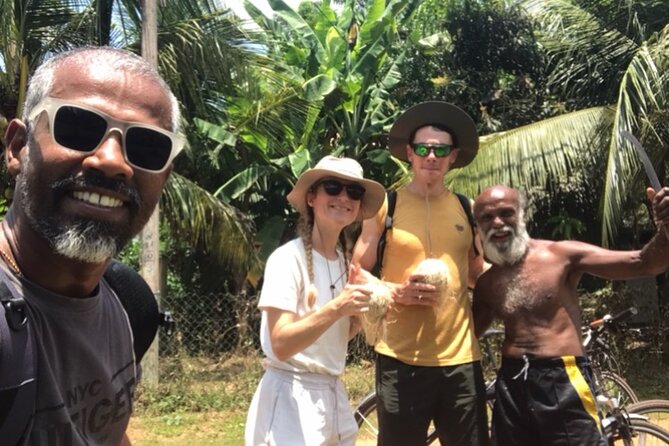
Basawkkulama Tank introduces Anuradhapura’s irrigation heritage. Sri Lanka’s earliest irrigation works date to about 430 BCE, during the reign of King Pandukabhaya, and water systems continued to develop over centuries.
The stop lasts about 20 minutes and is free of an additional admission charge. The tank also helps explain the quiet scenery around the heritage area. Rice fields, trees, and water are not just pleasant surroundings. They are tied to the system that allowed an ancient capital to support a large population and major monasteries.
The Abhayagiri refectory makes the monastery personal
The Main Refectory of Abhayagiri Monastery is a brief 10-minute stop, but it adds a human scale to the ruins. The Chinese monk Fa-Hien visited in the fifth century and recorded that as many as 5,000 monks lived at the monastery. A community that size needed organized kitchens, food storage, and dining facilities.
This is where the ancient complex feels less like a collection of monuments and more like a working institution. The short visit is useful because it links grand religious buildings with the ordinary business of feeding thousands of people.
Ruwanweliseya is the great visual centerpiece
Ruwanweli Maha Seya, also called Ruwanweliseya, was built by King Dutugamunu between 137 and 119 BCE. Its broad white form is one of Anuradhapura’s most recognizable sights.
The tour allows about 30 minutes here. That gives you time to take in the structure, watch the activity around the sacred area, and listen to Saranga’s explanation. This is an active religious site, not only an archaeological monument, so respectful clothing and behavior matter.
The bicycle route helps preserve the sense of movement between sites. You are not spending the day inside an air-conditioned vehicle, appearing suddenly at one monument after another. You ride through the setting that connects them.
Sri Maha Bodhi is sacred, active, and different
The final major stop is Sri Maha Bodhi, the sacred fig tree in Mahamevnāwa Gardens. It is described as the closest authentic living link to Gautama Buddha, making this one of the most important religious places in Anuradhapura.
You have about 30 minutes here. Expect a more devotional atmosphere than at a quiet ruin. This is a place to observe carefully, dress respectfully, and allow space for worshippers. The site is not simply another item to tick off, and Saranga’s understanding of Buddhism can help you approach it with the right attitude.
A local vegetarian meal adds welcome variety
Food is included, with a vegetarian meal prepared by local people at Hela Bojun. This is a useful feature after several hours on a bicycle, and it gives the tour a local-food element rather than relying only on monuments.
The supplied information does not specify the exact dishes or meal timing, so you should not book this expecting a set menu. Think of it as a simple local vegetarian lunch included in the day. If food needs are important to you, ask Rides Hub for current details before booking.
The bikes and private format affect the value
Rides Hub provides mountain bicycles, with equipment from recognized brands such as Giant, Trek, and Louis Garneau. That is reassuring for a cycling tour, since a poor bicycle can turn an easy ride into a frustrating one. The tour description presents this as a professional bicycle experience, though you should still check the bike fit before setting off.
The private format is another strong point. You are not tied to the pace of a large group, and Saranga can spend more time explaining a question that interests you. This suits couples, families with older children, and small groups who want a more personal introduction to Anuradhapura.
The $25 price per person is attractive when you consider the guide, bicycle use, bottled water, parking fees, and meal. But the value changes once you add the UNESCO ticket, which costs $30 per adult and $15 for a child under 13. For an adult, the combined cost is effectively $55 before any other personal spending.
That is still reasonable for a private 4½-hour tour with equipment and food, but it is not a $25 all-in experience. Budget honestly before you book.
Who should choose this Anuradhapura tour?
I would recommend it to you if you want to see the major heritage sights without spending the whole day walking or sitting in a car. It is especially suitable if you enjoy learning about Buddhism, ancient engineering, and local customs alongside taking photographs.
It also suits you if quiet scenery matters as much as famous monuments. The forest routes, rice fields, and tanks give the outing a calmer rhythm, and the route reaches areas that can feel removed from the main sightseeing circuit.
You should think twice if you dislike cycling in warm weather or have difficulty with several hours of moderate activity. The distance is only about 10 kilometers, but the total experience lasts around 4½ hours. It is also not the best choice if you want a highly detailed archaeological tour with long periods at each site.
Wear clothing that covers your shoulders and knees for temple visits. If your knees are uncovered, bring a wraparound cloth. This is a small preparation that can save you trouble at sacred places.
The meeting point is Rides Hubwela mada gedara, Garage waththa, near the old car park, at No. 116/1 Watawandana Road in Anuradhapura. The ride returns to the same place. Confirmation is provided at booking, and the meeting point is near public transportation.
Free cancellation is available up to 24 hours before the start time. Changes or cancellations inside that window are not accepted for a refund. The tour requires good weather, and if poor weather causes cancellation, you are offered another date or a full refund.
Should you book it?
Book this tour if you want a gentle, personal introduction to Anuradhapura rather than a rushed monument checklist. Saranga’s mix of site knowledge, Buddhist insight, and local perspective is the main reason to choose it, while the quiet cycling sections and vegetarian meal make the day feel more rounded.
The extra UNESCO fee is the key cost to remember. If you are comfortable with that and can manage a half-day bicycle outing, this is a strong-value way to connect Anuradhapura’s stupas, temples, tanks, and living religious traditions.
FAQ
How long does the Anuradhapura bicycle tour last?
The tour lasts approximately 4 hours and 30 minutes.
How far do you cycle?
The route is a loop of about 10 kilometers through the Anuradhapura heritage area.
Is this a private tour?
Yes. Only your own group participates in the activity.
Is the UNESCO entrance ticket included?
No. The UNESCO ticket costs $30 per adult and $15 for children under 13.
What is included in the tour price?
The price includes bottled water, parking fees, use of a mountain bicycle, a guide tour, and a vegetarian meal prepared by local people at Hela Bojun.
What should I wear for the temple visits?
You should wear clothing that covers your knees. If your knees are not covered, bring a wraparound cloth.
What happens if the weather is bad?
The tour requires good weather. If it is canceled because of poor weather, you are offered a different date or a full refund.
Just added around Anuradhapura
- Kaudulla National Park Shared Safari★ 5.0 · 7 reviews
- Rangiri Jeep Safari Sigiriya Lion Rock & Evening Jeep Safari★ 4.0 · 3 reviews
- Private Round Tour in Sri Lanka with Vehicle★ 5.0 · 6 reviews
- Wild Elephant Safari in Minneriya National Park★ 3.5 · 3 reviews
- Minneriya National Park Safari from Habarana★ 5.0 · 23 reviews
- Minneriya National Park Safari | Jeep with Tickets★ 5.0 · 3 reviews
- Hurulu Eco Park Half Day Safari★ 5.0 · 18 reviews
- Visiting the Historical Polonnaruwa Ruins and Minneriya Safari★ 5.0 · 16 reviews
Historical Tours, compared.
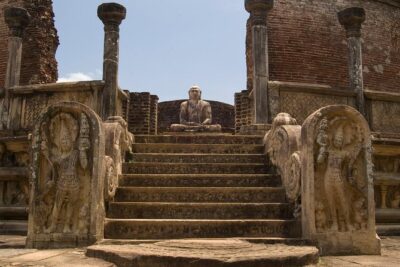
Day tour to Sigiriya,Dambulla & Polannaruwa (3 word heritage places) from Kandy
Read our review →
Explore & Ride the history of anuradhapura with Vogel Tours
Read our review →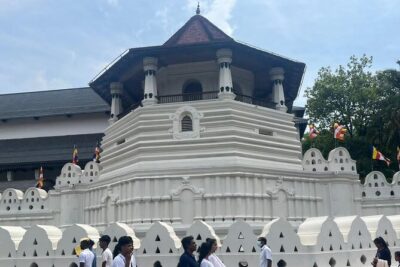
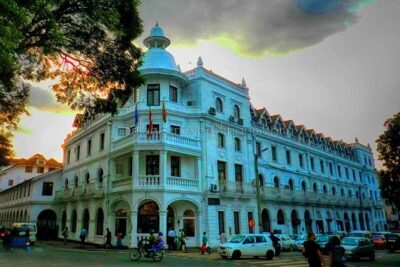
Galle Fort Heritage Walk by a Certified Heritage Interpreter
Read our review →

Visiting the Historical Polonnaruwa Ruins and Minneriya Safari
Read our review →
Sri Lanka Private 3-Day Cultural Tour, 5 UNESCO Sites
Read our review →Browse the lists this tour appears in