
Reviewed · GALLE TOURS
Cook with Wasantha
Sri Lankan cooking makes more sense once you see the ingredients before they reach the pot. Cook with Wasantha begins with a tuk-tuk ride to the Dutch Market and a fish market, then turns those purchases into coconut milk, fluffy rice, four vegetable curries, and a tuna or chicken curry. It is a food lesson, market visit, and family meal rolled into about four hours.
I like the small group limit of 10, which gives the experience a warm, personal feel. I also like the way the family recipes are practical: you learn how to choose produce, balance spices, make fresh coconut milk, and cook rice properly. The main thing to consider is that this may feel more like a cooking demonstration than a fully hands-on class. You help prepare some ingredients, but Wasantha or a family member handles much of the cooking.
Key points about Cook with Wasantha
- Market-first cooking: You choose vegetables and fish before learning how they become curries.
- Five curries from scratch: The meal includes four vegetable curries plus tuna or chicken, with coconut sambol sometimes added.
- Family-led instruction: Wasantha, her husband Sam, daughter Sasa, and other family members may guide different parts of the morning.
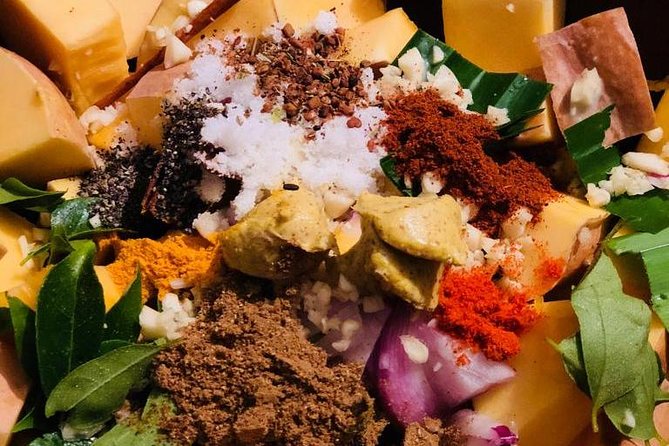
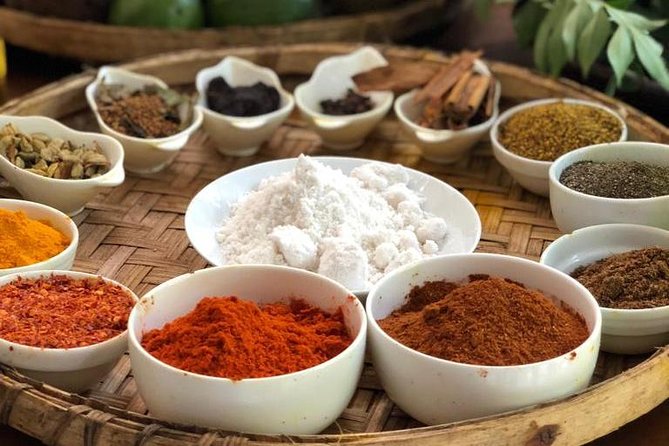
- Useful techniques: You learn to make coconut milk, cook fluffy rice, blend spices, and adjust dishes for preferences or some food intolerances.
- A proper Sri Lankan lunch: You eat the food you helped make, buffet style and with your fingers if you wish.
- Good value at $30: The price includes the market visits, tuk-tuk transport, instruction, ingredients, and lunch.
Start in Unawatuna, then head toward Galle’s markets
The meeting point is Wasantha’s Sri Lanka Cuisine at 180/A Yaddehimulla Road in Unawatuna. Start time is 10:00 am, and the experience ends back at the same place.
That starting point matters. You are not being collected from a hotel across the Galle area, so you need to arrange your own way to Unawatuna. Once you arrive, the family takes over the practical details. The market transport is by tuk-tuk, and the return ride is included in the price.
The experience runs for roughly four hours. That is long enough to visit two markets, cook several dishes, and sit down to eat, but it is not an all-day culinary course. If you want a relaxed morning with a substantial meal at the end, the timing works well. If you hope to master every dish yourself from start to finish, the short format and group setting may feel limited.
The group cap of 10 is a real advantage. You are not lost in a large demonstration, and you can ask questions as the food comes together. Still, the exact amount of hands-on work can vary. Some sessions involve chopping vegetables and fruit, while the family does most of the stove work.
Other Galle days worth booking alongside this:
- Whales and Dolphins Watching-Luxury Super Grade Cruiser(Hotel Pick up offered)
★ 5.0 · 1,268 reviews - Galle: Traditional Gems & Jewellery Workshop with Transfers
★ 4.9 · 539 reviews - Sea waves sri lankan cooking class
★ 5.0 · 467 reviews
Choosing vegetables at the Dutch Market
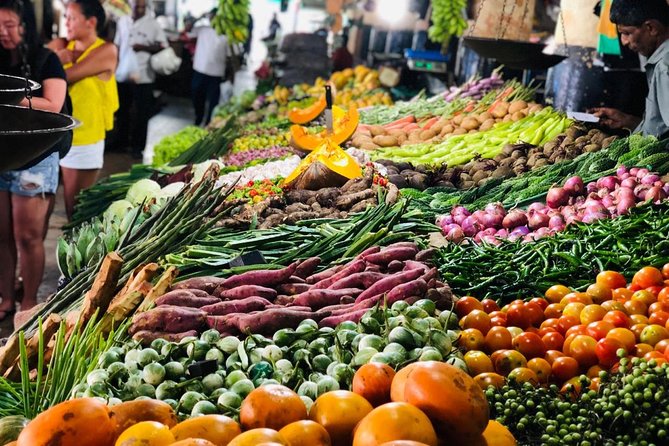
The first stop is the Dutch Market, where you learn how local produce is selected for the meal. Rather than arriving with every ingredient already fixed, you choose vegetables and fruit to cook. This gives the class a useful link between the market and the plate.
You may encounter produce that is unfamiliar or hard to find at home. One appealing part of the experience is getting to select a vegetable you want to try, then seeing it prepared as a Sri Lankan curry. The class is not just about following a recipe. It shows you how a home cook thinks about what is fresh, available, and suitable for a particular meal.
Sam, Wasantha’s husband, often leads the market visit. He is also a tour guide, so the ride and market stop can include broader advice about Sri Lanka and getting around the country. On other dates, their daughter Sasa may lead the visit and explain the local fruit and vegetables.
The market portion is valuable even if you are not a serious cook. Sri Lankan cuisine uses ingredients that can seem mysterious when reduced to a menu description. Seeing them whole, touching them, and deciding what goes into lunch gives you a better sense of the food.
The one caution is that the market commentary may not always be equally energetic. If you want a long, formal explanation of every stall and ingredient, this may feel light. The focus is on buying what you need for lunch, not on a dedicated market-history tour.
A second stop for fresh fish
After the vegetable market, the group visits a fish market. Here you pick up fresh fish for the non-vegetarian curry, usually tuna, though chicken is offered as the alternative in the class description.
This stop adds a useful choice to the morning. You are not simply watching a chef prepare a standard menu. You see the protein that will be cooked and connect it to the spices and techniques used later.
The fish market also makes the class feel tied to daily life in coastal Sri Lanka. Galle and Unawatuna are seaside places, and fish is a natural part of the local table. If you do not eat fish, the chicken option gives you a clear alternative, but tell the host about dietary needs before cooking begins.
Market visits do take time away from the kitchen. That is part of the point, but it helps to choose this experience for the whole food story rather than for maximum time at the stove.
Coconut milk, spices, and the logic of Sri Lankan curry
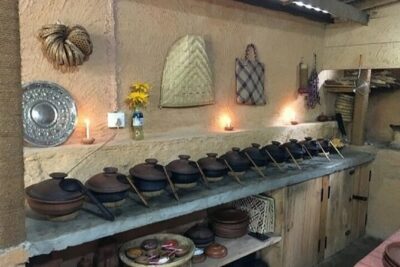
Back at Wasantha’s kitchen, the class moves from shopping to preparation. One of the most useful lessons is making fresh coconut milk. Coconut is central to many Sri Lankan dishes, and learning the process gives you more than a shortcut using a carton or can.
You also learn how local herbs and spices are blended. The emphasis is on practical judgment: how flavors are combined, how much seasoning to use, and how a dish changes as it cooks. Wasantha has many years of cooking experience and is known for adding spices by smell rather than relying only on measured amounts.
That style can be fascinating, especially if you want to understand how an experienced home cook works. It can also be hard to copy exactly at home. You may leave with a better feel for the food, but beginners who need precise gram-by-gram instructions should pay close attention and ask questions.
The recipes are shared afterward, with around 21 recipes provided in one account. You are also invited to ask questions when recreating the food at home. This is an important part of the value: the class does not end when lunch is cleared away.
Same island, a completely different kind of day:
- Galle Fort Walking tour
★ 4.9 · 285 reviews - Snorkeling with Turtles in Mirissa
★ 5.0 · 268 reviews - Whale Watching Mirissa with ( WWC )
★ 5.0 · 252 reviews - Galle/Mirissa/Hiriketiya: Drop to Ella & Udawalawa Safari
★ 4.9 · 186 reviews
Five curries and rice prepared as a family meal
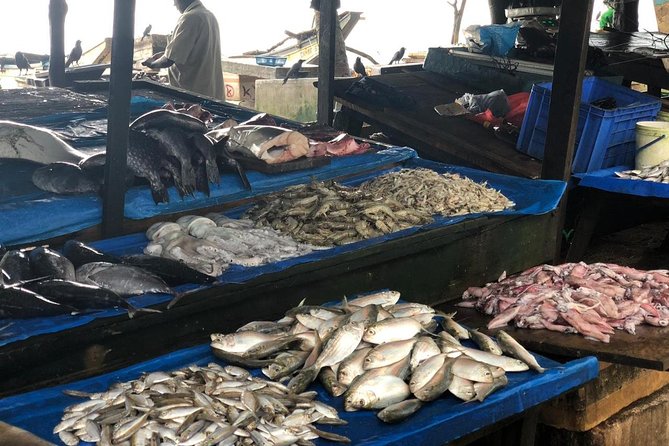
The menu centers on four vegetable curries and one tuna or chicken curry. The vegetable dishes can include combinations such as dhal, pineapple, aubergine with onion, pumpkin, and an avocado curry. The exact selection depends on what you choose at the market and what is available.
This variety is one of the strongest parts of the experience. You are not making five versions of the same sauce. You get to see how different vegetables respond to coconut, spices, heat, and cooking time.
The class also tackles a basic that many home cooks get wrong: rice. Wasantha demonstrates how to cook rice so it is fluffy rather than wet or clumped. It sounds simple, but rice is the foundation of a Sri Lankan meal, and a useful method can be one of the easiest lessons to repeat at home.
A signature coconut sambol may also appear alongside the curries. It adds a fresh, spicy contrast to the cooked dishes and rounds out the meal.
The family setting is central to the feel of the class. Wasantha’s mother, daughter, and son may take part, so you are learning in a home-style kitchen rather than a formal culinary school. That brings warmth and personal stories, but it also means the session may not follow a tightly scripted teaching plan.
How hands-on is this cooking class?
This is the point to understand before booking. The experience is described as hands-on, and you do help select produce, cut vegetables and fruit, prepare ingredients, and cook parts of the meal. But it is also a demonstration.
In practice, Wasantha or Sasa may show you the key steps while you watch, then invite you to take part in selected tasks. The family handles much of the work at the stove. One person may come away feeling they took part in every stage, while another may wish for more direct control of each curry.
I would choose this class if you want to learn by watching an experienced Sri Lankan cook, tasting as you go, and asking questions. I would not choose it if your main goal is to independently cook five dishes during the session.
That distinction does not make the class poor value. Watching an expert judge spices, texture, and doneness can teach you things that a rigid recipe cannot. Just set your expectations correctly: this is a family cooking experience with participation, not a professional kitchen workshop where each person gets a separate station.
The buffet lunch is the payoff
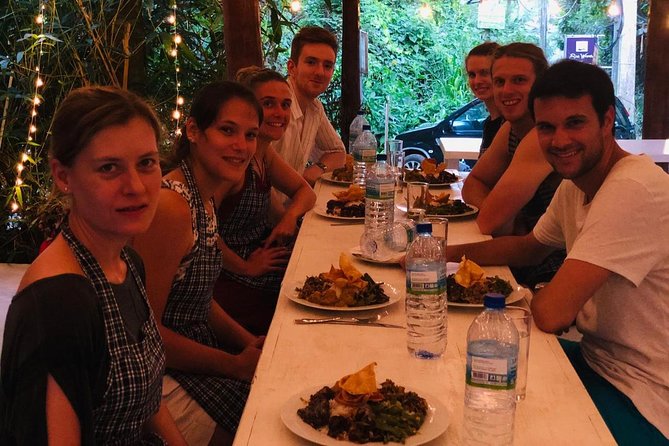
When the cooking is finished, the group sits down to eat the meal. The curries are served buffet style, and you can eat with your fingers, the local way.
This is not a small tasting plate. The five curries, rice, and sambol make a generous lunch, and the meal may be substantial enough that you do not want dinner later. Eating together also gives the session an easy social finish. You are not rushing out after the last demonstration.
The lunch lets you compare the dishes directly. A mild vegetable curry, a sweet note from pineapple, a creamy dhal, a fish curry, and sharp coconut sambol each show a different side of Sri Lankan food. The lesson becomes easier to remember when you can taste what each technique achieved.
You can use cutlery if you prefer, but trying the meal with your fingers is part of the cultural experience. The family meal atmosphere is one of the best reasons to choose this class over a standard restaurant cooking lesson.
The family makes the difference
Wasantha is the central teacher, but this is a family operation. Sam may handle the market trip, Sasa may guide the class, and other family members may help in the kitchen and join the meal.
That family involvement gives the experience a personal quality. You hear about recipes passed through generations, and the cooking feels connected to the family’s own table rather than designed only for visitors.
It also means that the tone can vary. Most of the experience is described as friendly and welcoming, but not every session will feel equally polished or energetic. A family kitchen does not always have the smooth timing or stage presence of a commercial cooking school.
For me, that trade-off is worthwhile if you care about home cooking and local contact. If you prefer a neatly timed class with formal demonstrations, printed instructions at every step, and constant participant activity, another type of course may suit you better.
What $30 includes, and who gets the best value
At $30, this is a strong-value half-day experience. The price covers the market visits, tuk-tuk transport, ingredients, cooking instruction, the completed meal, and recipes to take home. You are also paying for access to a family’s cooking knowledge, not just for lunch.
The value is especially good if you would otherwise pay separately for transport, a market visit, and a restaurant meal. You get all three elements in one morning, plus the chance to choose the ingredients.
The small group helps protect that value. With no more than 10 people, the class should feel more personal than a large group demonstration. Still, the price is not a guarantee of one-to-one teaching, so remember the hands-on limitation.
The experience is best suited to:
- First-time visitors who want context for Sri Lankan food.
- Couples, families, and small groups who enjoy eating together.
- Cooks who want practical ideas for coconut, spices, rice, and vegetables.
- People open to unfamiliar produce and a flexible menu.
- Anyone who prefers a home-style experience to a formal cooking school.
Families with children can join, but the amount of participation may depend on the child’s age and the group. The provided information confirms service animals are allowed and that the meeting point is near public transportation.
Practical details before you book
Confirmation is provided when you book. Plan to arrive at the Unawatuna meeting point before the 10:00 am start, since the group leaves for the markets by tuk-tuk.
Tell Wasantha about food allergies, intolerances, or dietary preferences in advance. The cooking can be adapted in some cases, and the class has adjusted recipes for individual needs, but you should not rely on an adaptation unless it has been discussed beforehand.
Wear something comfortable for a warm kitchen and market visit. The experience requires good weather because of the outdoor market stops. If poor weather causes cancellation, you are offered another date or a full refund.
Free cancellation is available until 24 hours before the start time. Canceling within 24 hours means no refund, and changes are not accepted inside that period.
Should you book Cook with Wasantha?
Book it if you want a family-led introduction to Sri Lankan food with market shopping, local ingredients, several curries, and a large shared lunch. The combination of fresh coconut milk, rice technique, vegetable choices, fish shopping, and recipes to take home gives the four hours real substance.
Think twice if you want every dish to be fully hands-on. The class can be more demonstration than workshop, and the market commentary may be fairly informal.
For most people, the best reason to book is the connection between the market and the meal. You see the ingredients, help choose them, watch them become curries, then eat the result with the family. At $30, that is a fair price for a personal food experience in the Galle and Unawatuna area.
FAQ
Where does Cook with Wasantha begin?
The experience begins at Wasantha’s Sri Lanka Cuisine, 180/A Yaddehimulla Road, Unawatuna, Sri Lanka.
What time does the experience start?
The scheduled start time is 10:00 am.
How long does the cooking experience last?
It lasts approximately four hours and ends back at the meeting point in Unawatuna.
How many people can join?
The group is capped at a maximum of 10 people.
What food do you cook?
You learn to prepare four vegetable curries and a choice of tuna or chicken curry, along with rice. The class also covers fresh coconut milk, and coconut sambol may be included.
Can I cancel for a refund?
Yes. You can cancel at least 24 hours before the start time for a full refund. Cancellations or changes made less than 24 hours before the start time are not accepted, and poor-weather cancellations offer either another date or a full refund.
Just added around Galle
- Kanneliya Rain Forest Tour★ 5.0 · 10 reviews
- Yala National Park Private Safari (All Inclusive) From Mirissa★ 4.5 · 4 reviews
- Galle Day Tour with Turtle Hatchery & River Boat Safari★ 5.0 · 4 reviews
- Yala Safari Drive From Galle, Weligama, Mirissa & Dickwella★ 5.0 · 7 reviews
- Yala National Park Private Safari trip from Galle/Unawatuna/Mirissa★ 5.0 · 12 reviews
- Whale Watching Experience in Mirissa★ 4.5 · 6 reviews
- Whale Watching Mirissa Ultimate Tour in Sri Lanka with Breakfast★ 4.5 · 6 reviews
- From: Ella – YALA Safari – Drop off: Arugam Bay / Arugambay★ 5.0 · 3 reviews
Galle Tours, compared.

Whales and Dolphins Watching-Luxury Super Grade Cruiser(Hotel Pick up offered)
Read our review →
Traditional Gems & Jewellery Workshop with Transfers
Read our review →


Galle/Mirissa/Hiriketiya: Drop to Ella & Udawalawa Safari
Read our review →
Browse the lists this tour appears in