
Reviewed · UDAWALAWE NATIONAL PARK SAFARIS
Udawalawe National Park Entrance Ticket with Private Safari
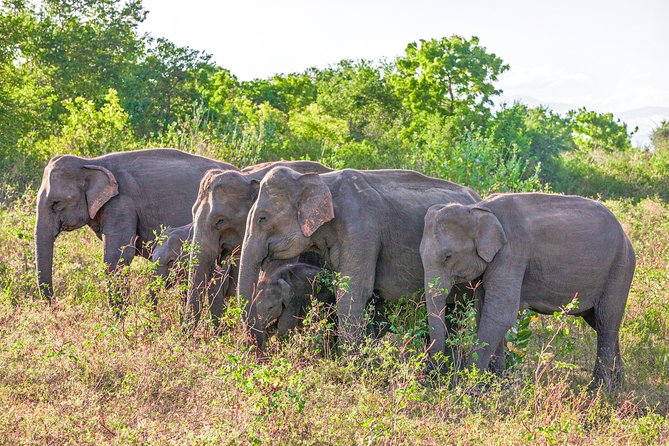
Udawalawe is one of Sri Lanka’s best places to see wild elephants without spending a full day on safari. The park’s open plains make animal spotting easier than in thick forest, and a three-hour drive can bring you close to elephant families, crocodiles, buffalo, monkeys, lizards, and a long list of birds.
I like the choice of booking: you can prebook only your park admission, then arrange a Jeep at the gate, or pay for the entry and safari together. I also like the small practical touches, including a four-wheel-drive Jeep for up to six people, a driver who doubles as your tracker, and pickup within 5 kilometers of the entrance.
The main drawback is that wildlife is wild, not scheduled. Some afternoon drives produce only a few elephants, deer, and monkeys, while birds and peacocks fill much of the park. The gate can also become crowded with Jeeps, so your experience depends partly on timing, the driver, and the season.
Key points at a glance
- Elephants are the main attraction: You have a good chance of seeing herds and family groups, though numbers vary by month.
- The three-hour Jeep ride covers open country: Plains, grasslands, forests, marshes, and waterways give you several types of scenery and wildlife habitat.
- Your driver is also your tracker: Guides such as Asunka, Shameera, Max, and Lahiru have been praised for calm driving, wildlife knowledge, and patient spotting.
- A Jeep holds up to six passengers: This can keep the cost reasonable, but a full vehicle gives you less room for cameras and elbows.
- Pickup is limited to 5 kilometers: Transport farther away, food, drinks, gratuities, and some entrance fees are not included.
- Wildlife sightings vary: You might see elephants, crocodiles, buffalo, monkeys, deer, lizards, and birds, but no safari can promise a certain number of animals.
Why Udawalawe works well for a short safari
Udawalawe National Park covers nearly 120 square miles on the boundary of Sri Lanka’s Sabaragamuwa and Uva Provinces. It was established in 1972 and contains a mix of plains, grasslands, forests, and marshes, with mountains along its northern edge.
That variety matters. Open grassland gives you a better chance of spotting elephants from a distance, while forest edges and wet areas support monkeys, buffalo, crocodiles, lizards, and birds. The Walawe River and its smaller waterways provide vital water for wildlife, especially during drier periods.
I like the park for another reason: three hours is enough to feel like a real safari, but not so long that you need to build an entire day around it. If you are moving between Sri Lanka’s southern coast, the hill country, or the cultural sites farther inland, this shorter format can fit neatly into a larger route.
The average temperature is around 27 to 28 degrees Celsius, and the park receives about 1,500 millimeters of rain each year. Expect heat, dust, and changing conditions rather than a polished zoo-style outing. You are entering a working wildlife reserve, and the rough roads are part of the experience.
More Udawalawe National Park Safaris in Sri Lanka:
- Udawalawe National Park: Elephant Safari with Expert Guide
★ 4.9 · 641 reviews - Galle/Mirissa/Hiriketiya: Drop to Ella & Udawalawa Safari
★ 4.9 · 186 reviews - Udawalawe: National Park Safari & Elephant Transit Home Tour
★ 4.9 · 183 reviews
The choice between entry only and entry with a Jeep
The basic booking lets you prearrange admission to the national park. This removes one uncertainty from the morning, but you still need to arrange a Jeep when you arrive.
The upgraded option combines park entry with a three-hour 4×4 safari and a driver-tracker. For most people, I think this is the easier choice. You reach the gate with the main parts of the visit organized, then get into the Jeep rather than spending time sorting out the vehicle.
The advertised price is $27 per person, and the value depends on which option you choose and how many people share the Jeep. A vehicle can carry up to six passengers, so a full group helps spread the cost. Solo visitors or pairs should check exactly which entrance charges are included in their selected option before booking.
There is an important distinction in the terms: entrance fees are not included with Jeep-only bookings and must be paid in cash. The package that includes admission is designed to avoid that particular surprise, but read your voucher carefully so you know what you purchased.
Pickup and drop-off are included only within a 5-kilometer radius of the park gate. If your hotel is farther away, you will need to arrange and pay for transport separately. This is easy to overlook, especially if you are staying in a nearby town rather than directly by Udawalawe.
What the three-hour Jeep safari feels like
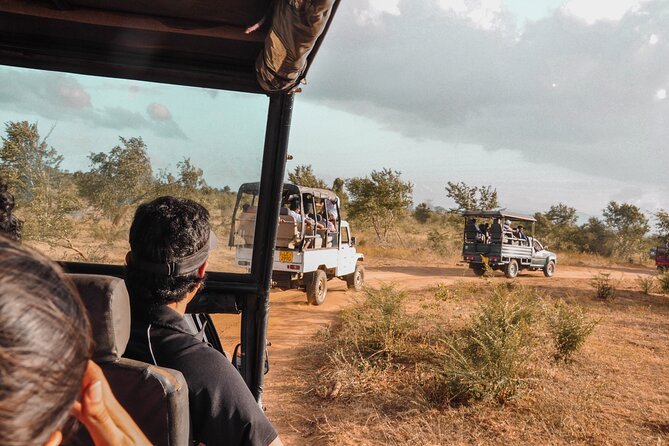
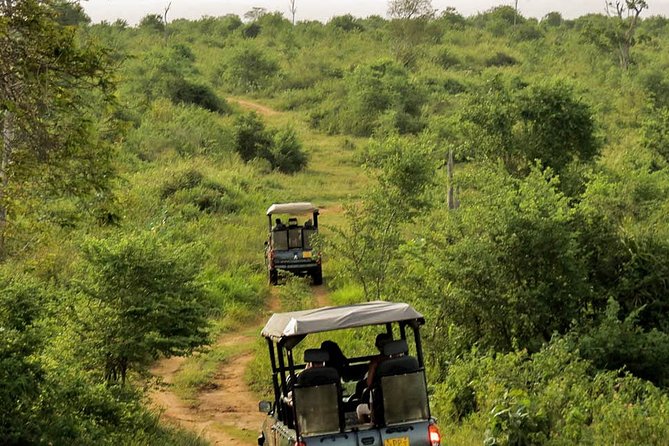
The safari takes place in a 4×4 Jeep with a maximum of six passengers. The vehicle is practical rather than luxurious. You should expect an open-air wildlife drive over uneven ground, with dust and bumps adding to the sense that you are in a real reserve.
Your driver also acts as your tracker. That role is important. The driver watches the road, reads signs of animal movement, knows where water and open feeding areas may be found, and helps identify what you are seeing.
Names connected with especially strong outings include Asunka, Shameera, Max, and Lahiru. Asunka has been praised for combining wildlife knowledge with patience and a friendly manner. Shameera has been described as warm and engaging, while Max is noted for calm driving and a respectful approach around animals. Lahiru has also helped arrange transport and short-notice safari plans.
Of course, you cannot request a particular driver with certainty from the information provided. Still, these names are useful to know if the local operator discusses guide assignments or if you are communicating before arrival.
The three-hour length gives you time to move through several parts of the park, pause when animals appear, and wait for a better view. It is long enough for a satisfying first safari, but shorter than a full-day wildlife program. If you want an unhurried day with long stops and repeated searches for a particular animal, this may feel brief.
Elephants, crocodiles, buffalo, and birds
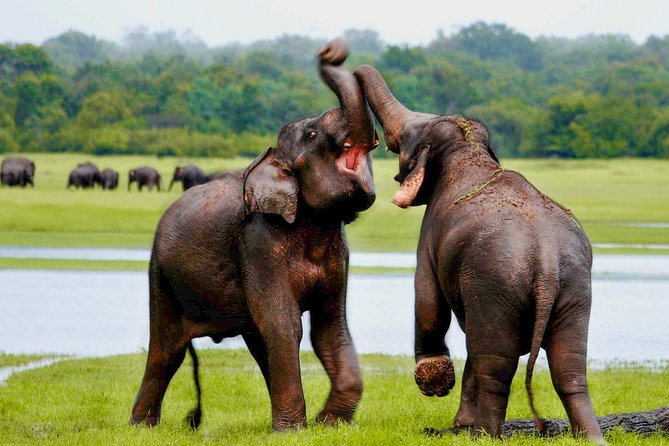
Elephants are the headline act at Udawalawe, and they are the reason many people choose this park. You might see a single animal crossing open ground or several families gathered near water and grassland.
Some drives have produced many elephants, including close views of family groups. Others have found only a few. August and September can be less reliable for elephant numbers in some parts of the park, as animals may move north, so consider the time of year when setting your expectations.
The park is not only about elephants. Crocodiles may appear around waterways, while buffalo often graze in open areas. Monkeys, deer, lizards, and salamanders add variety to the drive. The birdlife can be extensive, with peacocks among the more visible species.
This is where personal preference matters. If you want a safari built around large mammals, an afternoon with only a handful of elephants may feel disappointing. If you enjoy identifying birds and watching smaller wildlife, the same outing can still feel full.
The best approach is to treat each sighting as part of the reserve rather than measuring success by a checklist. A patient guide can help you notice behavior, tracks, movement, and habitat, not just point at the largest animal nearby.
A few more Sri Lanka trips to weigh up
- From Colombo: Sigiriya and Dambulla Day Trip with Safari
★ 4.7 · 842 reviews - Yala National Park Safari Tours: Morning/Evening/Full Day
★ 4.8 · 818 reviews - Full day Safari – Yala National Park – 04.30 am to 06.00 pm with – Janaka safari
★ 5.0 · 603 reviews - Yala National Park: Half, 7-Hour, or Full-Day Safari & Meals
★ 4.8 · 489 reviews
The park’s plains, marshes, and mountain edge
Udawalawe’s scenery changes as the Jeep moves through the reserve. Grasslands and open plains offer long views, which is helpful when looking for elephants or buffalo. Forest sections feel more enclosed and can reward careful watching for monkeys, birds, and movement beneath the trees.
Marshes and waterways bring another set of possibilities. Crocodiles may rest close to the water, and birds gather where food and shelter are available. The Walawe River and its tributaries help explain why wildlife remains in the area, particularly when other sources of water become scarce.
The mountains along the northern boundary give the park a clear sense of place. You are not simply driving through a featureless animal enclosure. The reserve has geological formations, changing vegetation, and a strong connection between water, weather, and animal movement.
Do not expect every part of the three hours to produce action. A good safari includes stretches of driving, quiet observation, and time spent scanning the edges of grass and forest. That slower rhythm can be frustrating if you want constant sightings, but it is closer to how wildlife watching actually works.
Crowds, shared Jeeps, and the best way to sit
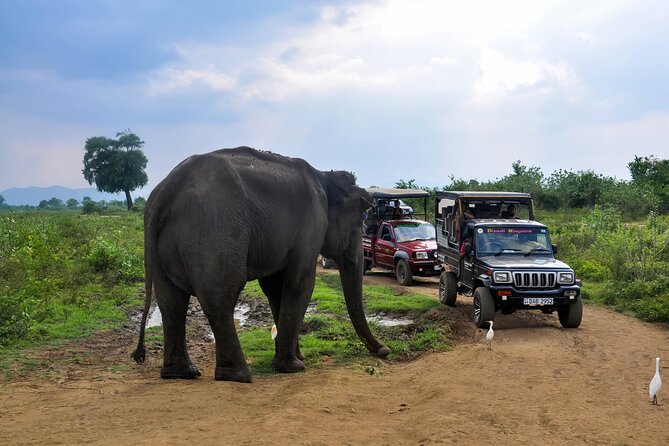
The park gate can be busy, with many 4x4s arriving around the same time. Some vehicles may be mostly empty, which can make the waiting area feel more crowded than necessary and reduce the sense of a low-impact outing.
Once inside, you may also encounter other Jeeps near a notable animal. That can affect your view and make the experience feel less private, even though your booking is described as a private safari vehicle. In practical terms, private usually means your own Jeep and driver rather than an exclusive section of the park.
A full Jeep with six passengers keeps the price down but can feel tight. If photography matters to you, ask about the passenger arrangement and choose your seat early if possible. A window or outer position gives you a clearer view and more freedom to turn toward wildlife.
The positive side of a shared vehicle is the social element and lower per-person cost. The negative side is less space and more competition for a clean sightline. Couples seeking a quiet, private-feeling ride may prefer a smaller group if that option is available, but the supplied details do not promise a reduced-capacity Jeep.
Timing, weather, and wildlife luck
The experience lasts about three hours, but the exact quality of the drive depends on weather, season, and animal movement. Rain can change road conditions and visibility. Because the experience requires good weather, poor conditions may lead to a rescheduled date or a full refund.
Seasonal movement is worth taking seriously. August and September may bring fewer elephants in the areas covered by the drive, while other periods can produce more family groups. No fixed date guarantees a better result, but asking the operator about current conditions before you go is sensible.
Morning and afternoon drives can feel different, though the supplied details do not promise a particular departure time or a better slot. One afternoon outing produced only a few elephants along with deer and monkeys, with birds and peacocks making up much of the wildlife. That is not a failure of the park, but it is a reminder to book for the whole experience rather than a guaranteed elephant count.
Bring patience and accept that a quiet stretch is normal. The driver’s ability to spot animals helps, but even the best tracker cannot control where wildlife chooses to move.
What is included and what is not
The package includes a 4×4 safari Jeep, a driver who also tracks wildlife, a water bottle for each person, and pickup and drop-off within 5 kilometers of the park gate.
Food and drinks are not included, apart from the provided bottle of water. Plan ahead if you need more refreshments, especially because the drive takes place in warm conditions.
Gratuities are not included either. Tipping is optional, but you may wish to budget for it if your driver provides patient explanations, careful positioning, or help with transport arrangements.
The voucher sent at booking is not the official park ticket. You must exchange the Viator or TripAdvisor confirmation with staff at the starting point. This is a small step, but knowing it ahead of time prevents confusion at the gate.
Confirmation is issued at booking, and the meeting point is Udawalawe National Park in Sri Lanka. The park is near public transport, and the activity is suitable for most people according to the supplied information.
Who should book this safari?
I would recommend it to first-time safari visitors who want a straightforward way to see Sri Lankan wildlife without committing to a full day. It also suits families and small groups, especially when six people can share one Jeep and bring the per-person cost down.
It works well for anyone whose main goal is elephants but who would also enjoy crocodiles, buffalo, monkeys, lizards, and birds. The driver-tracker format is useful if you do not know the park or the difference between the animals you are seeing.
Bird lovers may find the experience rewarding, since the park contains many bird species and peacocks. People who want only large mammals should be more cautious, particularly during August and September or when booking an afternoon drive.
I would not choose it if you expect a completely empty park, guaranteed close elephant encounters, or a luxury vehicle. The gate can be crowded, Jeeps may gather around wildlife, and a three-hour drive cannot control nature.
Booking flexibility and final practical advice
Free cancellation is available if you cancel at least 24 hours before the start time. Changes made less than 24 hours before departure are not accepted, and late cancellations are not refunded.
If the minimum number of participants is not reached, the operator may cancel and offer another date, another experience, or a full refund. Poor weather can lead to the same choices. Keep this in mind if your wider Sri Lanka itinerary is tightly timed.
Before booking, confirm three things: whether you selected park admission plus the Jeep or Jeep only, where your pickup falls in relation to the 5-kilometer limit, and whether you need to carry cash for entrance fees. These details affect the real cost more than the headline price.
Should you book it?
Book this Udawalawe safari if you want a fairly short, practical wildlife outing with a good chance of seeing elephants and a wide mix of smaller animals. The $27 price can be good value when admission and the Jeep are included, especially for a group sharing the vehicle.
I would choose the combined entry and safari option for convenience, then aim for a period with stronger elephant activity if your schedule allows. Go with realistic expectations: you may see elephant families, crocodiles, buffalo, monkeys, deer, lizards, and many birds, but you may also spend part of the drive searching.
For a first safari in Sri Lanka, the balance is appealing. You get a real reserve, a dedicated Jeep, a driver-tracker, and enough time to see how Udawalawe’s animals use its water, grasslands, forests, and marshes.
FAQ
How long does the safari last?
The Jeep safari lasts approximately three hours.
How many people can share one Jeep?
The 4×4 safari Jeep can carry a maximum of six passengers.
Is park admission included?
Park admission is included when you choose the package that combines the entrance ticket with the safari. Entrance fees are not included with Jeep-only bookings and must be paid in cash.
Is pickup included?
Free pickup and drop-off are included for locations within 5 kilometers of the Udawalawe National Park gate.
What animals might I see?
Possible sightings include wild elephants, crocodiles, buffalo, monkeys, deer, lizards, salamanders, and many types of birds, including peacocks.
Is food included?
No. Food and drinks are not included. One bottle of water is provided per person.
What happens if the weather is poor?
If bad weather causes the experience to be canceled, you will be offered a different date or a full refund.
Can I cancel for a refund?
You can receive a full refund if you cancel at least 24 hours before the experience start time. Cancellations made less than 24 hours in advance are not refunded.
More National Parks in Sri Lanka
- From Sigiriya: Minneriya National Park Private Jeep Safari
★ 4.9 · 415 reviews - From Sigiriya: Minneriya National Park Elephant Safari
★ 4.8 · 365 reviews - Yala National Park Wildlife Safari/ Game Drive – by Ajith Safari
★ 4.5 · 351 reviews - Private Jeep Safari at Minneriya National Park to Visit Elephants
★ 5.0 · 338 reviews
Just added around Sri Lanka
- Yala Village Tour: Pottery Class, Lake and Temple Visits★ 5.0 · 5 reviews
- SKIP THE LINE – YALA SAFARI TOUR – Incl. ENTRY TICKETS★ 4.8 · 27 reviews
- Yala Safari: High-Luxury PRIVATE Tours with Entry Tickets★ 4.7 · 15 reviews
- Zip Lining in Ella★ 4.5 · 16 reviews
- Yala National Park Sharing Safari (5 Hours)★ 4.0 · 3 reviews
- Yala Safari All-Inclusive Package with Convenient Pick Up★ 4.4 · 3 reviews
- Yala Safari : 7 hour & 12 hour Tours★ 3.8 · 6 reviews
- Yala Private Safari: Half-Day or Full-Day with Picnic Lunch★ 4.3 · 8 reviews
Udawalawe National Park Safaris, compared.
Udawalawe National Park: Elephant Safari with Expert Guide
Read our review →
Galle/Mirissa/Hiriketiya: Drop to Ella & Udawalawa Safari
Read our review →
National Park Safari & Elephant Transit Home Tour
Read our review →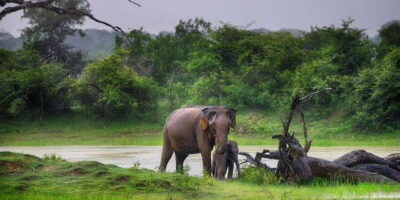
Shuttle to Tangalle/Mirissa/Galle w Udawalawe Safari
Read our review →Udawalawe National Park — 4-Hour Private Jeep Safari (Pickup)
Read our review →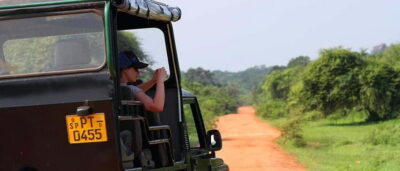
Udawalawa National Park Safari Tour with Experienced Guides
Read our review →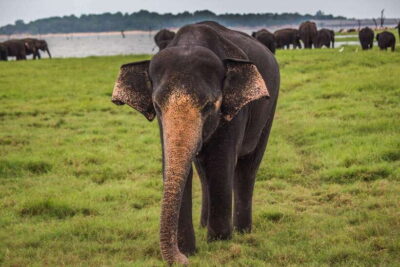
Hikkaduwa/Galle/Weligama/Mirissa/Tangalle: Udawalawa Safari
Read our review →Udawalawe National Park Half Day Jeep Safari (Private Tour)
Read our review →Browse the lists this tour appears in