
Reviewed · YALA NATIONAL PARK SAFARIS
Yala Village Tour: Pottery Class, Lake and Temple Visits
Yala village life comes into focus through small, memorable encounters: wet clay turning under your hands, birds moving across a quiet lake, and a 2,300-year-old Buddhist stupa tied to an ancient royal family. This is not just a drive between sights. It links craft, village farming, and Buddhist heritage in one private outing.
I especially like the family-run pottery workshop, where you make a small clay item to take with you, and the chance to watch birds with supplied binoculars rather than simply passing the lakes by. The possible drawback is the tour’s flexible 3 to 12-hour format, which can be confusing unless you confirm whether you are booking only the village tour or combining it with the early Yala safari.
Key things to know
- Yatala Tissa Stupa is about 2,300 years old: Learn why King Mahanaga built it to mark the birth of his son, Yatala Tissa.
- The pottery class is hands-on: You shape clay yourself at a local family workshop and receive a small keepsake.
- The lakes support village farming: Your guide explains how five major lakes and connecting canals collect rainwater for paddy fields.
- Birdwatching comes with binoculars: Debarawewa Lake offers a calm setting for local and migratory birds.
- A natural bat colony adds an unusual wildlife stop: You can watch thousands of bats roosting in their usual habitat.
- Sunset finishes the village tour: Tissa Lake provides the final pause, with the evening colors reflected on the water.
Why this village tour feels different from a standard Yala stop
Many visits to the Yala area focus on the national park and its larger wildlife. This experience takes you into the human side of the region, where temples, irrigation lakes, craft skills, and family life still shape the day.
I like that the route does not treat culture as a quick photo stop. The pottery class asks you to use your hands, while the lake visits show how water supports farming and settlement. The result is a more grounded picture of southern Sri Lanka.
The tour is private, with an English-speaking guide and pickup included. That makes it easier to ask questions, adjust the pace, or spend more time at a place that interests you. Guide Uchith is specifically associated with the experience, and the information provided describes him as a friendly guide who explains Buddhist culture and life around Tissamaharama clearly in English.
The advertised price is $40 per group up to one person, so check the exact total for your party before booking. That price can be good value for private transport, guiding, water, and binoculars, but the separate Yala National Park entrance fee is about $45 per adult, or LKR 13,500. If you add the safari, the park fee changes the final cost considerably.
More Yala National Park Safaris in Yala
- Full day Safari – Yala National Park – 04.30 am to 06.00 pm with – Janaka safari
★ 5.0 · 603 reviews - Yala National Park: Half, 7-Hour, or Full-Day Safari & Meals
★ 4.8 · 489 reviews - Yala National Park Wildlife Safari/ Game Drive – by Ajith Safari
★ 4.5 · 351 reviews
The 5 a.m. start and how the day is arranged
When the safari is included, pickup begins around 5 a.m. from your accommodation. After the park visit, you return around 10 a.m., giving you time for lunch and a break before the village portion starts around 3 p.m.
The village tour usually finishes around 6 p.m. or 6:30 p.m. and returns you to accommodation in the Tissamaharama area. This split schedule works well if you want to combine wildlife with culture, but it creates a long day. I would choose it only if you are comfortable with an early morning and a full afternoon.
For the village tour alone, pickup is offered around Tissamaharama, with return to the same area. Transport is by car or jeep, and drinking water is supplied. The operator can also arrange lunch or dinner on request. One particularly personal option is eating a Sri Lankan-style meal at the guide’s home, where his wife prepares the food. Treat that as an arrangement to request in advance, not as an automatic part of the tour.
The flexible transport option may suit a wider Sri Lankan route. After the village tour, the operator says it can arrange a taxi to places including Ella, Mirissa, Tangalle, Hiriketiya, Galle, Hikkaduwa, Ahangama, and Weligama. Confirm the extra transport cost and destination before relying on this plan.
Yatala Tissa Stupa and the Buddhist Museum
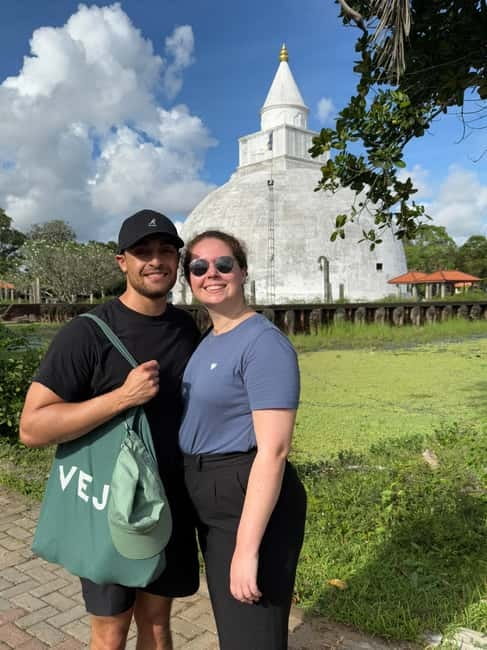
The first major cultural stop is Yatala Tissa Stupa, one of the most important historic sites in the area. Its story reaches back roughly 2,300 years, when King Mahanaga built it to mark the birth of his son, Yatala Tissa.
That detail gives the visit a human angle. You are not only looking at an old Buddhist monument. You are seeing a site connected to royal family life, early Buddhist practice, and the long history of Tissamaharama.
The adjoining Buddhist Museum adds useful context. Centuries-old artifacts and relics help explain the spiritual importance of the area, which can otherwise be hard to grasp from a short temple visit.
Dress respectfully for the stupa and temple stops. Modest clothing is the sensible choice, and you should follow local instructions about footwear and behavior. The supplied information does not give a fixed museum schedule, so confirm the day’s opening arrangements if this stop is especially important to you.
What makes this stop valuable is the guide’s explanation. The building itself may be quiet and understated, but the story behind it gives the rest of the tour a stronger sense of place.
The family pottery workshop
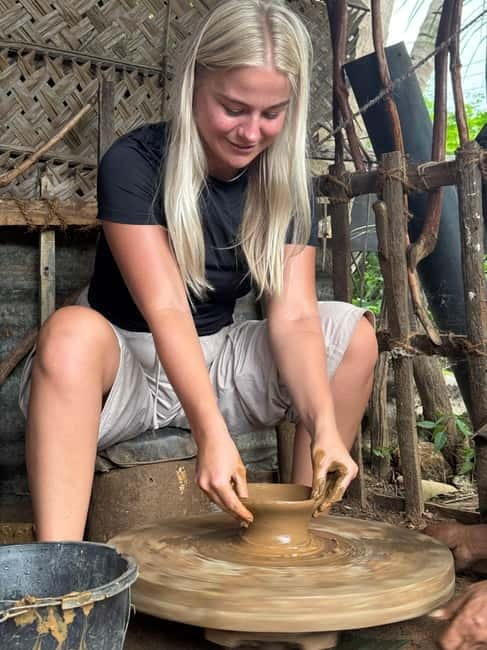
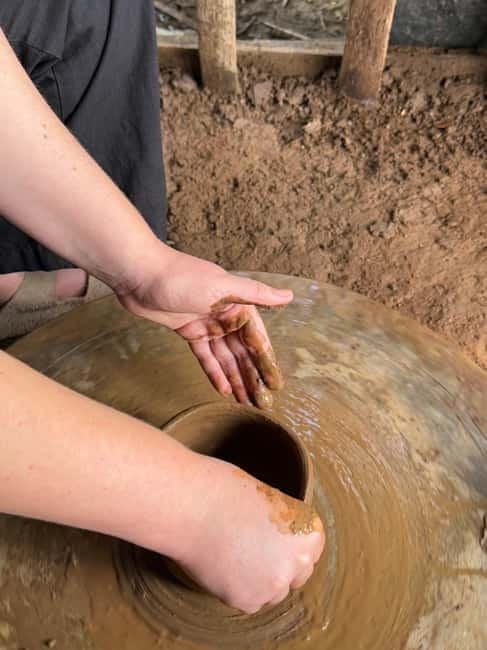
The pottery class is the most active part of the experience. At a small family-run workshop, you watch local artisans shape clay using methods passed down through generations, then try the process yourself.
You should expect a simple, personal class rather than a polished studio production. Your hands go into wet clay, and you form a small object under instruction. The activity is suitable for people who like making things, and it gives children and adults a break from sightseeing, although babies under one year are not accepted on the tour.
The keepsake adds value. The information provided says you can take a small pottery item home, and specific examples include little clay lights for oil lamps. It is the kind of souvenir that carries a memory of the place because you helped make it.
The pottery visit also directs money and attention toward a local family rather than only toward large attractions. You see a working craft and meet the people keeping it alive. That is more meaningful than buying a mass-produced item at a roadside shop.
Allow for imperfect results. The point is the process, not producing a flawless bowl. Wear clothing you do not mind getting dirty, since the class involves wet clay. The tour information does not state whether finished pieces are fired before collection, so ask what kind of keepsake you will receive.
Same island, a completely different kind of day:
- Leopard Safari Tour in Yala National Park
★ 4.5 · 281 reviews - Full day / Half Day WildlifeAdventure in Yala-National-Park
★ 5.0 · 258 reviews - Special leopards safari Yala National park – 04.30 am to 11.30 am
★ 5.0 · 186 reviews - Yala National Park – Full Day Safari (04:30 am – 06:00 pm)
★ 5.0 · 132 reviews
Debarawewa Lake and the village water system
Debarawewa Lake brings the tour outdoors again. It is surrounded by paddy fields and offers open views across the water, with birdwatching as the main activity.
Binoculars are included, which matters here. Birds can be easy to miss when you only glance across a lake, but a closer view lets you notice more movement along the water and fields. The tour describes opportunities to see both local and migratory birds, though no guaranteed species list is provided.
Your guide also explains the area’s irrigation system. Five major lakes are linked by canals, collecting rainwater and directing it toward traditional village farming. This is one of the strongest parts of the tour because it connects the view in front of you to daily life.
The paddy fields are not simply pretty scenery. They depend on a managed water network, and that network helps explain why villages developed where they did. You get a practical lesson in how farming works in this part of Sri Lanka.
Birdwatching is naturally affected by weather, season, and timing. Bring patience. This is not the place for a fast checklist. If you want the best chance of spotting birds, ask your guide how much time is planned at the lake and whether the schedule can be adjusted.
The bat colony and an unexpected wildlife pause
The natural bat colony is a brief but memorable wildlife stop. Thousands of bats roost together in their natural surroundings, offering a different kind of animal encounter from the open-country sightings associated with Yala National Park.
This stop is especially useful for anyone who likes wildlife beyond the usual big mammals. It also breaks up the cultural visits without requiring another long drive.
Do not expect a staged presentation or a guaranteed close-up. You are observing animals in their normal roosting place. The exact viewing conditions may vary, and the tour information does not specify how long the group remains there.
The bat colony works best as part of the wider route. On its own, it may not justify a separate outing, but alongside the birds, lakes, pottery, and temples, it adds variety.
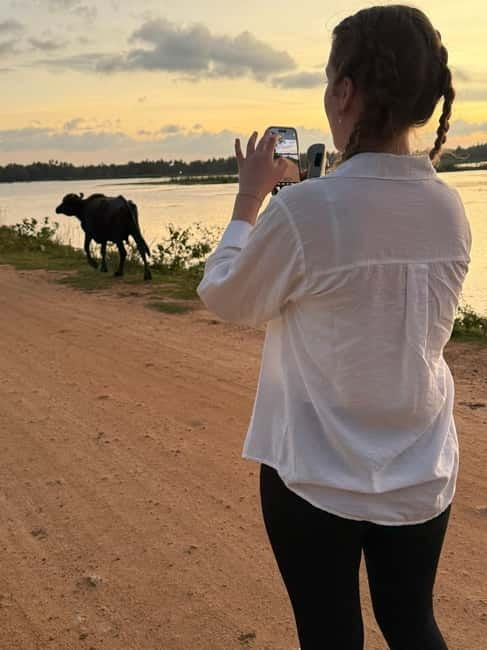
Tissa Lake at sunset
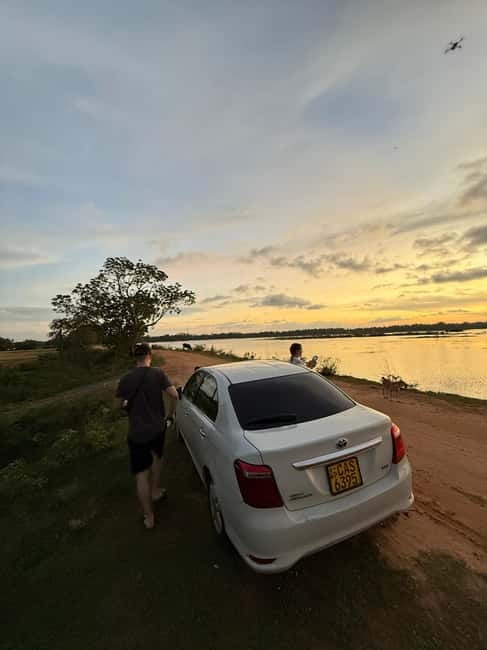
The final stop is Tissa Lake, where the tour slows down for sunset. After the stupa, workshop, birdwatching, and bat colony, this quiet ending gives you time to simply look.
The lake reflects the changing evening sky, and the calm water provides a gentle finish rather than another packed activity. I like this closing moment because it lets the day settle. You are not being rushed toward one more monument.
Sunset timing changes through the year, so the exact quality of the view depends on weather and the day’s schedule. The tour normally reaches this part around 6 p.m. to 6:30 p.m. If sunset photography matters to you, ask the guide how much time will be available at the water.
What the price includes, and what it does not
The village tour includes transport by car or jeep, drinking water, binoculars, an English-speaking guide, and pickup and return around Tissamaharama. It is a private group experience, so you do not have to share the vehicle with strangers.
The $40 price is easiest to judge when you value privacy and several different stops. You are paying for a guide, transport, a craft activity, nature viewing, and cultural visits rather than a single entry ticket.
The main extra cost is the Yala National Park entrance fee, approximately $45 per adult, or LKR 13,500. That fee applies to the safari portion, not simply to the village route. Personal expenses, meals, and any onward taxi are also separate unless you arrange them directly.
Because the published duration ranges from 3 to 12 hours, ask these questions before confirming:
- Is the price for one person only, or can the group rate cover your full party?
- Are you booking the village tour alone or the village tour with safari?
- Is lunch at the guide’s home available on your date?
- What is the cost of a taxi to your next destination?
- How long will the pottery class and lake stops last?
These details will tell you the real value more clearly than the headline price.
Who will enjoy this experience most
I would recommend this tour to you if you want a quieter alternative to a park-only day. It suits people who enjoy local craft, religious history, birdwatching, and seeing how rural communities use water and land.
It is also a good choice if you prefer a private outing and want to ask questions freely. The guide can explain the temples, pottery, Buddhist customs, and village life in English, and the private format gives you more control over the pace.
Families with older children may like the pottery class and bats, while couples may prefer the lake visits and sunset. People interested in photography should bring equipment for birds, temple details, clay work, and the evening lake.
The experience may be less suitable if you want a tightly timed museum tour, guaranteed wildlife sightings, or a polished tourist attraction. The village workshop is small-scale, and nature stops depend on conditions. You should also think twice about combining it with the safari if an early start followed by a late afternoon finish sounds tiring.
The tour is not suitable for babies under one year or people over 95 years. No other limits are provided, so ask the operator directly if you have mobility concerns or need a particular vehicle setup.
Should you book the Yala Village Tour?
Book it if you want to connect the Yala area with real village life rather than stopping at the national park alone. The pottery class, irrigation story, and ancient stupa give the day substance, while birds, bats, and sunset keep it from feeling like a history lesson.
I would choose the village-only option if you have limited energy or already visited Yala National Park. Choose the combined safari and village day if you want to make the most of Tissamaharama and do not mind starting at 5 a.m.
Before paying, confirm the group price, whether the $40 covers your whole party, the separate park fee, meal arrangements, and your return or onward transport. With those points clear, this is a strong choice for a personal, culture-focused day with plenty of variety.
FAQ
Where does the Yala Village Tour start?
Pickup is available from accommodation around Tissamaharama. If you book the safari with the village tour, pickup is planned for around 5 a.m.
Is the Yala National Park entrance fee included?
No. The park entrance fee is approximately $45 per adult, or LKR 13,500, and personal expenses are also excluded.
What does the pottery class involve?
You visit a small family-run workshop, watch traditional pottery-making, and shape your own item from wet clay. A small pottery keepsake is provided.
Is the tour private?
Yes. The activity is operated as a private group experience with an English-speaking live guide.
Can I book lunch or dinner?
Yes. Lunch or dinner can be arranged on request. The operator also offers Sri Lankan-style meals at its own place, subject to arrangement.
Can I travel to another Sri Lankan destination afterward?
The operator says it can arrange a taxi after the village tour to destinations including Ella, Mirissa, Tangalle, Hiriketiya, Galle, Hikkaduwa, Ahangama, and Weligama. Confirm the transport cost and destination in advance.
More Workshops in Yala
- Ella: Traditional Sri Lankan Cooking Class
★ 4.9 · 788 reviews - Organic cooking class sigiriya (kumara & family)
★ 5.0 · 650 reviews - Galle: Traditional Gems & Jewellery Workshop with Transfers
★ 4.9 · 539 reviews - Kandy Village Cooking Class
★ 5.0 · 536 reviews
Just added around Yala
- SKIP THE LINE – YALA SAFARI TOUR – Incl. ENTRY TICKETS★ 4.8 · 27 reviews
- Yala Safari: High-Luxury PRIVATE Tours with Entry Tickets★ 4.7 · 15 reviews
- Yala National Park: Safari Experience at Dawn or Dusk★ 3.8 · 21 reviews
- Yala National Park: Leopard Safari Full day tour with Lunch★ 4.3 · 22 reviews
- Yala National Park: Leopard Safari Tour with Park Tickets★ 4.8 · 35 reviews
- Morning 07 Hour Private Safari at Yala National Park by Yala La Safari Tours★ 5.0 · 4 reviews
- Yala Camping by Ajith Safari All Inclusive★ 5.0 · 8 reviews
- Yala Safari – Yala National Park★ 5.0 · 3 reviews
Yala National Park Safaris, compared.
Yala National Park Safari Tours: Morning/Evening/Full Day
Read our review →
Full day Safari – Yala National Park – 04.30 am to 06.00 pm with – Janaka safari
Read our review →
Yala National Park: Half, 7-Hour, or Full-Day Safari & Meals
Read our review →
Yala National Park Wildlife Safari/ Game Drive – by Ajith Safari
Read our review →
Hikkaduwa/Galle/Weligama/Mirissa/Tangalle: Yala Safari Tour
Read our review →
Full day / Half Day WildlifeAdventure in Yala-National-Park
Read our review →
Galle/Mirissa/Tangalle: Transfer to Ella & Yala Safari
Read our review →Browse the lists this tour appears in