
Reviewed · SIGIRIYA ROCK FORTRESS TOURS
Organic cooking class sigiriya (kumara & family)
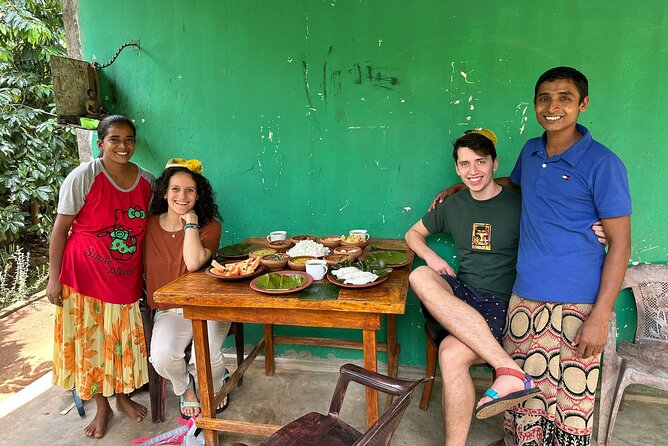
Sri Lankan cooking makes the most sense when you see the garden first. At Kumara and his family’s home near Sigiriya, you pick up the vegetables and herbs, learn how spices are prepared by hand, then help turn them into a full evening meal over a row of wood fires. The garden-to-table approach and the warm family setting are the best reasons to come.
I especially like the chance to learn several dishes rather than make one token curry, and I like that Kumara explains the plants, their uses, and the way a Sri Lankan table is arranged. The main consideration is comfort: this is a real home kitchen, not a polished cooking studio, and you should bring extra drinking water because one account found the supplied water limited.
Key points at a glance
- Garden first: Walk through the family’s organic plot and see vegetables, herbs, and spices used in the meal.
- Several dishes: Prepare a spread that may include dal, pumpkin, aubergine, sambal, string hoppers, coconut roti, and dessert.
- Hands-on cooking: Chop, measure, season, and cook with Kumara, Thanuja, and other family members.
- Wood-fire kitchen: Cook in a traditional outdoor setup with several simple cooking fires.
- Home-style welcome: Share the finished meal with the family and other participants in a relaxed setting.
- Good value: At $28, you receive instruction, food, a garden visit, herbal tea, and a full meal over roughly two and a half hours.
A garden tour before the cooking begins
The experience starts at Organic Cooking Class Sigiriya, at 284 Kahatagahayaya, Kalapuraya, Sigiriya 21120. This is Kumara and his family’s home, not a restaurant or a purpose-built culinary school. That distinction matters. You are seeing the source of many of the ingredients and learning in the same setting where the family cooks for itself.
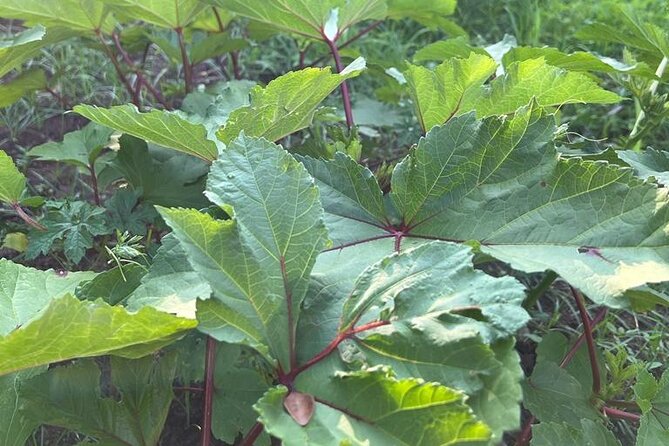
Kumara usually begins with a walk through the garden. He introduces the herbs, vegetables, and spices that may appear later in the meal. The garden is also used to explain Ayurvedic eating and the possible health uses of different plants. If you enjoy food with a little botany and home-remedy discussion on the side, this opening gives the class more depth than a simple recipe demonstration.
The garden visit also helps you understand Sri Lankan cooking as a process of balancing fresh produce, coconut, spices, heat, and texture. Instead of seeing curry powder as one mysterious ingredient, you learn that spices are handled separately and prepared in a traditional way. That is useful knowledge if you plan to cook Sri Lankan food at home.
The word organic is central here. The family grows the garden produce used in the class, and many accounts describe the meal as fully or almost fully homegrown. It would be too strong to assume every single ingredient comes from the plot, but the food is clearly built around the family’s own vegetables and spices.
More Sigiriya Rock Fortress Tours in Sigiriya
- From Colombo: Sigiriya and Dambulla Day Trip with Safari
★ 4.7 · 842 reviews - From Sigiriya: Minneriya National Park Private Jeep Safari
★ 4.9 · 415 reviews - From Sigiriya: Minneriya National Park Elephant Safari
★ 4.8 · 365 reviews
Preparing spices the traditional way
After the garden, the class moves into food preparation. Kumara, his wife Thanuja, and sometimes his sister guide you through washing, cutting, measuring, and seasoning. You learn how much of each ingredient is needed and why the quantities change from one dish to another.
This is a useful part of the class because Sri Lankan cooking is not only about following a printed list. The amount of spice, coconut, chili, or vegetable can depend on the dish and the cook’s judgment. The family offers practical tips as you work, rather than asking you to simply watch from the side.
The precise menu can vary, but the dishes described include three curries such as dal, aubergine, and pumpkin, along with sambal, rice, string hoppers, coconut roti, sweet potato curry, and a dessert. Some groups have prepared seven curry dishes. You should think of this as a broad family meal, not a single-recipe workshop.
The food is largely plant-based, and several of the reported menus are vegan. If that suits your diet, this is a natural fit. If you need a strict dietary guarantee, ask when booking, since the supplied information does not provide a formal allergy or ingredient policy.
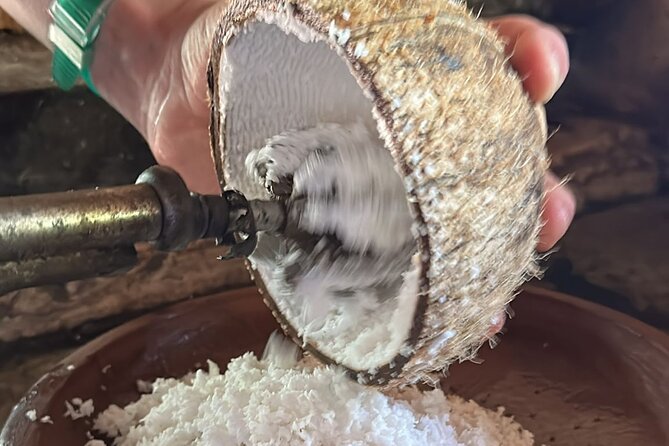
Spice preparation is one of the most worthwhile lessons. The family shows how spices are made and may offer spice products for purchase afterward. You get more than a taste of Sri Lankan food: you see some of the work behind the flavor.
Cooking over the family’s wood fires
The cooking area is a traditional outdoor kitchen. One account describes a row of simple wood fires, where participants prepare the dishes with the family’s help. This is part of the appeal, but it also means you should expect heat, smoke, and a less controlled setting than you would find in a modern indoor kitchen.
You will not spend the whole session at one station following a leader. The work is shared. Someone may be chopping while another person stirs a curry, prepares sambal, or works on string hoppers. That group format creates plenty of activity, though it can also mean you should take initiative if you want more time with a particular dish.
Kumara’s role is part teacher and part host. He explains the ingredients and cooking methods, while Thanuja and other family members help keep the meal moving. The family’s English communication is described as good, though the pace may feel informal rather than classroom-like.
String hoppers are a particularly interesting addition. These delicate rice-flour noodles are a classic Sri Lankan food and require a different technique from a curry. A sweet version or dessert may also be included, giving you a chance to see how the meal moves from savory dishes to something lighter at the end.
The class is best for people who enjoy participation. If you want a quiet demonstration with every step measured and photographed, this may feel loose. If you like cooking alongside a family and sharing tasks with other people, the setting should work well.
A Sri Lankan table made for sharing
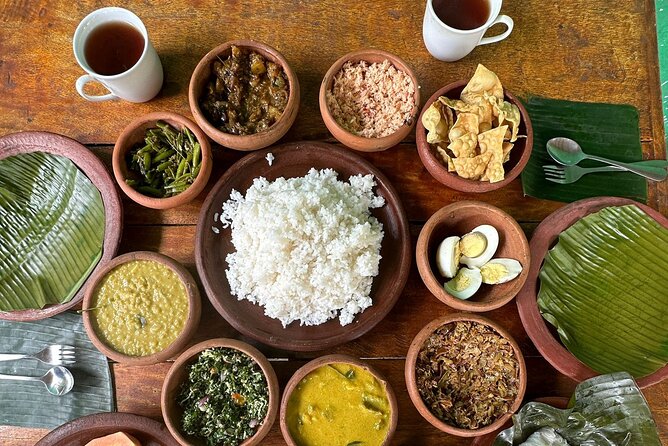
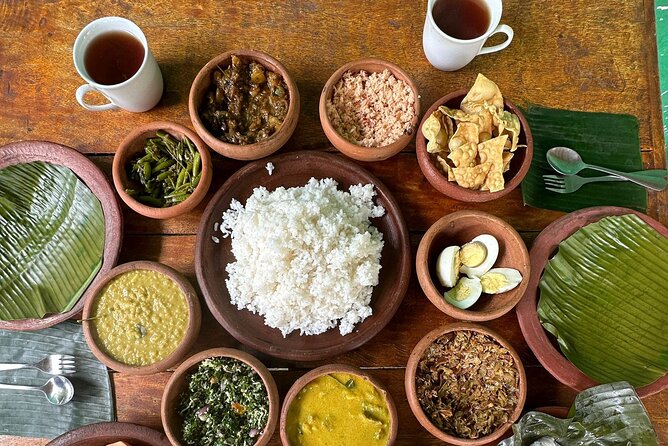
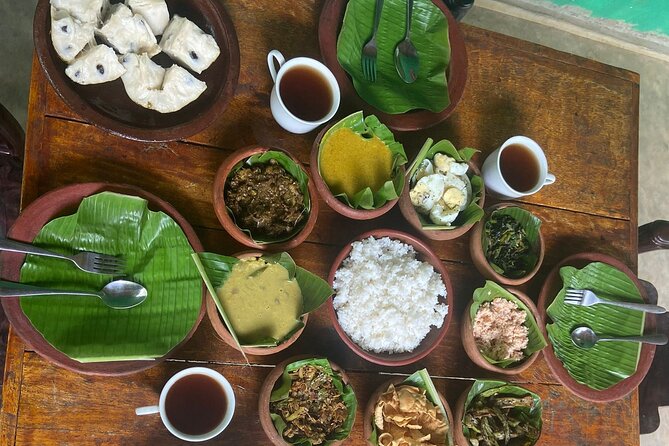
Once the dishes are ready, the family shows you how a traditional Sri Lankan dinner table is arranged. This is a small but valuable detail. The meal is not only about the recipes. It is also about how several curries and accompaniments are placed together so that each bite can have a different mix of spice, sweetness, creaminess, and heat.
You then sit down and eat what you helped prepare. Bottled water and herbal tea are listed as part of the experience. Still, practical reports are mixed on the water available at the home, so I would carry your own bottle, especially in Sigiriya’s warm climate.
The meal is the payoff, but it is also when the class becomes social. You may cook with a small group, and some accounts describe joining a larger group of about a dozen people. The experience is advertised as private, but group size can apparently differ by booking. If privacy matters to you, confirm the arrangement before paying.
Eating together also gives you a better sense of the family’s hospitality. This is not a quick tasting where food arrives in separate courses. The dishes are made together, placed on the table, and shared as a complete home-style dinner.
Same island, a completely different kind of day:
- Private Jeep Safari at Minneriya National Park to Visit Elephants
★ 5.0 · 338 reviews - Minneriya National Park halfday Safari
★ 5.0 · 293 reviews - Sajee’s Place Cooking Class
★ 5.0 · 237 reviews - Sunrise or Sunset Hike Pidurangala Rock with Scenic Views
★ 4.6 · 125 reviews
What makes the food memorable
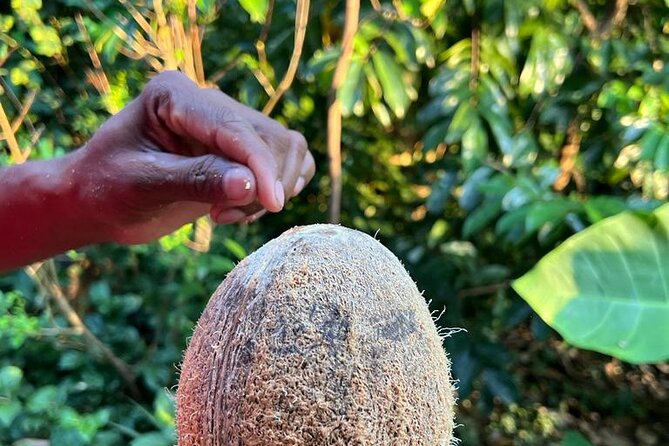
The strongest feature is the connection between the garden and the plate. You see the vegetables and herbs before they are cut, then taste them after they have been combined with coconut, spices, and careful cooking. That connection gives the meal a sense of place without turning the class into a performance.
The food itself is described as flavorful and generous. The most repeated praise goes to the curries, the freshness of the ingredients, and the taste of the final meal. The appeal is not fine dining. It is simple equipment, fresh produce, strong seasoning, and recipes used by a local family.
You also receive recipes afterward, according to several accounts. That improves the value of the class. A cooking experience is far more useful when you can recreate at least some of it later, though you may need to adapt the recipes to the ingredients and equipment available at home.
Do not expect every dish to come out exactly as it would in a restaurant. The point is to learn a home method, and the family’s quantities may be explained by feel as well as by measurement. Take notes if you want to remember details, especially the order in which spices are added.
Price, time, and practical value
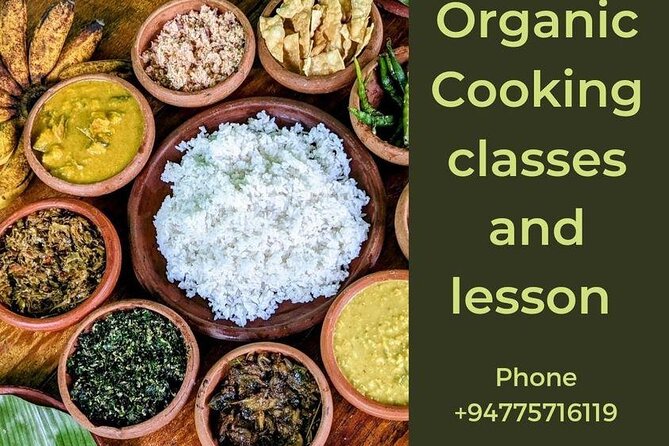
The price is $28 per person. For about two hours and thirty minutes, that covers a garden walk, ingredient and spice instruction, hands-on preparation, the meal, bottled water, and herbal tea. You may also have the chance to buy spices made by the family.
That is a fair price for Sigiriya, particularly if you count the dinner as part of the cost. You are not paying only for a lesson. You are receiving a home visit, a guided look at an organic garden, several dishes, and a cultural exchange with the family.
The advertised timing is approximate, and some accounts put the whole visit closer to three hours. Plan your evening with a little breathing room. This is not the activity to squeeze between a late arrival and a fixed dinner reservation.
The meeting point is the family home in Kalapuraya, and the activity ends there. Some participants arranged a tuk-tuk to and from the location, while the supplied details do not promise transport. Confirm your own route in advance rather than assuming pickup is included.
The activity requires good weather. If poor weather causes cancellation, you are offered another date or a full refund. You can cancel for a full refund up to 24 hours before the start time, but late cancellations and changes are not accepted.
Who should book this cooking class
I would choose this for anyone who wants a local food experience rather than a hotel demonstration. It suits couples, families, solo visitors, and people who enjoy meeting others around a shared meal.
It is also a strong choice for vegetarians and for anyone curious about Sri Lankan plant-based cooking. The menus described are built around curries, sambal, string hoppers, garden vegetables, and other meat-free dishes.
You should be comfortable with a few rough edges. The cooking is outdoors, the setting is a family home, and the format may be shared even though the activity is described as private. You may work in heat and smoke, and the available drinking water may not match every person’s preference.
The class is less suited to someone looking for a formal certificate, a silent demonstration, or a luxury setting. It is also worth checking in advance if you have allergies or strict dietary needs, since no detailed allergy procedure is provided.
Small details that improve the visit
Bring a refillable bottle or your own bottled water. This is the clearest practical tip, especially because the class takes place outdoors and may last close to three hours.
Wear clothes that can handle cooking smells and a little splatter. The setting is informal, and you may be working near wood fires, so comfort matters more than dressing up.
Ask questions as you go. The family’s best lessons concern spice preparation, ingredient quantities, garden plants, and the reason each dish is cooked in a particular way.
If you want the most from the class, pay attention to technique rather than trying to memorize every ingredient. Notice when spices are added, how vegetables are cut, and how the family judges texture.
If you wish to buy homemade spices, ask about them at the end. This gives you a practical souvenir and may help you reproduce the dishes later.
My verdict: a strong Sigiriya food experience
I would book this class if I wanted an evening that connects food, farming, and family life. Kumara, Thanuja, and their family offer more than a recipe lesson: you see the garden, prepare the meal, cook in a traditional outdoor kitchen, learn about spices and plants, and sit down together afterward.
The best reasons to go are the homegrown ingredients, the number of dishes, and the chance to learn in a genuine family setting. The main cautions are the informal kitchen, possible group participation, uncertain transport arrangements, and the need to bring your own drinking water.
At $28, the experience offers good value, especially if you count the substantial meal. If your Sigiriya plans allow an unhurried evening and you want to understand Sri Lankan food from the garden upward, this is an easy choice.
FAQ
Where does the cooking class take place?
It takes place at Organic Cooking Class Sigiriya, Kumara and Family, at 284 Kahatagahayaya, Kalapuraya, Sigiriya 21120, Sri Lanka.
How long does the experience last?
The stated duration is approximately two hours and thirty minutes. Some accounts describe the full visit as taking about three hours.
What is the price?
The price is $28.
Is the activity private?
It is described as a private workshop, but some accounts describe cooking with other participants, including a group of about 12 people. Confirm the group arrangement when booking.
Who leads the class?
Kumara leads the cooking instruction with help from his wife, Thanuja, and other family members, including his sister on some occasions.
What food will I prepare?
Menus can vary, but dishes described include dal, aubergine and pumpkin curries, sambal, rice, string hoppers, coconut roti, sweet potato curry, and dessert.
Are the ingredients organic?
The family grows garden vegetables, herbs, and spices organically, and the meal is described as fully or almost fully organic. The supplied information does not state that every ingredient comes from the garden.
Is a meal included?
Yes. You eat the meal prepared during the class. Bottled water and herbal tea are also listed as included.
Does the activity include transportation?
The meeting and end point is the family home. Some participants arranged a tuk-tuk to and from the location, but transport is not stated as a standard inclusion.
What is the cancellation policy?
You can cancel at least 24 hours before the start time for a full refund. Changes or cancellations made less than 24 hours before the start are not accepted, and poor-weather cancellations offer a different date or a full refund.
More Workshops in Sigiriya
- Malee Cookery Lessons
★ 5.0 · 26 reviews - Sri Lankan Privet Cooking Class with Lunch
★ 5.0 · 12 reviews - Sigiriya Rock Climb, Village Tour+Cooking Class & Elephant Safari
★ 5.0 · 9 reviews - Ella: Traditional Sri Lankan Cooking Class
★ 4.9 · 788 reviews
More Cooking Classes in Sigiriya
- Cooking Class: Sajee’s Place Cooking Class sigiriya
★ 5.0 · 117 reviews - Organic Cooking Class sigiriya home Kitchen(Kumara & family)
★ 5.0 · 116 reviews - Organic Cooking Class with Garden Visit by Sinhagiri
★ 5.0 · 65 reviews - Organic Cooking Class Sigiriya TASTY TASKS
★ 5.0 · 17 reviews
Just added around Sigiriya
- Private Safari Tours in Minneriya National Park★ 5.0 · 18 reviews
- Organic Cooking Class Sigiriya TASTY TASKS★ 5.0 · 17 reviews
- Night Hike to see Elusive & Rare Loris in Sigiriya★ 4.5 · 43 reviews
- Malee Cookery Lessons★ 5.0 · 26 reviews
- Sigiriya Rock Climb, Village Tour+Cooking Class & Elephant Safari★ 5.0 · 9 reviews
- Sigiriya and Dambulla Day Tour from Kandy★ 5.0 · 6 reviews
- Sigiriya Village Tour and Lunch with Hotel Pick up from Sigiriya★ 5.0 · 10 reviews
- Private Polonnaruwa Sightseeing Day Tour from Sigiriya★ 5.0 · 31 reviews
Sigiriya Rock Fortress Tours, compared.





Kandy to Sigiriya Day Tour and Dambulla cave temple with private vehicle
Read our review →
Private Day Trip to Sigiriya & Dambulla from Kandy – Aaliya Tours
Read our review →
Browse the lists this tour appears in