
Reviewed · COOKING CLASSES
Kandyan Hut Cooking Class
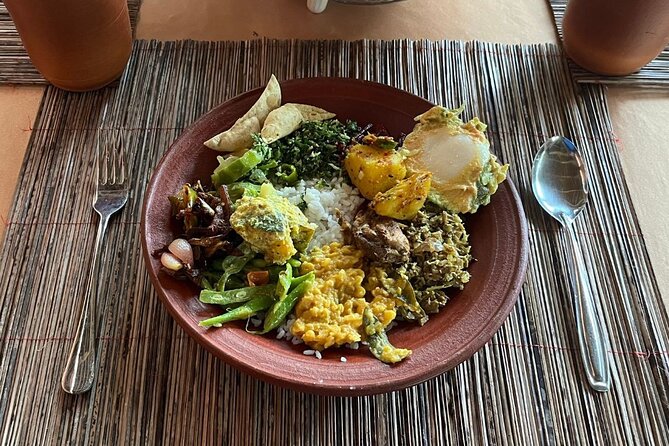
Sri Lankan food is built around bold spices, coconut, rice, and patient cooking, and this private, hands-on class lets you work with those basics instead of simply eating the finished dishes. You’ll prepare favorites such as egg hoppers, coconut sambol, dhal curry, kottu roti, and rice with curry in a traditional-style kitchen in Kandy.
I like the choice of adding a local market visit, where you can select seasonal produce and learn how ingredients fit into Sri Lankan cooking. I also like the friendly teaching team, with Anu, Upul, Asha, and family members named as hosts. The main consideration is time: at about two and a half hours, this is a focused class rather than a long food tour, and the market visit may make the schedule feel tighter.
Key points at a glance
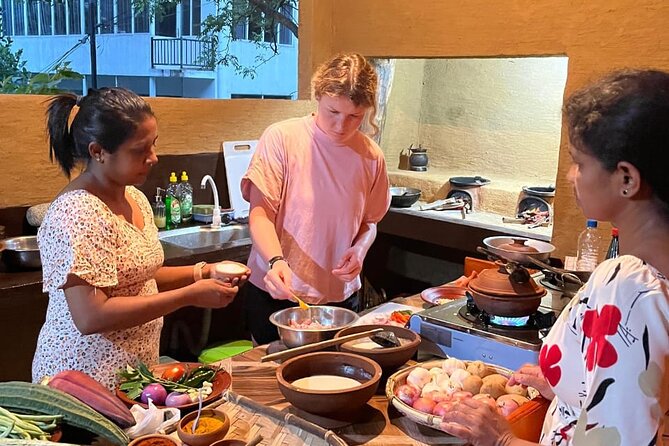
- Cook several Sri Lankan staples: Prepare egg hoppers, coconut sambol, dhal curry, kottu roti, and rice and curry dishes.
- Choose the market option: Shop for fresh vegetables and other ingredients with your host before cooking.
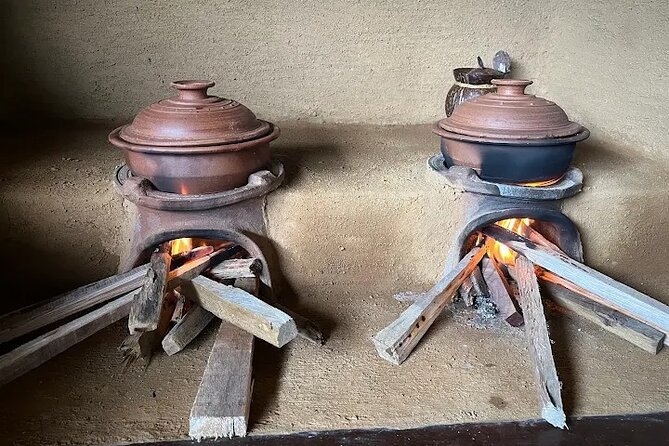
- Work in a traditional-style kitchen: The class centers on practical preparation rather than a demonstration from a distance.
- Learn from local hosts: Anu, Upul, Asha, and family members are connected with the teaching experience.
- Eat what you prepare: The class finishes with a shared meal, traditional tea, and local sweets.
- Good value for private groups: At $22 per person, the price includes a personal cooking session, food, and recipes to recreate at home.
What the Kandyan Hut class is really about
A cooking class can be a quick recipe lesson, or it can give you a better way to understand a place. Kandyan Hut aims for the second option through ordinary ingredients and familiar home-style dishes.
Sri Lankan cooking often gets its character from the balance of spice, coconut, heat, and texture. You are not just learning how to make one special dish. You are seeing how several parts of a meal work together, from a creamy dhal curry to a sharp coconut sambol and a rice-based main course.
The class takes place at Kandyan Hut Cooking Class, at No. 662/3A Peradeniya Road in Kandy. The activity begins and ends there, which keeps the day simple. It is near public transportation, so you do not need to build a complicated transfer plan around it.
The activity lasts about two hours and 30 minutes. That is enough time for a proper cooking session and meal, but you should not expect a full-day food program. If you select the market visit, allow for the extra stop and the time needed to choose ingredients.
A few more Kandy trips to weigh up
- Kandy Village Cooking Class
★ 5.0 · 536 reviews - Private Traditional Sri Lankan Cooking Class in Kandy with Hotel Transfers
★ 5.0 · 115 reviews - Cooking With Village Family
★ 5.0 · 104 reviews
Starting with spices and fresh ingredients
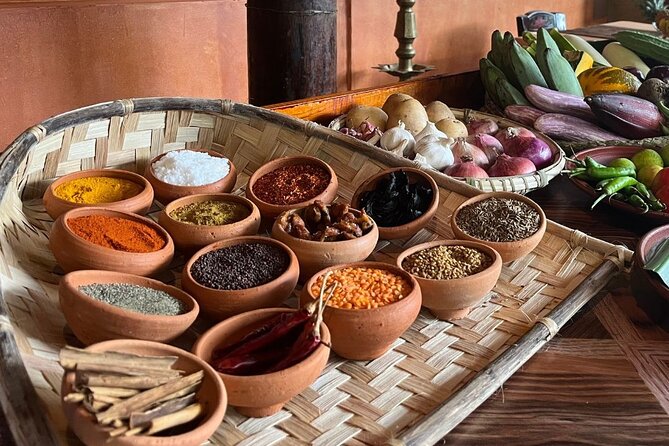
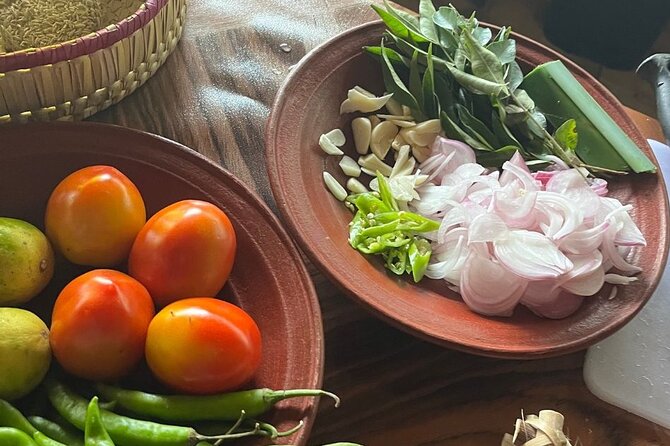
The class begins with an introduction to the ingredients that give Sri Lankan food its character. The supplied details do not list every spice used, so I would expect the focus to stay on the produce and seasonings needed for the selected recipes rather than a large formal spice lecture.
That practical approach is useful. You learn what goes into the food you are about to prepare, then use those ingredients straight away. It is easier to remember the role of a spice when you have smelled it, handled it, and tasted it in the finished dish.
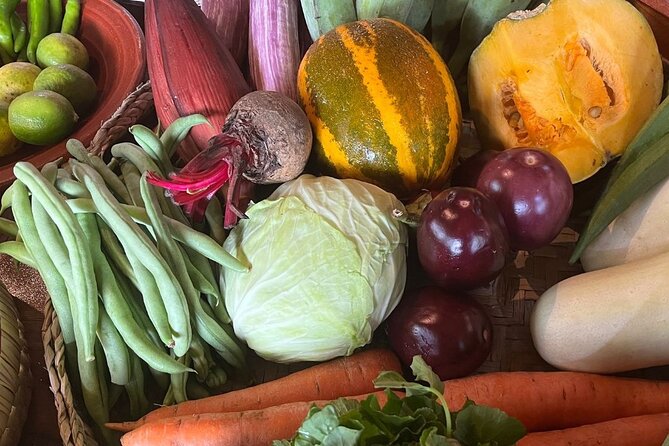
If you choose the market visit option, you go with your host to a local market and select seasonal produce. This gives the class a stronger connection to daily life in Kandy. You can also learn why certain vegetables and ingredients matter in local cooking, rather than treating the market as a quick photo stop.
The market portion is optional, so it may suit you if you want a little more cultural context before cooking. If you mainly want to make food, the class itself is the central part of the booking. Ask at the time of booking or before the start how the market option affects your start time and recipe choices, since the supplied information does not give a separate schedule.
Entering the traditional-style kitchen
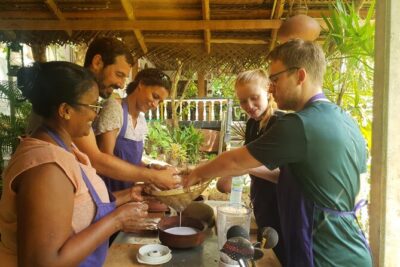
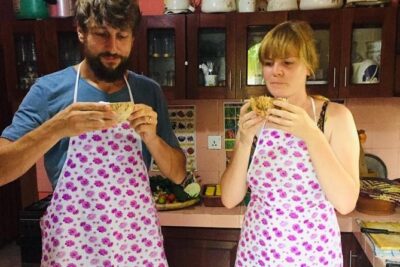
Back at Kandyan Hut, you are welcomed into a traditional-style cooking space. The teaching is described as step by step, with local cooks showing you how to prepare each dish.
That matters for beginners. Sri Lankan cooking can look simple on the plate, yet the order of preparation affects the result. A class that lets you follow each stage is more useful than one where the cook does most of the work while you watch.
The class is a private activity, so only your group takes part. This is one of its strongest practical features. You can ask questions at your own pace, spend more time on a technique that feels new, and keep the session focused on the dishes your group wants to understand.
The available information names Anu and a sister-in-law as patient and friendly teachers. Other comments refer to Upul and his wife Asha, as well as the wider cooking team. Since several family members and local hosts are involved, the exact person leading your session may vary.
Egg hoppers, kottu, and coconut sambol
Egg hoppers are one of the most appealing dishes on the menu. These bowl-shaped pancakes are a classic Sri Lankan food, and the egg cooked in the center makes them more than a plain breakfast bread. Preparing them gives you a chance to learn a technique that depends on shaping and cooking, not just mixing ingredients.
Kottu roti brings a different kind of lesson. The dish is made from chopped flatbread combined with other ingredients, and its preparation is part of the lively food culture associated with Sri Lanka. The class description includes kottu roti among the dishes you may prepare, though the exact menu can depend on the session.
Coconut sambol provides contrast. It brings coconut into the meal in a fresh, strongly seasoned form rather than as a smooth curry. It is also a useful recipe to take home because it can change the feel of a rice and curry plate with only a few ingredients.
Dhal curry is another key part of the class. Its creamy texture shows how coconut and spices can turn a simple pulse into an important part of a full meal. Along with aromatic rice and other curries, it gives you a clearer idea of how Sri Lankan food is usually enjoyed as a group of dishes rather than one large main course.
Same island, a completely different kind of day:
- Kandy Private Guided City Tour by Tuk Tuk
★ 4.9 · 1,307 reviews - From Kandy: Sigiriya Rock & Dambulla Cave Temple Adventure
★ 4.9 · 785 reviews - Kandy to Ella Train Tickets – Reserved Seats
★ 4.5 · 523 reviews - From Kandy: Pinnawala Day Tour
★ 4.8 · 331 reviews
Cooking with stories, not just instructions
The hosts also explain the background and customs connected with the recipes. This is where the class gains value beyond a standard recipe lesson.
Food traditions make more sense when you understand how dishes fit into family meals and local routines. The class is described as friendly and home-style, so you should expect the emphasis to be on shared knowledge and practical cooking rather than formal culinary-school technique.
The reviews supplied for this experience repeatedly praise the patience, kindness, and friendly manner of the teaching team. One family found the preparation especially enjoyable because everyone could take part. Another group of visitors from Australia was pleased with the lesson and the work of Upul and Asha.
Those details suggest that the class works well for mixed-age groups and people with different levels of kitchen experience. Still, the information does not state the minimum age, dietary arrangements, or exact number of participants. If those points matter to you, contact Kandyan Hut before booking.
Sitting down to a meal you prepared
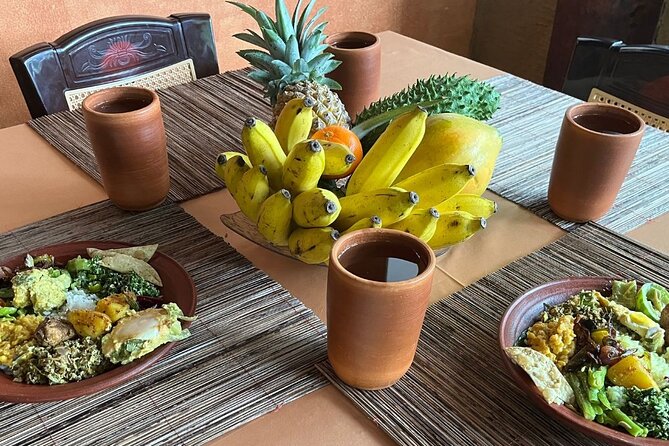
After the cooking, you eat the food together in a relaxed, home-style setting. This is not just a convenient ending. Tasting the dishes as a complete meal helps you understand how the flavors balance each other.
You can compare the creamy curry with the sharper sambol, try the rice alongside the other dishes, and see how the different textures work on the same plate. The shared meal also gives you a natural chance to ask final questions while the recipes are still fresh in your mind.
Traditional tea and local sweets are included in the food experience. They provide a small finish after the savory dishes and give you another taste of local hospitality.
The meal is prepared by the group, so the result may not look like a restaurant plate. That is part of the appeal, but it is also worth keeping expectations realistic. You are paying for participation, instruction, and a cultural setting, not for a polished fine-dining service.
What you take home besides a full stomach
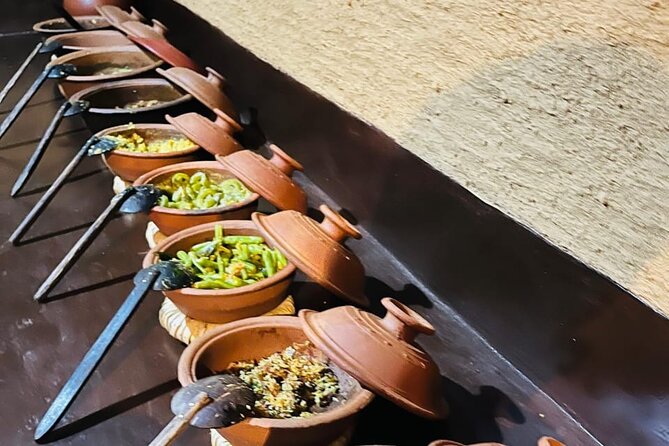
The class provides recipes for you to use later. This is important because a cooking class has limited value if everything depends on ingredients or tools you cannot remember once you leave Sri Lanka.
You will not recreate every local detail perfectly in another country. Some produce and spice blends may differ, and the exact kitchen setup at home may not match Kandyan Hut. Even so, the recipes give you a practical starting point for making coconut sambol, dhal curry, egg hoppers, or a rice and curry meal.
I would bring a phone or small notebook if you like recording cooking notes, though the provided information does not specifically state that photography or note-taking is arranged. Pay attention to the order of steps and the texture the cook is aiming for. Those details can be more useful than a list of ingredients alone.
The class may also change how you shop for Sri Lankan food later. After seeing fresh produce selected at a market and used in a meal, you have a better sense of which ingredients are essential and which substitutions may be possible.
Is $22 good value in Kandy?
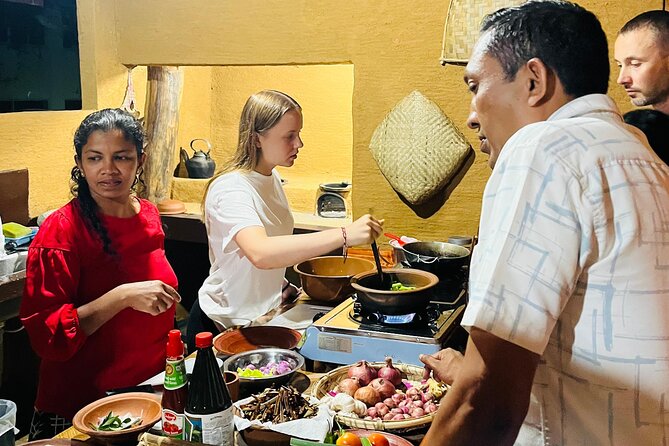
At $22 per person, the class is priced reasonably for a private two-and-a-half-hour activity that includes cooking, eating, tea, sweets, and recipes. The price becomes especially attractive if you value personal attention and want more than a restaurant meal.
A private format normally gives you more room to ask questions than a large group class. Here, it also means your group can share the meal together without being mixed with other bookings. For couples, families, and small groups, that personal setting can justify the cost.
The value is less clear if you only want to watch someone cook or if you already prepare Sri Lankan food often. You are paying for the activity as much as the food. If your time in Kandy is short, compare this with simply eating at a local restaurant. The class costs more than one casual meal, but it gives you skills and recipes to use later.
The market option may add to the experience, but the supplied price does not say whether it has a separate charge. Confirm that point if the market visit is important to your budget.
Who will enjoy this cooking class most?
I would recommend Kandyan Hut to you if you want a direct, practical way to connect with Sri Lankan food. It suits curious eaters, home cooks, families, and private groups who prefer doing the work themselves.
It is also a good choice after arriving in Kandy. Learning the basics early in your stay can help you recognize dishes on restaurant menus and notice ingredients at markets and food stalls later.
The class may suit you less if you want a highly structured professional kitchen, advanced cooking theory, or a long market tour. The available details point to a warm, local, home-style lesson rather than a formal chef-training course.
The private setup is helpful for families and groups with mixed interests. One person can focus on the curry, another on the hoppers, and everyone can share the finished meal. The activity does not list accessibility details, so contact the provider if you have mobility or other practical needs.
Timing, meeting point, and cancellation
The class begins and ends at Kandyan Hut Cooking Class, No. 662/3A Peradeniya Road, Kandy 20000. Its listed operating hours are 9:00 AM to 10:00 PM daily for the stated booking period from July 18, 2025, through November 26, 2026.
Because the activity runs for about two hours and 30 minutes, check the start time carefully if you have a train, temple visit, or other Kandy plans afterward. The market option may require additional coordination.
A mobile ticket is provided, and confirmation is received at booking. Free cancellation is available if you cancel at least 24 hours before the local start time. Cancellations or changes made within 24 hours are not refunded or accepted.
Should you book the Kandyan Hut Cooking Class?
Book it if you want to do more than sample Sri Lankan food. The combination of a private group, local instruction, optional market shopping, several classic dishes, and recipes to take home gives you a useful two-and-a-half-hour window into everyday cooking in Kandy.
I would choose the market option if you have enough time and want the food lesson tied to local produce. I would skip that addition if your schedule is tight and concentrate on the kitchen session.
At $22 per person, this is a sensible buy for families, couples, and small groups who enjoy active experiences. It is not the right choice for a passive food tasting or a serious professional cooking course. For most curious visitors, though, it offers a friendly meal, practical skills, and a better understanding of why Sri Lankan food tastes the way it does.
FAQ
Where does the Kandyan Hut Cooking Class take place?
The class takes place at Kandyan Hut Cooking Class, No. 662/3A Peradeniya Road, Kandy 20000, Sri Lanka.
How long does the cooking class last?
The activity lasts approximately two hours and 30 minutes.
What dishes can I learn to prepare?
The class includes dishes such as egg hoppers, kottu roti, coconut sambol, dhal curry, and aromatic rice and curry combinations.
Is a market visit included?
A local market visit is available as an option. With your host, you can select seasonal produce and learn about its cultural importance before returning to cook.
Is this a private activity?
Yes. Only your group participates in the activity.
What is the price?
The listed price is $22 per person.
Can I cancel for a refund?
You can receive a full refund if you cancel at least 24 hours before the experience start time. Cancellations or changes made less than 24 hours in advance are not refunded or accepted.
Just added around Kandy
- Kandy to Nuwara Eliya Private Day Tour★ 5.0 · 21 reviews
- Nuwara Eliya Highlands from Kandy★ 5.0 · 9 reviews
- Kandy to Sigiriya and Dambulla Private Day Tour★ 5.0 · 5 reviews
- Kandy to Nuwara Eliya Day Trip – Little England & Tea Country★ 5.0 · 24 reviews
- Polonnaruwa Day Tour with Lunch by Mahaweli★ 5.0 · 6 reviews
- Day Tour to Polannaruwa from Kandy by Lux Tours Lanka★ 5.0 · 3 reviews
- World Heritage Sigiriya and Dambulla Day Tour★ 5.0 · 11 reviews
- Private Full Day Tour to Nuwara Eliya from Kandy★ 5.0 · 16 reviews
Cooking Classes, compared.
Organic cooking class sigiriya (kumara & family)
Read our review →
Sri Lankan Cooking Class with Neranji at Homestay
Read our review →
Browse the lists this tour appears in