
Reviewed · COOKING CLASSES
Ella : Cooking class with amazing Spice Garden Tour
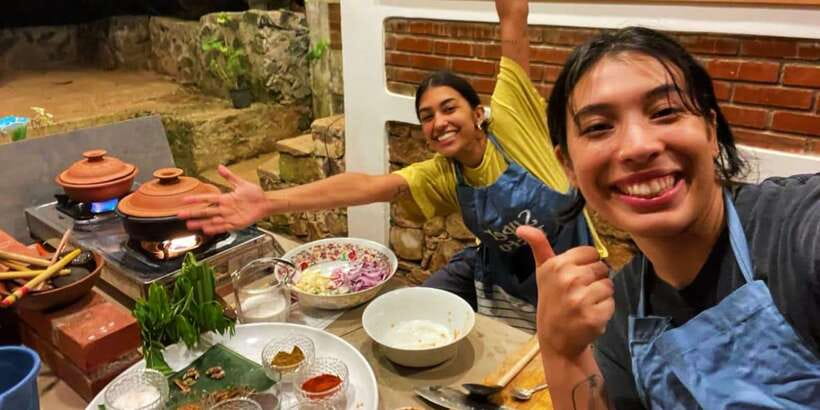
The best part of this Ella experience is the link between plants in the garden and food on your plate. You see cinnamon, vanilla, nutmeg, clove, cacao, curry leaves, and other plants growing, then use Sri Lankan ingredients in a working local kitchen.
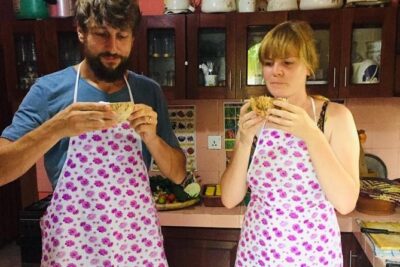
I like the hands-on preparation and the generous final meal served on banana leaves. I also like the small groups, capped at eight, which makes it easier to ask questions and take part. The one thing to keep in mind is that some people do more chopping, stirring, and tasting than actual cooking, depending on the group and the dish.
Key points at a glance
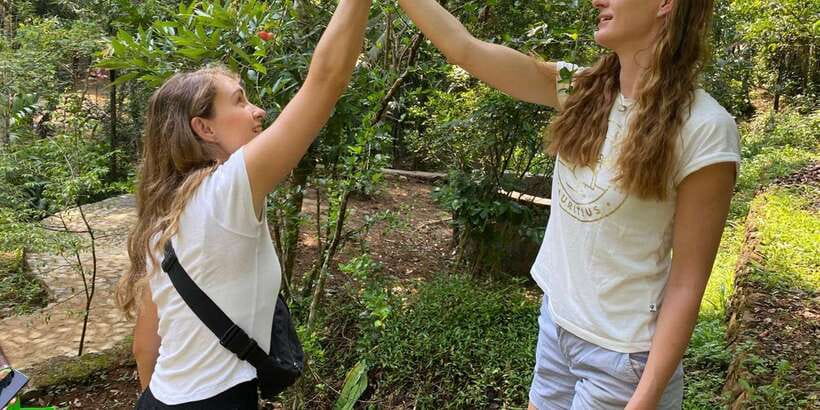
- A two-and-a-half-acre food garden: Explore more than 100 spice, fruit, herb, and medicinal plants with a guide such as Sam, Senaka, or Upulu.
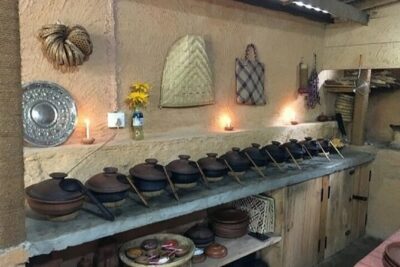
- Traditional fireplace cooking: Prepare Sri Lankan dishes in a local kitchen rather than watching a polished hotel demonstration.
- A full curry spread: Cook rice, several curries, coconut sambol, banana chips, and papadam, then eat the meal together.
- Fresh coconut milk by hand: Learn a basic Sri Lankan technique that gives the class a strong sense of place.
- Flexible for plant-based diets: Vegetarian and vegan dishes can be arranged when needed.
- Strong value at $32: Four hours, a garden tour, refreshments, dessert, the meal, recipes, and a small-group setting are included.
Why the garden makes this cooking class different
Ella has no shortage of cooking classes, but this one begins outdoors among the ingredients. That matters. Instead of hearing a list of spice names in a classroom, you can see how the plants grow and learn how the same ingredient may be used in cooking or traditional medicine.
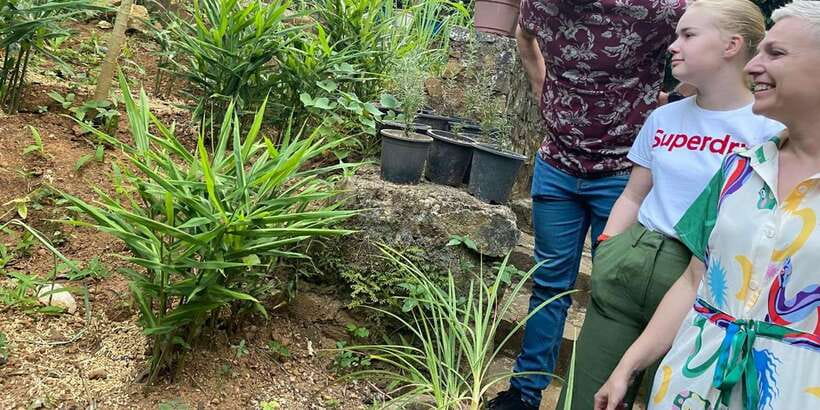
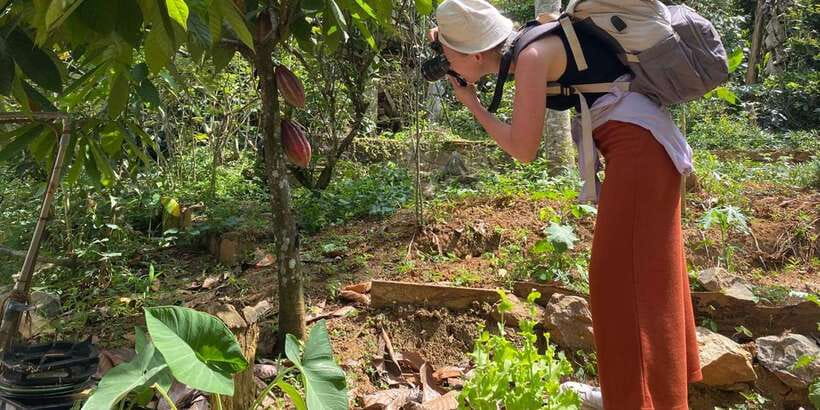
The garden covers about 2.5 acres and contains more than 100 plants. It is described as Ella’s largest spice garden, though the experience feels broader than a spice-only visit. Expect fruit trees, herbs, roots, cacao, vanilla, avocado, garcinia, curry leaves, nutmeg, cloves, and cinnamon alongside the usual cooking spices.
The guide explains the plants one by one. You may be invited to smell, touch, or taste some of the ingredients, which helps turn an abstract spice lesson into something memorable. Cinnamon is especially interesting when you understand that the familiar rolled sticks come from the bark of a living plant. Vanilla and cacao also gain new meaning when you see them at their source.
I would allow the full hour for the garden walk. It is not just a quick introduction before the real activity. Several of the strongest parts of the experience come from seeing the garden as a working source of food and herbal knowledge.
The setting also gives the class a calmer start. You are outside, moving through plants, asking questions, and learning the vocabulary of Sri Lankan cooking before you begin chopping. Bring mosquito repellent if your timing reaches sunset, as one useful tip from the experience makes clear.
A few more Ella trips to weigh up
- Ella: Traditional Sri Lankan Cooking Class
★ 4.9 · 788 reviews - Ella: Sri Lankan Cooking Class with Neranji at Homestay
★ 5.0 · 276 reviews - Ella Sri Lanka : Mom’s Kitchen Cooking class
★ 5.0 · 113 reviews
Meeting Sam, Senaka, Upulu, and the cooking team
The exact host can vary, but names connected with the experience include Sam, Senaka, and Upulu. Nalini is also praised as a patient cooking teacher, while Lahiru helps keep the session moving and the work area tidy.
That family feel is part of the appeal. The garden is family-run, and the cooking takes place in a local kitchen rather than a large commercial venue. The tone is friendly and informal. You are encouraged to ask questions, work with other people, and learn how food fits into daily Sri Lankan life.
English is the teaching language. The guides explain the spices, preparation methods, and dishes in English, and the small group format helps if you want more detail. With a maximum of eight participants, you are less likely to disappear into the back row than in a large demonstration.
The group setting is worth noting. You cook with people you may not know, then sit down to share the finished food. That social part is not an extra decoration. It is one reason the class feels more like a family meal than a formal lesson.
The three-hour kitchen session
After the garden tour, the class moves into the cooking section, which takes roughly three hours. You work through several dishes, usually beginning with preparation and then moving to the fireplace as each recipe comes together.
The menu includes:
- White rice
- Pumpkin or dhal curry
- Potato milk curry
- Mushroom curry
- Green bean curry
- Chicken curry
- Coconut sambol
- Crispy banana chips
- Papadam
The wording of the menu allows some variation. Pumpkin or dhal may be used depending on what is available, and vegetarian or vegan alternatives can be arranged. A chicken dish is normally part of the spread, but it can be replaced, as one class did, with an omelette for a vegetarian participant.
You will wash and cut ingredients, help season the curries, stir, taste, and follow the cooking sequence. The instruction is designed for beginners, so you do not need advanced kitchen skills. The teachers explain why ingredients are added at different points and how spices affect the final taste.
It is useful to set your expectations correctly. This is hands-on, but it is also a group class. You may not personally cook every stage of every dish. Some participants take on more preparation while others stir, taste, or watch a technique. If you want a private lesson where you control each pan from start to finish, this may feel less intensive.
For most people, the group approach is a fair trade. You get to see a wide range of dishes without having to make each one alone, and the teacher can keep several curries moving at once.
Making coconut milk and sambol by hand
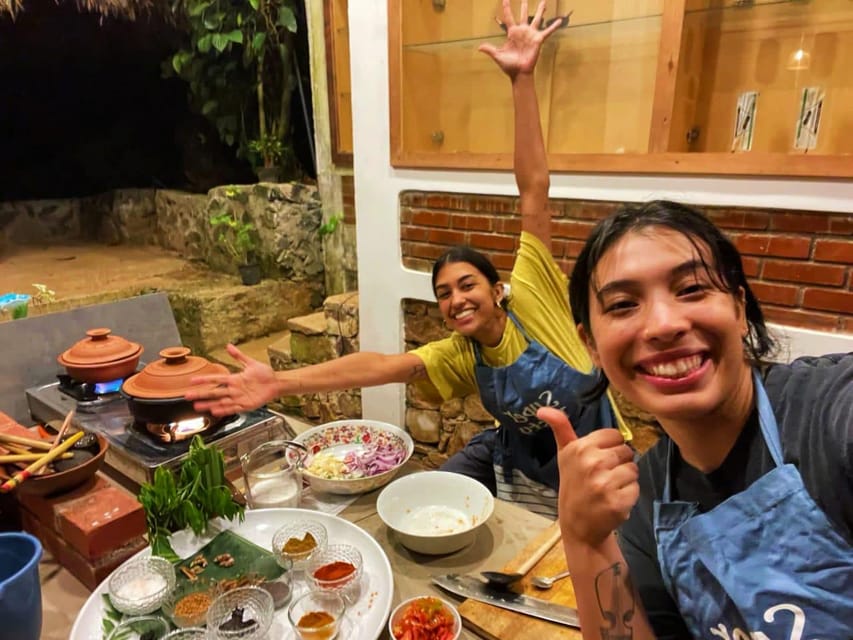
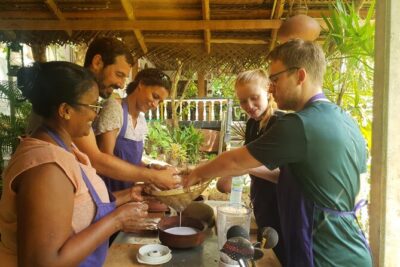
One of the most memorable tasks is preparing fresh coconut milk by hand. This simple step shows how much work can sit behind a dish that arrives at a restaurant table in a small bowl.
You also make coconut sambol, a fresh side dish with a sharp, cooling contrast to the curries. The class shows how coconut is used in several ways, not only as a sweet ingredient. It becomes part of sauces, accompaniments, and the texture of the meal.
The banana chips are another popular part of the session. You work with fresh bananas, prepare them for frying, and serve them alongside sambol and curries. Papadam adds crunch, while the rice gives the meal its base.
The class is not built around rare or difficult equipment. Its value comes from the ingredients, the order of preparation, the fireplace, and the explanation of local methods. That makes the recipes more realistic to recreate at home.
Same island, a completely different kind of day:
- Ella: Drop to Tangalle/Hiriketiya/Mirissa/Galle & Yala Tour
★ 4.9 · 518 reviews - Ella: Little Adam’s Peak, Nine Arches Bridge & Waterfalls
★ 4.9 · 402 reviews - ELLA: Drop to Tangalle/Hiriketiya/Mirissa/Galle & Yala Tour
★ 4.1 · 336 reviews - From Ella: Drop to Tangalle/Hiriketiya/Mirissa & Yala Safari
★ 4.8 · 296 reviews
What the meal is like at the end
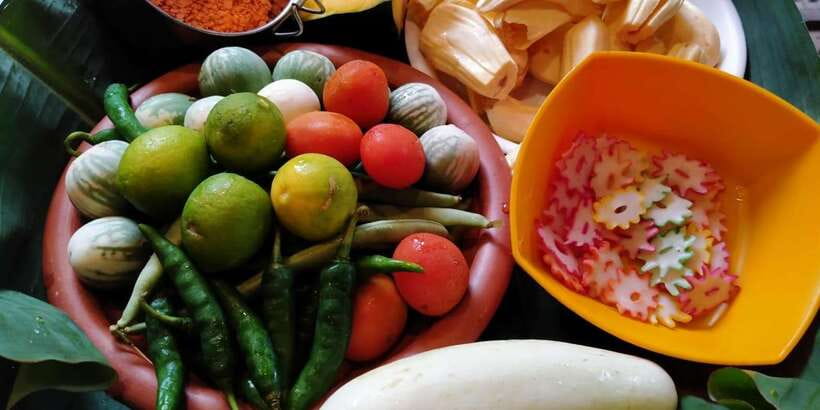
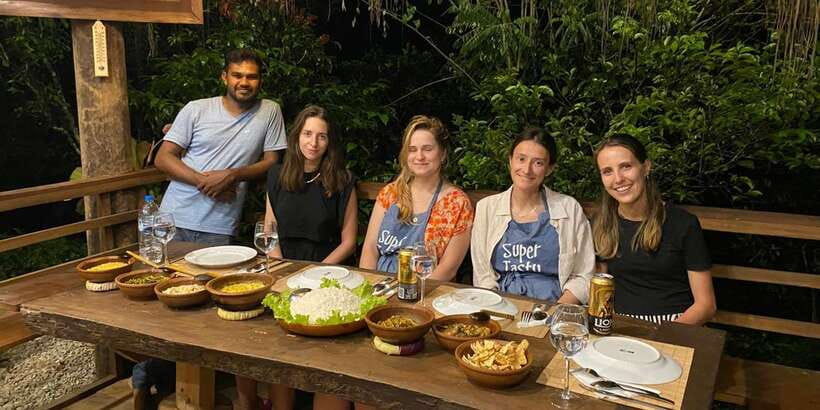
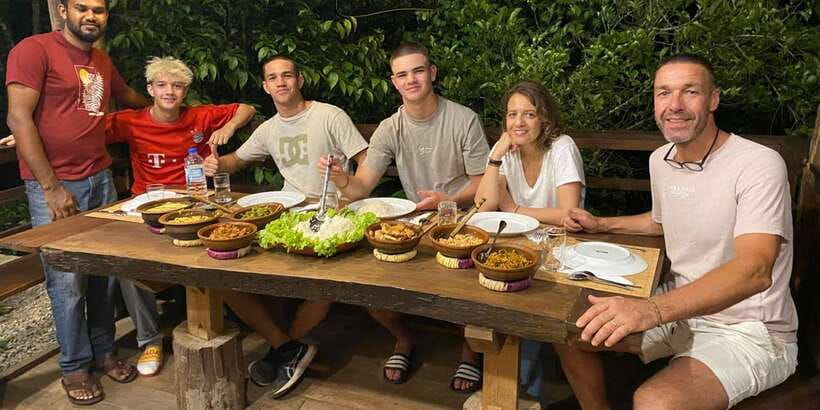
At the end, the food is served on banana leaves. You sit down with the group and eat what you helped prepare, usually with a substantial selection of curries, rice, sambol, banana chips, and papadam.
The amount of food is generous. Several dishes mean you can compare textures and levels of heat rather than eating one curry with rice. The menu also gives you a good introduction to the Sri Lankan habit of combining several small portions into one meal.
Spice levels can be adjusted. This is important if you enjoy flavor but are cautious with chilli. The teachers can adapt the food to the group, and plant-based diners have options. Still, you should tell the team about dietary needs before cooking begins so the menu can be planned properly.
Dessert is included, though the specific dessert is not stated. A refreshment is also part of the experience. Free Wi-Fi is available at the venue, including Starlink Wi-Fi, but I would treat that as a useful extra rather than a reason to book a food class.
Is $32 good value for four hours?
At $32 per person, this is strong value if you want more than a quick cooking demonstration. The price includes about one hour in the garden, roughly three hours of cooking, a refreshment, the meal, dessert, a recipe PDF, and access to the spice showroom.
You are paying for several connected experiences rather than one activity. A garden visit alone would give you information but no practical kitchen work. A cooking class alone would teach recipes but not show where the spices grow. Together, the two parts explain both the ingredients and their use.
The small group matters too. Eight is the maximum, and groups can be smaller. A class of four or five gives you more opportunities to work directly with the teacher. A full group may mean more waiting during shared tasks, but it can also make the meal more social.
There are a few possible additional costs. Pickup can be arranged from elsewhere for a reasonable price, but the exact amount is not provided. Spices are also available to buy in the showroom. That is optional, but it can be handy if you want vanilla, cinnamon, or other ingredients for home cooking.
The four-hour duration makes this a substantial half-day or evening plan. Do not place it beside another tight appointment. Cooking several curries takes time, and the final meal is part of the experience, not something to rush through.
Who will enjoy this most?
I would recommend it to you if food is one of the main reasons you visit Sri Lanka. It suits curious home cooks, beginners, vegetarians, vegans, couples, families with older children, and solo visitors who enjoy meeting people around a shared table.
Garden lovers should pay special attention. The plant tour is unusually important here, and the garden is much more than a short row of labelled herbs. If you want to understand how local ingredients grow, this is a better choice than a cooking class held entirely indoors.
It also works well for people who want an easy cultural activity in Ella. You learn about home cooking, herbal uses, local ingredients, and shared meals without needing a full-day excursion.
You may want to choose another class if your main goal is to cook every dish independently. The group format means shared tasks, and the teaching style includes demonstration, preparation, tasting, and observation. It is practical, but not a private chef apprenticeship.
The class can also be a good rainy-day option, though the garden portion may be less comfortable in poor weather. One session continued during difficult weather and the team helped arrange a safe return, but transport and weather arrangements should be confirmed directly.
Practical advice before you book
Plan on four hours from start to finish. Starting times vary, so check availability before you choose the day.
Wear clothes and shoes suitable for a garden walk and kitchen work. Mosquito spray is a smart addition if the class runs into the evening or sunset.
Tell the team in advance if you need vegetarian or vegan food. The menu can be adjusted, but early notice makes the cooking smoother.
Bring an appetite. The final spread is large, and the meal is one of the main rewards of the session. You may also want room in your bag for spices from the showroom.
Pickup is available from elsewhere for an additional reasonable price. If you are staying outside central Ella or expect the class to finish after dark, ask about transport when booking rather than leaving it until the end.
The cancellation policy is friendly: you can cancel up to 24 hours ahead for a full refund. You can also reserve and pay later, which helps if your Sri Lanka route is still changing.
Should you book this Ella cooking class?
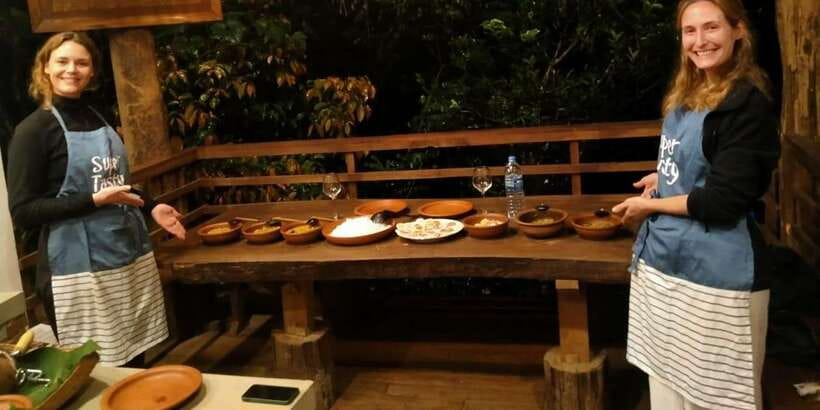
Book it if you want a food class with a real sense of place, not just a chef preparing curry in front of you. The garden, fireplace kitchen, fresh coconut milk, group meal, and recipe PDF create a full experience for $32.
I especially recommend it to first-time visitors who want to understand Sri Lankan spices before tasting them. The garden walk gives the cooking context, while the meal lets you enjoy the results without a long wait for restaurant service.
Skip it only if you dislike group cooking, have very limited time, or expect to personally prepare every part of every dish. For everyone else, this is a generous, friendly, useful way to spend four hours in Ella, with enough practical knowledge to bring the flavors home.
FAQ
How long does the spice garden and cooking class take?
The full experience lasts four hours. The garden tour takes about one hour, followed by a cooking class of roughly three hours.
How much does the experience cost?
The listed price is $32 per person.
How many people are in each group?
The activity is limited to eight participants. Some sessions may be smaller.
What language is used during the class?
Instruction is provided in English.
Which dishes will I cook?
The menu includes white rice, pumpkin or dhal curry, potato milk curry, mushroom curry, green bean curry, chicken curry, coconut sambol, crispy banana chips, and papadam. The exact menu may vary.
Are vegetarian and vegan dishes available?
Yes. Vegetarian and vegan dishes can be arranged when needed.
Is the meal included?
Yes. You eat the food prepared during the class, served on banana leaves. Dessert and a refreshment are also included.
Can I learn how to make coconut milk?
Yes. Preparing fresh coconut milk by hand is part of the cooking experience.
Is pickup available?
Pickup can be arranged from anywhere for a reasonable additional price. The exact cost is not specified, so ask when booking.
Just added around Ella
- Zip Lining in Ella★ 4.5 · 16 reviews
- YALA BLOCK 5 & 6 (Weheragala & Lunugamwehera) Safari Tour★ 4.8 · 30 reviews
- Yala Block 5: Private Morning or Evening Safari★ 4.3 · 4 reviews
- Sri Lanka private tour package 10 Days. and luxury hotel★ 5.0 · 3 reviews
- Sri Lanka Private 10-Day Round Tour Car, Guide, Hotels, Food★ 4.8 · 10 reviews
- Private cooking class – Personalized classic menu★ 5.0 · 5 reviews
- Haputale:Glorious Tuk Tuk Ride to Lipton’sSeat & Tea Factory★ 5.0 · 6 reviews
- Get a private driver for day tours around Sri Lanka★ 5.0 · 18 reviews
Cooking Classes, compared.
Organic cooking class sigiriya (kumara & family)
Read our review →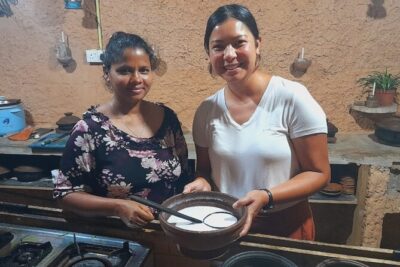
Sri Lankan Cooking Class with Neranji at Homestay
Read our review →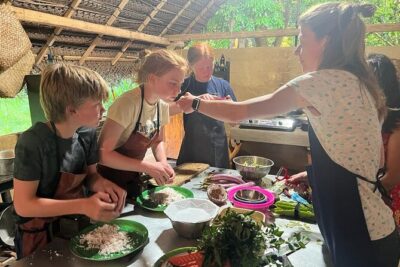
Browse the lists this tour appears in