
Reviewed · COOKING CLASSES
Ella Sri Lanka : Mom’s Kitchen Cooking class
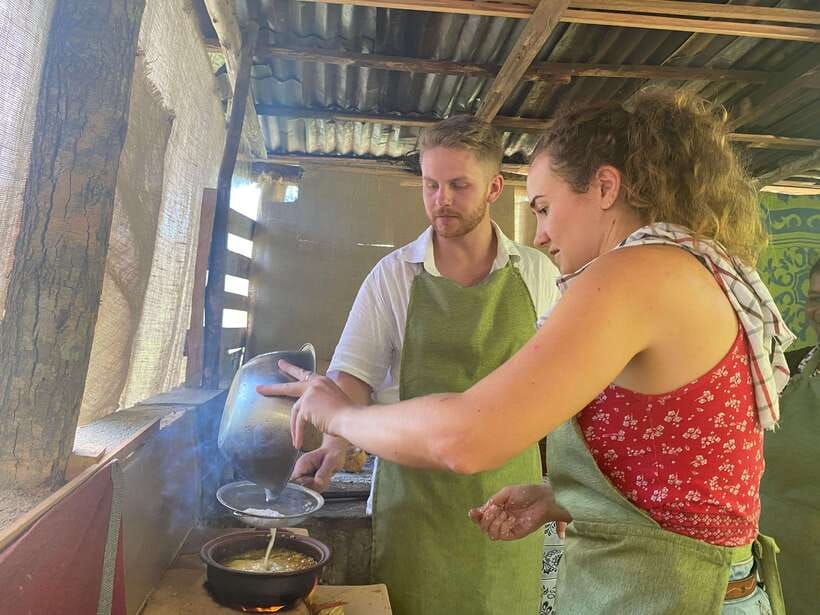
The best part of Mom’s Kitchen is the setting: you cook in a family outdoor kitchen, using wood fire, stone grinding, fresh coconut, and everyday Sri Lankan ingredients. I like the mother-daughter team of Irosha and Kamala, and I like that the recipes use a short list of spices yet produce several distinct curries.
I also like the small six-person limit, which gives you real jobs instead of watching a demonstration. The one consideration is that this is family-style cooking, not a polished restaurant school. Timing and the exact menu can vary, and an outdoor class may be affected by rain.
Key points at a glance
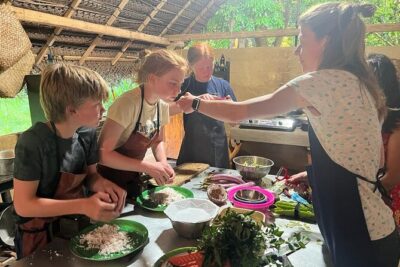
- A real home kitchen: Cook beside Irosha and Kamala in an outdoor space near their home, with views over Ella’s green hills.
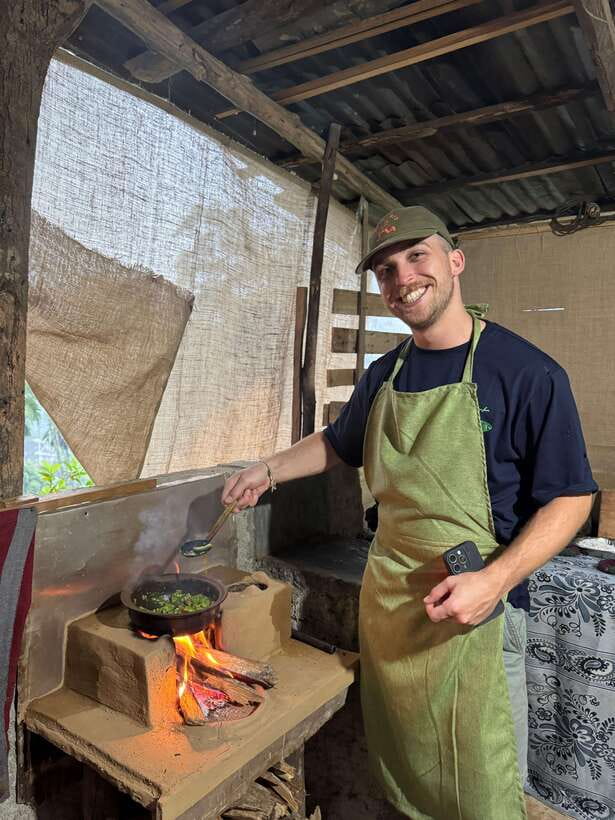
- Traditional methods: Use a wood fire, stone grinding, coconut grating, oil tempering, and hands-on preparation.
- A generous Sri Lankan meal: Prepare several curries, rice, coconut sambol, and papadam, then eat everything together.
- Recipes for your kitchen: Receive the recipes through WhatsApp, with tips designed for cooking at home.
- Small and practical: Groups are limited to six, and the two-hour format keeps the class focused.
- Good value at $20: Ingredients, instruction, and the finished meal are included.
Cooking with Kamala and Irosha near Ella
Mom’s Kitchen is built around a simple idea: learn Sri Lankan food from the people who cook it at home. Kamala brings years of practical experience, while her daughter Irosha explains the process clearly in English and helps connect each step to modern home cooking.
That pairing matters. Kamala can move through familiar recipes by instinct, while Irosha makes the methods easy to follow. You are not left guessing how much spice to use or what a particular cooking sound means. The class has a personal feel, but the instruction remains clear.
The location is outside Ella’s central town area, surrounded by nature rather than traffic and shop signs. The outdoor kitchen has views toward the surrounding hills, and several class times appear to work well for a morning meal or an evening sitting with a view.
The setting is not just decoration. It helps you understand how traditional Sri Lankan food is made. You see ingredients handled in a working kitchen, rather than arranged only for a tourist demonstration. The cooking area has been described as clean and well organized, with careful food handling.
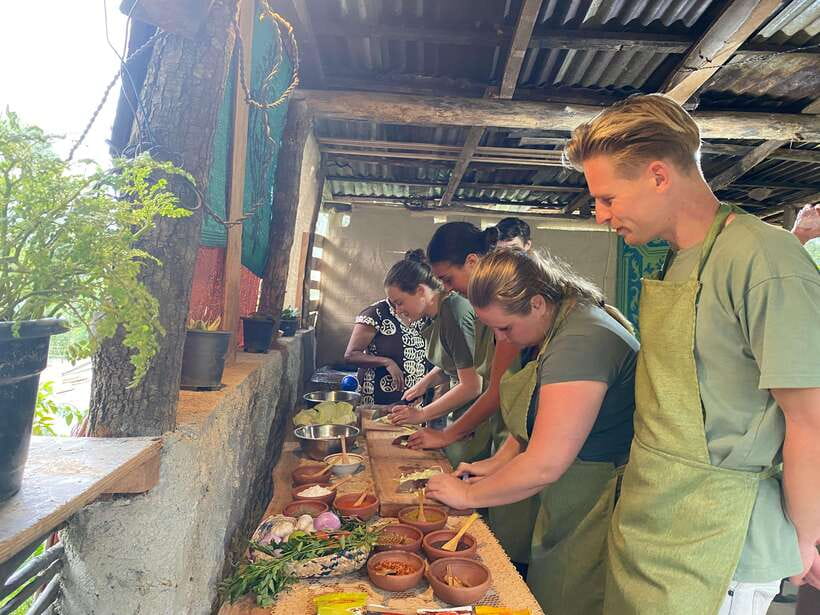
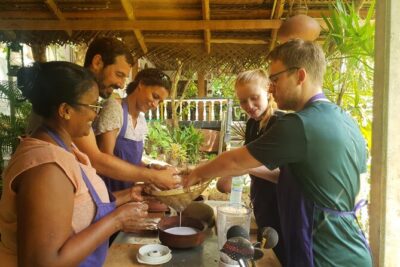
The class is limited to six participants. That is a useful number for this kind of activity. You can chop, peel, wash, grind, stir, fry, season, and taste rather than standing behind a crowd. If only one booking is made, the class may still run, giving you an unusually personal lesson.
A few more Ella trips to weigh up
- Ella: Traditional Sri Lankan Cooking Class
★ 4.9 · 788 reviews - Ella: Sri Lankan Cooking Class with Neranji at Homestay
★ 5.0 · 276 reviews - Ella : Cooking class with amazing Spice Garden Tour
★ 5.0 · 239 reviews
The first steps: ingredients, tools, and local cooking habits
The session begins with an introduction to the dishes and the ingredients. You learn how spices are used, why several curries can taste so different even when they share a similar spice base, and how local techniques affect the final result.
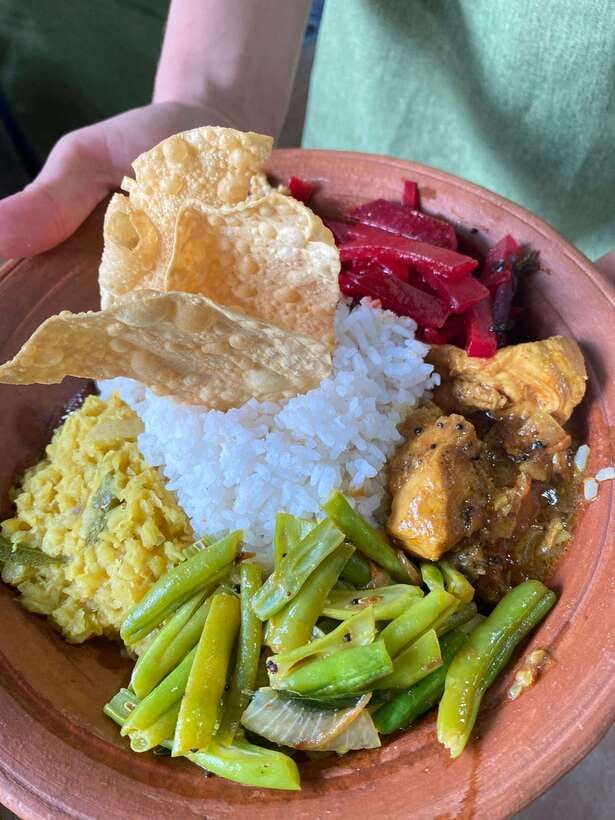
The ingredients are locally sourced and fresh. Specific menus can change, but the classes have included chicken, dhal, beans, beetroot, mango, rice, coconut sambol, and papadam. Some sessions have produced four curries, while others have included five or six.
This variety gives you a useful lesson in Sri Lankan cooking. A curry is not defined only by a single spice mix. The main ingredient, the amount of coconut, the cooking time, the heat, and the order of adding ingredients all shape the result.
You may also learn small tricks that are more useful than a long lecture. The hosts explain how to prepare ingredients efficiently, how to season, how to aromatize oil, and how to work with a modest number of spices. These are the kinds of details that help when you return home and do not have every Sri Lankan ingredient in your cupboard.
The emphasis is practical. You are shown what to do, then asked to do it yourself. That makes the class suitable for beginners, including families and children. A seven-year-old has taken part, and the hands-on format gives younger cooks a clear role.
From fresh coconut to wood fire
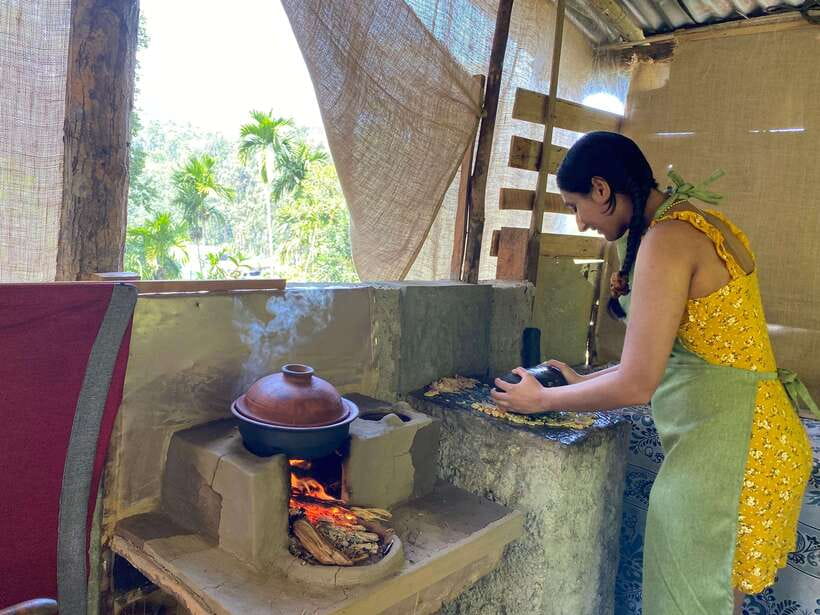
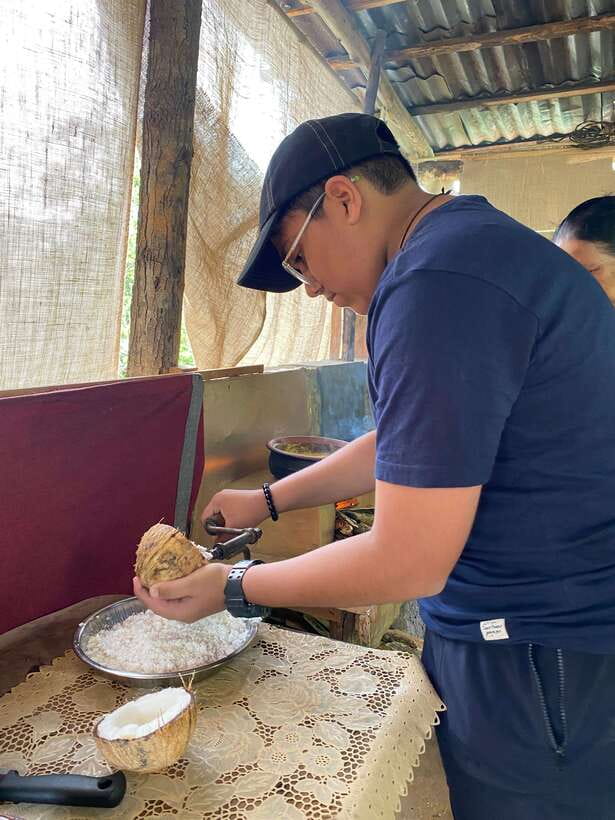
The cooking methods are a major reason to book this class. You may prepare coconut by grating it fresh, grind spices on a stone, and cook over a wood fire as well as gas. These methods take more effort than using an electric hob, but they show how texture, heat, and aroma enter traditional food.
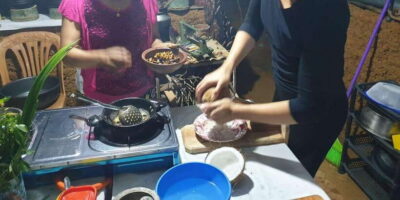
The wood fire adds atmosphere, along with a few practical lessons. You notice how heat must be managed and how ingredients change as they hit hot oil. The smell of garlic, coconut, herbs, and spices becomes part of the class, not just a result served at the end.
You may also use more familiar equipment during the session. That combination is useful because it links traditional cooking with what you can realistically do at home. You do not need to build an outdoor stove to recreate the recipes.
Stone grinding is another memorable part. It gives you a feel for the texture of freshly prepared spices and pastes. It also slows the process enough for you to see why traditional food often depends on preparation, not just a packet of curry powder.
This is not a class where every step is performed for you. You might wash vegetables, peel ingredients, chop, grind, mix, fry papadam, crack and grate coconut, or adjust seasoning. The work is shared across the small group, so you should expect to participate rather than simply take photographs.
Four to six curries, sambol, rice, and papadam
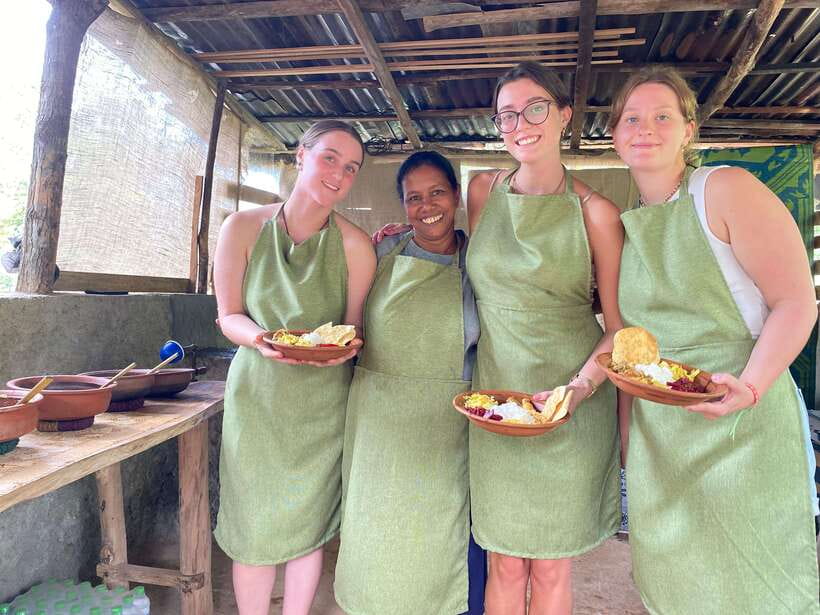
The meal is the heart of the experience. Depending on the menu, you may prepare four to six curries, plus rice, coconut sambol, and papadam. Past combinations have included chicken with vegetable curries such as bean, beetroot, or mango, along with dhal.
The menu offers a good picture of Sri Lankan rice and curry. Instead of one large curry being treated as the whole meal, you build a table of separate dishes. Each one has its own color, texture, heat, and level of sweetness or sourness.
Mango curry is a particularly interesting possibility for anyone who wants something beyond the standard chicken and dhal combination. It shows how fruit can work in a savory Sri Lankan dish. Beetroot and beans offer another useful comparison, since the same broad family of spices can produce very different results.
Coconut sambol brings freshness and bite to the meal. Papadam adds crunch. Rice gives the curries a mild base. These supporting dishes are not filler. Together, they show how a Sri Lankan meal balances soft, crisp, spicy, creamy, and fresh elements.
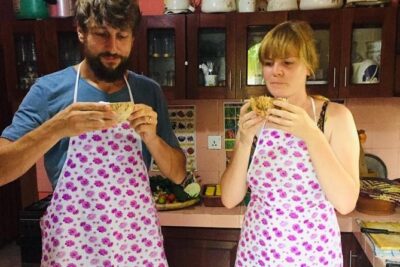
The meal is communal. Once the cooking ends, you sit down with the other participants and eat what you prepared. This gives the class a natural finish and lets you judge the dishes while the instructions are still fresh in your mind.
Portions have been described as generous, so you are unlikely to leave hungry. That is worth noting when you compare the $20 price with a simple cooking demonstration that offers only a small tasting plate.
Same island, a completely different kind of day:
- Ella: Drop to Tangalle/Hiriketiya/Mirissa/Galle & Yala Tour
★ 4.9 · 518 reviews - Ella: Little Adam’s Peak, Nine Arches Bridge & Waterfalls
★ 4.9 · 402 reviews - ELLA: Drop to Tangalle/Hiriketiya/Mirissa/Galle & Yala Tour
★ 4.1 · 336 reviews - From Ella: Drop to Tangalle/Hiriketiya/Mirissa & Yala Safari
★ 4.8 · 296 reviews
Why the recipes work back home
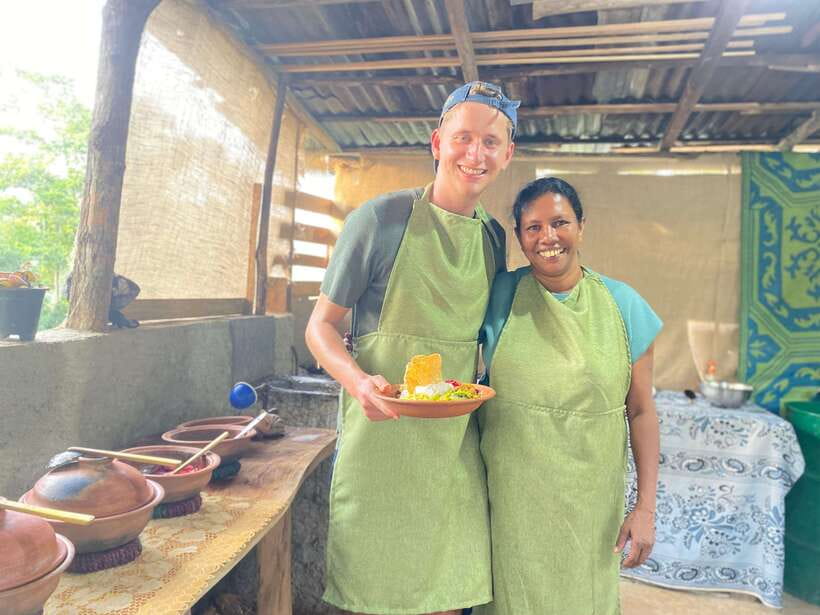
Many cooking classes are enjoyable on the day but difficult to repeat. Mom’s Kitchen tries to avoid that problem by keeping the recipes straightforward and using ingredients that can be adapted to a normal home kitchen.
The main lesson is that you can create several different curries with a relatively small group of spices. The technique changes the result as much as the ingredient list. You learn when to add ingredients, how to heat the oil, how to season, and how to avoid making every dish taste the same.
The hosts provide recipes through WhatsApp after the class. That is a useful touch because you do not have to copy every measurement while also chopping vegetables and watching a pan. You can return to the instructions later and plan a Sri Lankan meal at home.
You should still keep your expectations realistic. The recipes may require coconut, fresh curry leaves, particular vegetables, or spices that are easier to find in Sri Lanka than elsewhere. The class makes the food approachable, but it cannot guarantee that every ingredient will be available in your local shop.
The method is forgiving, though. The repeated use of a core spice set means you can begin with what you have and adjust over time. The tips about preparation and seasoning are likely to be more valuable than a rigid recipe with hard-to-find ingredients.
The view, the weather, and the pace
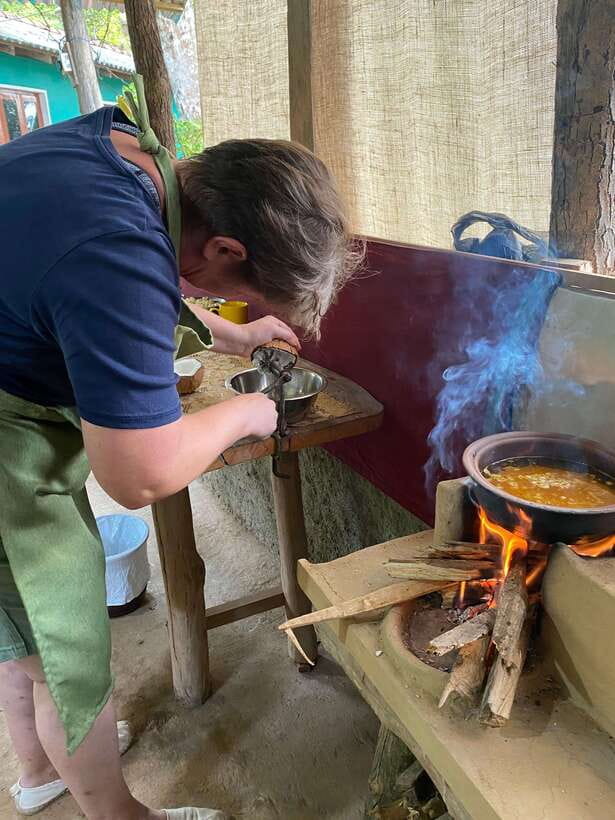
The outdoor kitchen is one of the experience’s strongest features. You cook in a natural setting with a view over Ella, and the meal can feel far removed from the center of town. The atmosphere is relaxed and family-run.
Outdoor cooking also comes with tradeoffs. Rain can affect the setting and the pace. One class continued during torrential rain, but you should be prepared for weather to alter the experience. The cooking area is described as outdoor, so bring practical clothing and accept that this is not a sealed classroom.
Two hours is a good length for a first cooking class. It is long enough to prepare several dishes but short enough to fit around a day of exploring Ella. The pace can feel busy when many dishes are being prepared, yet the small group and clear instructions help keep the work manageable.
The class may suit you best if you enjoy active experiences. If you want a quiet meal with no work, choose a restaurant instead. If you like understanding how food is made and are happy to wash, chop, grind, stir, and taste, this offers much more value.
The $20 price and what you receive
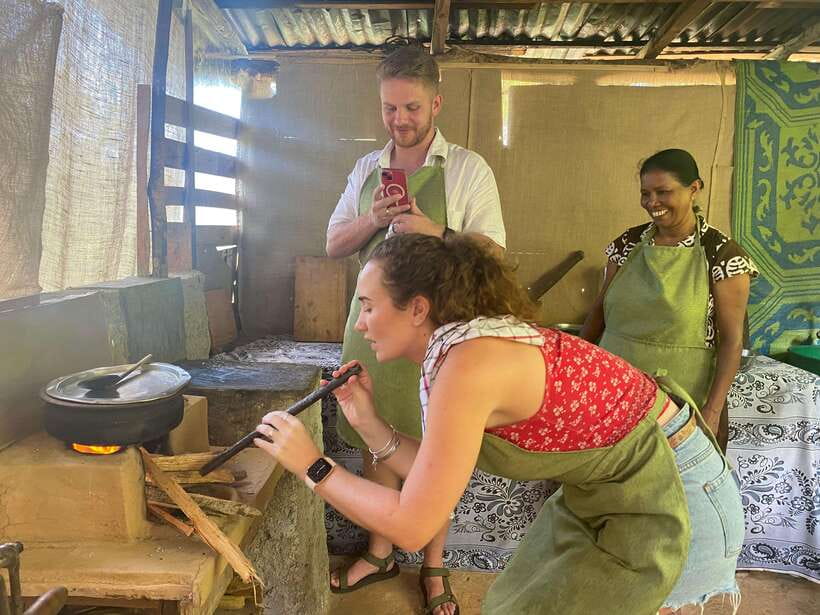
At $20 per person, the class is strong value. You receive two hours of instruction, locally sourced ingredients, several prepared dishes, and a full meal. You also take away recipes and practical cooking advice.
The price is especially fair for small groups capped at six. A larger class could offer a similar menu, but you would have less time with the teachers and fewer chances to handle the ingredients. Here, the instruction is part of the meal, not an extra charge added to a basic tasting.
The value also comes from the personal setting. You are learning in a family kitchen from a mother and daughter, not simply being shown a preset recipe by a rotating instructor. Irosha’s English makes the explanations accessible, and Kamala’s experience gives the cooking a direct link to home tradition.
There are no claims here of luxury or a formal culinary qualification. The benefit is authenticity, participation, and food you can try to make again. That is a better deal for many visitors than a slick class with expensive equipment and little contact with local life.
Free cancellation up to 24 hours before the activity and the option to reserve without paying immediately make it easier to fit into a changing Sri Lankan itinerary. Check the available start times before booking, since the class lasts two hours and the menu may depend on the selected session.
Who should book Mom’s Kitchen?
I would recommend this class to anyone who wants a close look at everyday Sri Lankan cooking. It is particularly good for couples, families, solo visitors, and small groups who prefer doing rather than watching.
It also works well for people who have already eaten several curries and want to understand how the flavors are built. The class shows how one spice base can lead to different dishes, and it covers more than the familiar restaurant version of chicken curry.
Families should consider it, especially if children enjoy practical activities. The hosts are used to involving young participants, and the tasks can be shared according to age and confidence.
You may want to skip it if you need a highly structured professional course, guaranteed air-conditioned comfort, or a fixed menu confirmed in advance. The outdoor family setting is the attraction, but it means the experience is less formal and possibly more affected by weather.
Should you book this Ella cooking class?
Yes, if you want a warm, hands-on introduction to Sri Lankan food at a sensible price. The strongest reasons are the small group, the mother-daughter instruction, the wood-fire and stone-grinding methods, the views, and the chance to eat a substantial meal you helped make.
Book it early if your time in Ella is short, but keep your schedule a little flexible around weather and start times. Bring an appetite, ask questions, and be ready to work. If you do, Mom’s Kitchen offers something better than a quick food stop: you leave with a meal in your memory and recipes you can use at home.
FAQ
Where is Mom’s Kitchen cooking class located?
The class takes place in the Ella area of Sri Lanka, in an outdoor kitchen near the family home and surrounded by nature. It is a little outside Ella’s inner town area and has views of the surrounding hills.
How long does the cooking class last?
The class lasts two hours. Available starting times depend on the date you choose.
How much does the cooking class cost?
The listed price is $20 per person.
What food will I prepare?
Menus can vary, but classes have included four to six curries, rice, coconut sambol, and papadam. Dishes have included chicken, dhal, beans, beetroot, and mango curry.
Who teaches the class?
The class is taught by Irosha and her mother, Kamala. Irosha explains the cooking process in English, while Kamala brings her family cooking experience to the recipes and techniques.
Is the meal included?
Yes. The locally sourced ingredients, cooking class, and meal are included in the price.
Can I cancel or pay later?
You can cancel up to 24 hours in advance for a full refund. You can also reserve your place and pay later, keeping your plans flexible.
Just added around Ella
- Zip Lining in Ella★ 4.5 · 16 reviews
- YALA BLOCK 5 & 6 (Weheragala & Lunugamwehera) Safari Tour★ 4.8 · 30 reviews
- Yala Block 5: Private Morning or Evening Safari★ 4.3 · 4 reviews
- Sri Lanka private tour package 10 Days. and luxury hotel★ 5.0 · 3 reviews
- Sri Lanka Private 10-Day Round Tour Car, Guide, Hotels, Food★ 4.8 · 10 reviews
- Private cooking class – Personalized classic menu★ 5.0 · 5 reviews
- Haputale:Glorious Tuk Tuk Ride to Lipton’sSeat & Tea Factory★ 5.0 · 6 reviews
- Get a private driver for day tours around Sri Lanka★ 5.0 · 18 reviews
Cooking Classes, compared.
Organic cooking class sigiriya (kumara & family)
Read our review →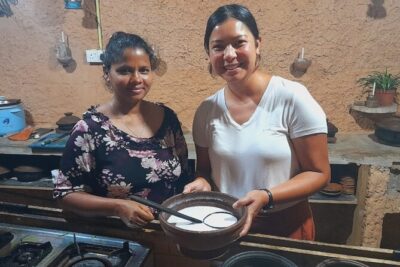
Sri Lankan Cooking Class with Neranji at Homestay
Read our review →
Browse the lists this tour appears in