
Reviewed · COOKING CLASSES
Ella: Sri Lankan Authentic Cooking expirience
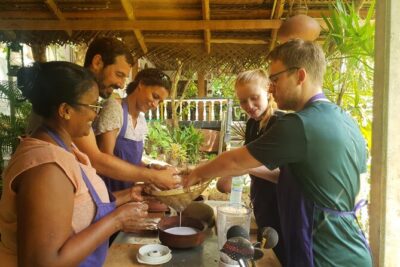
Sri Lankan cooking makes the most sense when you take part in the work. At Honey Bee Garden, near Ella in Sri Lanka’s Eastern Province, you help turn whole coconuts, spices, vegetables, and lentils into a full rice-and-curry meal. Ruwini, the English-speaking host, leads the two-hour class in her traditional home.
I like two things right away: the food is genuinely hands-on, from cracking coconuts to making fresh coconut milk, and the menu gives you several different curry styles rather than one token dish. I also like that you eat what you cook, with rice, papadam, coconut roti, and coconut sambal completing the meal.
The main consideration is time. Two hours goes quickly when you are preparing rice, roti, sambal, and several curries, so this is an active class, not a slow demonstration. Transportation is not included, and you should tell the host about allergies or dietary needs before arriving.
Key points at a glance
- Crack and scrape fresh coconuts: Learn how coconut becomes milk, sambal, and roti.
- Cook a full rice-and-curry spread: Prepare aubergine modju, dhal, pumpkin, and beans curries, plus rice and papadam.
- Learn with Ruwini: The English-speaking host explains spices, cooking methods, and ingredient substitutions.
- Eat the meal you make: The class ends around a shared table with the finished dishes.
- Small groups make a difference: Up to 10 people can join, with private sessions available by request.
- Recipes follow by email: You can try the dishes again after returning home.
A home kitchen, not a staged restaurant lesson
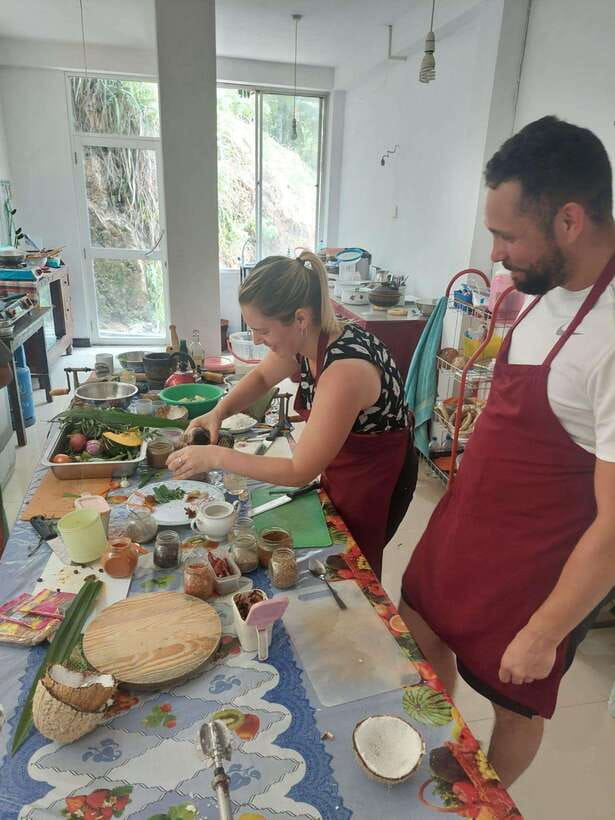
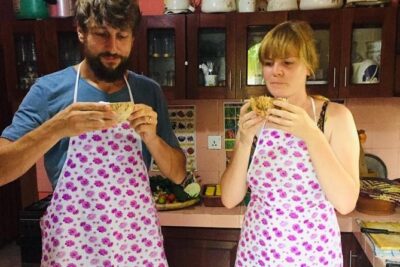
The setting is a traditional Sri Lankan home, which gives the class a useful sense of place before the cooking even starts. You are not simply watching someone prepare a finished curry in a restaurant kitchen. You are invited to take part in the routine work that makes Sri Lankan food taste the way it does.
Ruwini is the host and instructor. She speaks English and guides the class through the ingredients, techniques, and order of preparation. Her teaching style, as reflected in the class experience, is warm, patient, humorous, and practical. That matters because Sri Lankan cooking can look complicated at first, with several curries served at once and each one carrying a different balance of spice, coconut, salt, and heat.
The group limit is 10 people. That is small enough for a personal lesson, though your role will depend on the size of the group. With only two or four people, you should get a larger share of the chopping, stirring, grinding, and shaping. In a full group, the class becomes more social, but you may spend more time waiting for a turn at certain tasks.
Private sessions are available if you want more control over the pace. The timing can also be adjusted for a private class, which may suit families, couples, or anyone with special dietary needs.
A few more Ella trips to weigh up
- Ella: Traditional Sri Lankan Cooking Class
★ 4.9 · 788 reviews - Ella: Sri Lankan Cooking Class with Neranji at Homestay
★ 5.0 · 276 reviews - Ella : Cooking class with amazing Spice Garden Tour
★ 5.0 · 239 reviews
Spices first, then the cooking begins
The class starts with a short introduction to Sri Lankan spices. This is a useful opening because the goal is not just to copy a recipe. You begin to understand how the flavor of a curry is built and how changing one spice or vegetable can change the final dish.
You can expect Ruwini to explain which spices are used and how they work together. The supplied information does not give a fixed spice list or exact quantities, so you should not expect a formal spice lecture with a printed chart at the table. Instead, the value is in seeing the ingredients used during the cooking and asking questions as the dishes come together.
This is also where the English instruction helps. You can ask why a certain spice goes into one curry and not another, or how to replace an ingredient that may be hard to find at home. Ruwini has offered substitute ideas for ingredients unavailable in other countries, a particularly useful touch for anyone planning to recreate the meal after the trip.
The class is best suited to people who want to participate. If you prefer to sit back and take photographs while someone else does the work, you may find the format less relaxing. The host encourages active involvement, so bring clean hands, curiosity, and a willingness to help.
Cracking coconuts and making the basics
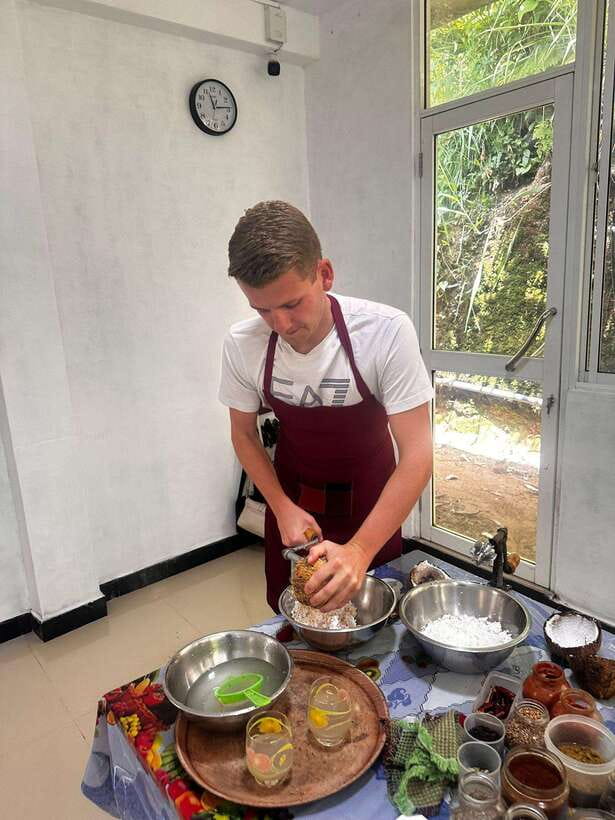
One of the most memorable parts is the coconut preparation. You take part in cracking coconuts, scraping the flesh, and preparing fresh coconut milk. These steps show why Sri Lankan curries have a different texture and flavor from curries made with packaged coconut milk or cream.
Coconut is not just a garnish here. It appears in the curry base, coconut sambal, and coconut roti. Learning how it is handled helps you understand the relationship between a Sri Lankan household kitchen and the final meal on the plate.
The work also gives the class a clear rhythm. You move from raw ingredients to prepared components, then to cooking and serving. Because several dishes are made as a team, you get to see how the different parts of the meal fit together instead of treating each curry as an isolated recipe.
The exact amount of physical work will vary with the group size. In a smaller class, you can expect a more direct role in most steps. In a group of 10, you may share tasks with others. Either way, the point is participation, not a private chef lesson where every action is assigned to you alone.
The curry menu gives you real variety
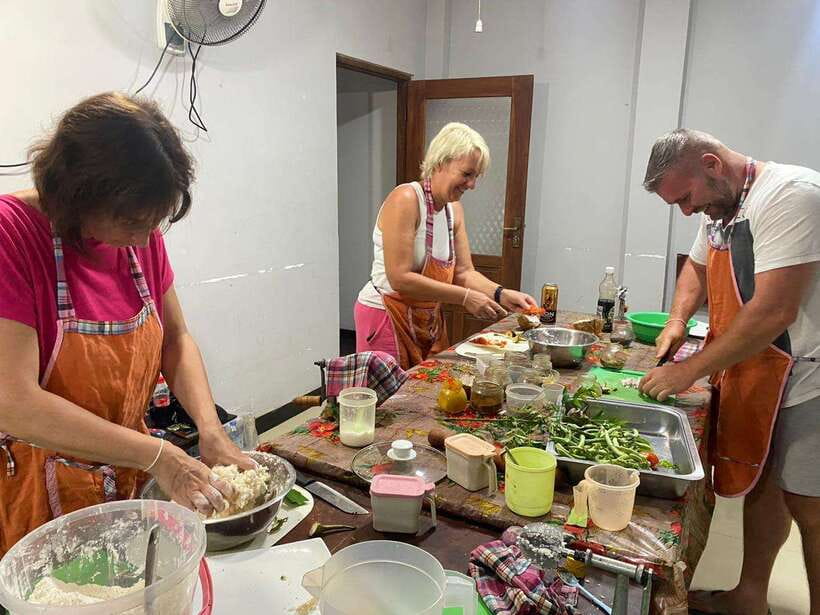
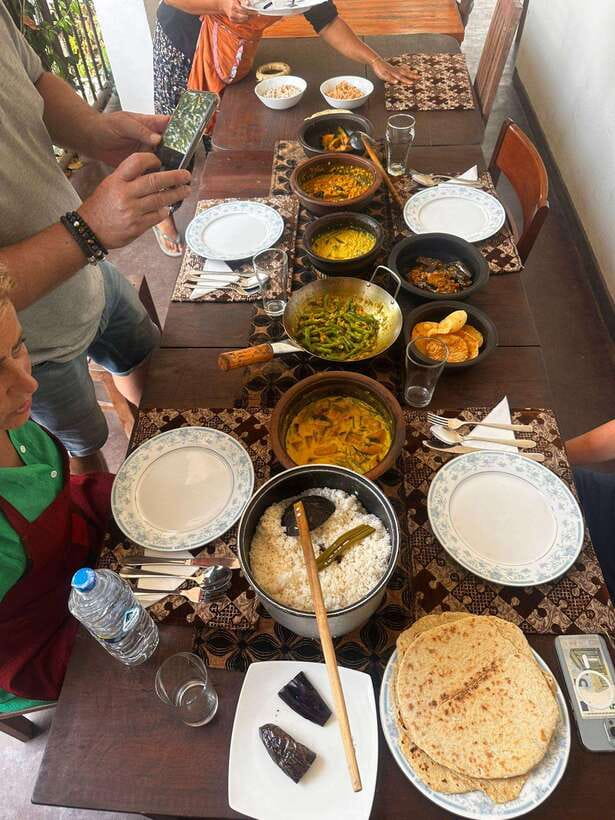
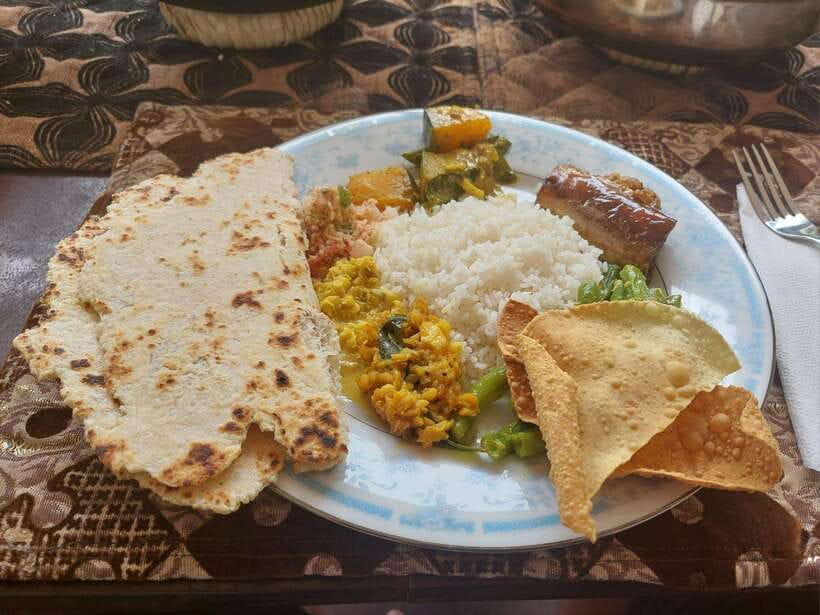
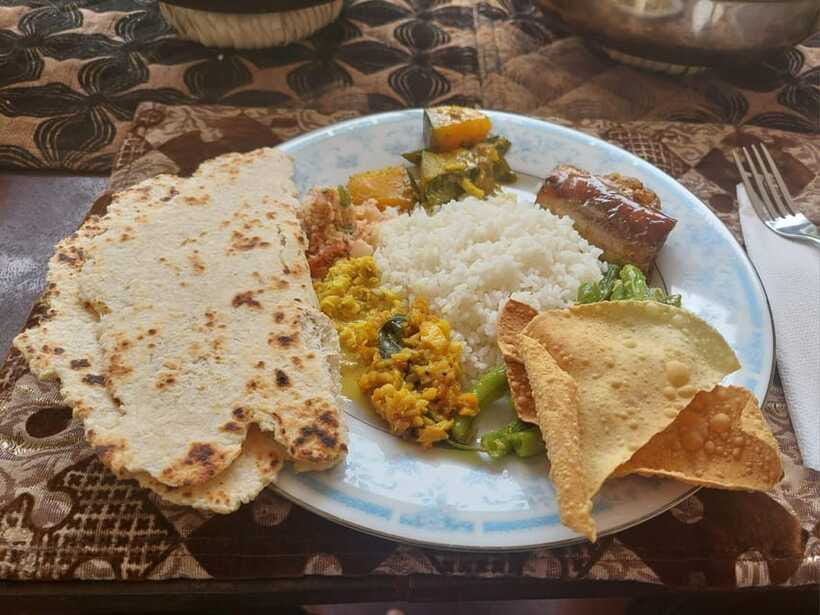
The meal includes much more than a single curry. The listed dishes are rice, aubergine modju, beans curry, dhal curry, pumpkin curry, coconut sambal, coconut roti, and papadam.
Aubergine modju is especially worth paying attention to. It brings a different flavor and texture from the lentil and vegetable curries, and it gives you a useful example of how aubergine can be treated in Sri Lankan cooking. Several people who have taken the class have singled out the aubergine dish as a favorite, so watch the preparation closely if you enjoy eggplant.
Dhal curry gives the meal a soft, comforting base. Pumpkin curry adds a sweeter vegetable note, while beans curry brings another texture and a fresher vegetable flavor. Preparing all four lets you compare how the same broad idea, a Sri Lankan curry, can change from dish to dish.
Coconut sambal is a bright side dish rather than a heavy curry. Coconut roti gives you a chance to work with dough, and papadam adds a crisp contrast to the softer rice and curries. Together, the dishes make a complete meal rather than a collection of cooking samples.
Some classes may include additional curry choices depending on the day and the ingredients available. The fixed meal information lists the dishes above, while past participants have also described making other curry varieties. Treat the menu as a strong guide, not a promise that every session will be identical.
Same island, a completely different kind of day:
- Ella: Drop to Tangalle/Hiriketiya/Mirissa/Galle & Yala Tour
★ 4.9 · 518 reviews - Ella: Little Adam’s Peak, Nine Arches Bridge & Waterfalls
★ 4.9 · 402 reviews - ELLA: Drop to Tangalle/Hiriketiya/Mirissa/Galle & Yala Tour
★ 4.1 · 336 reviews - From Ella: Drop to Tangalle/Hiriketiya/Mirissa & Yala Safari
★ 4.8 · 296 reviews
Sitting down to eat what you prepared
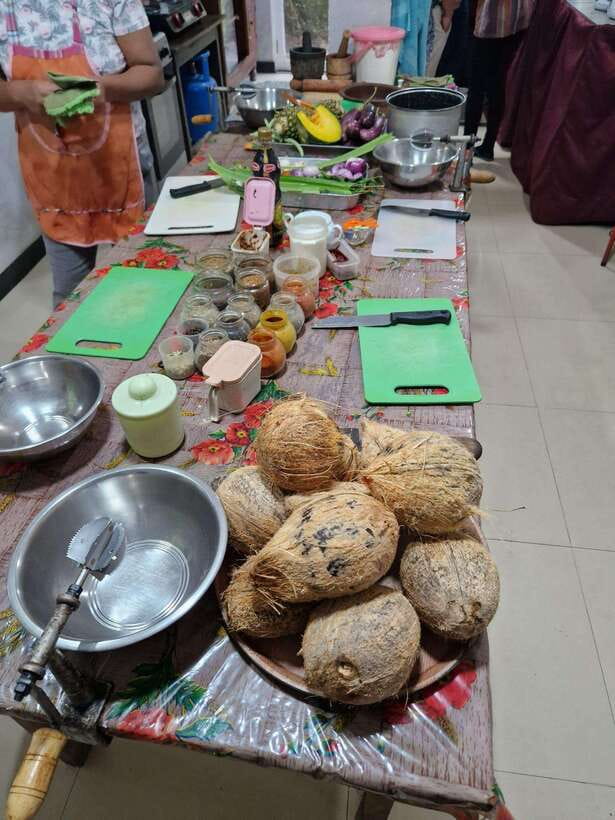
At the end, you sit down and eat the meal made during the class. This is more than a pleasant finish. It lets you taste the effect of each technique while the instructions are still fresh in your mind.
You can compare the curries side by side and see why Sri Lankan meals are served with several smaller dishes. Rice becomes the foundation, dhal brings body, vegetable curries add different flavors, and sambal and papadam provide sharper and crunchier contrasts.
The meal is also where the value of the class becomes clear. A restaurant can serve you a good rice-and-curry plate, but it cannot give you the same understanding of how the meal was assembled. Here, you have handled the coconut, prepared the curries, and helped make the roti. You can ask questions while eating and remember the answer because it is tied to food you helped cook.
Portions are described as generous, with enough food for the group to share. That makes this a good midday or evening activity, but you should not plan another large meal immediately afterward. The class includes the cooked dishes, not just a small tasting plate.
Upcountry black tea is available upon request. Ask for it if you want to add a familiar Sri Lankan drink to the meal, since it is not presented as an automatic part of the class.
What the $22 price really buys you
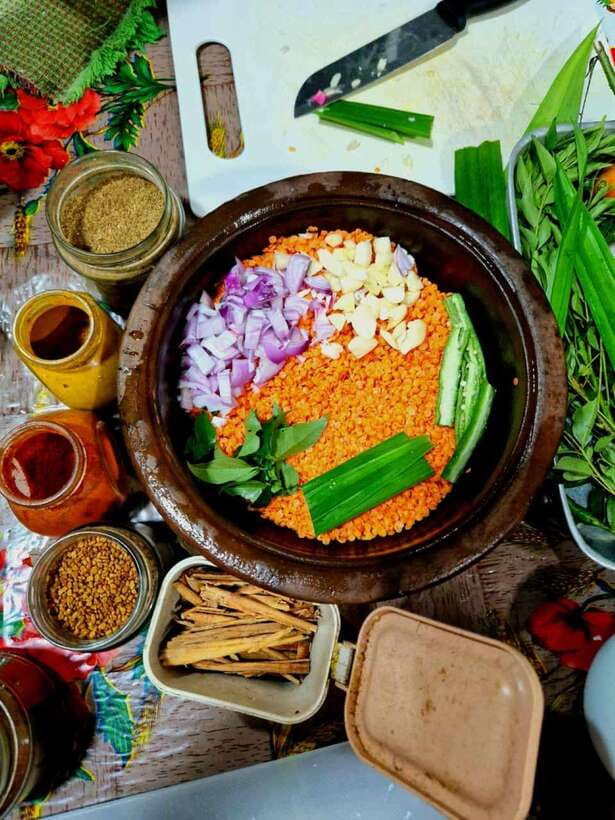
At $22 per person, the class is good value if you want more than a meal. The price includes the spice introduction, instruction, ingredients, cooking equipment, the full meal, and recipes sent by email.
The recipe email is an important part of the deal. Without recipes, a cooking class can become a pleasant memory that is hard to repeat. Here, you have a practical way to make the dishes again and use Ruwini’s substitution advice when local ingredients are difficult to find.
You are also paying for access to a local home kitchen and for direct instruction in English. That is different from ordering a Sri Lankan curry at a café and trying to guess what went into it. The class gives you several techniques in one sitting, including preparing coconut, making curry, and shaping roti.
The price does not include transportation to or from the home. Add that cost and time when planning your day around Ella. The available information does not specify pickup arrangements or the exact meeting point, so confirm those details before you set off.
The class is wheelchair accessible, which widens its appeal, though the cooking tasks may still vary in ease from person to person. If you have mobility concerns or need a particular setup, tell the host in advance.
Who will enjoy this class most
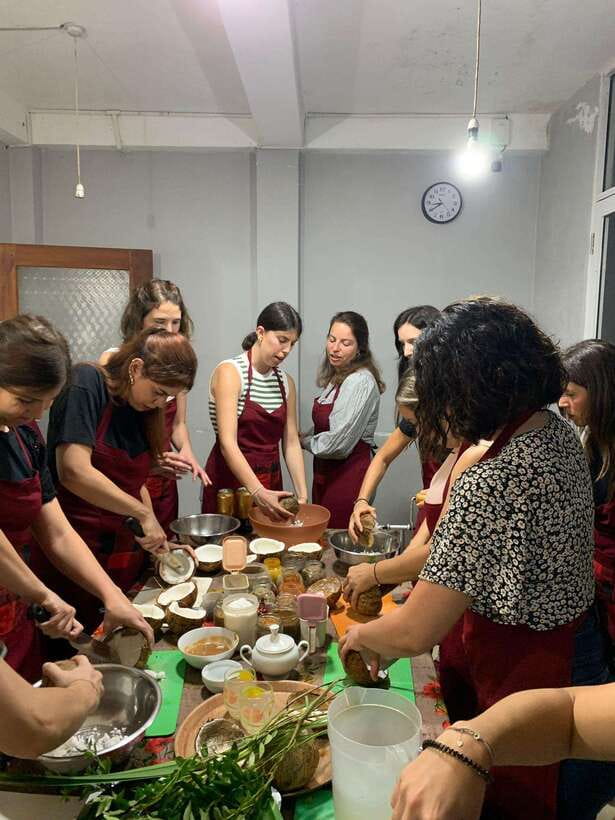
This experience suits anyone who likes to understand food through practice. It is especially good for couples, small groups, vegetarian diners, and cooks who want a useful set of recipes rather than a single souvenir meal.
Vegetarians are well catered for because the listed menu centers on lentils, vegetables, coconut, rice, roti, and papadam. Still, tell the host about your diet before the class. The same applies to allergies, especially if you need ingredients avoided rather than simply left off your own plate.
Families can also find plenty to do, since the work is divided into several tasks. Younger children may need help with some of the cooking steps, but the class format offers more than passive sightseeing.
This may be less suitable if you need a very quiet, highly polished lesson or if you dislike shared tasks. A group of 10 can be lively, and everyone is encouraged to take part. The class has a social side as well as a cooking side.
Timing, cancellation, and useful planning tips
The class lasts two hours, and starting times depend on availability. Since the menu contains several dishes, arrive ready to begin rather than expecting a long introduction before the work starts.
Book transport separately because it is not included. The location is described as a traditional home in the Ella area, but the supplied details do not give a precise pickup service or travel time.
You can cancel up to 24 hours in advance for a full refund. A reserve-now, pay-later option is also available, which helps if your Sri Lanka route is still changing.
Before booking, send the host your dietary restrictions or allergies. If you want a private class, request it early and ask about possible time adjustments. These two messages can make a bigger difference to your experience than any extra sightseeing tip.
Bring a note-taking method if you want to record spice combinations and cooking order. Recipes are sent by email, but your own notes can help you remember the small adjustments Ruwini explains while you are working.
Should you book Honey Bee Garden?
I would book this class if you want a practical food experience in Ella and like the idea of eating a full meal that you helped prepare. The strongest reasons are the hands-on coconut work, the range of curries, Ruwini’s friendly English instruction, and the recipes sent afterward.
The main limits are simple: transport is extra, the class moves at a steady pace, and a larger group means shared jobs. If those points suit you, $22 buys a useful two-hour look at everyday Sri Lankan cooking, not just a staged tasting.
Book it for the cooking, not only for the meal. If you take part fully, you leave with techniques, flavor ideas, and a menu you can try again at home.
FAQ
Where is the Sri Lankan cooking class held?
The class is held in a traditional Sri Lankan home in the Ella area, in Sri Lanka’s Eastern Province.
How long does the cooking class last?
The class lasts two hours. Starting times vary, so check availability when booking.
Who teaches the class?
The class is taught by Ruwini, a local woman, experienced home cook, and fluent English speaker.
What dishes will I prepare?
The meal includes rice, aubergine modju, beans curry, dhal curry, pumpkin curry, coconut sambal, coconut roti, and papadam.
Is the meal included?
Yes. You eat the dishes prepared during the class, including the rice, curries, coconut sambal, coconut roti, and papadam.
Are ingredients and cooking equipment included?
Yes. The class includes all cooking ingredients and equipment.
Are recipes provided after the class?
Yes. The recipes are sent to you by email after the cooking session.
Is transportation included?
No. Transportation to and from the cooking class location is not included.
Can I request a private class or mention dietary needs?
Yes. Private sessions are available by request, with possible time adjustments. You should tell the host about dietary restrictions or allergies in advance.
Just added around Ella
- Zip Lining in Ella★ 4.5 · 16 reviews
- YALA BLOCK 5 & 6 (Weheragala & Lunugamwehera) Safari Tour★ 4.8 · 30 reviews
- Yala Block 5: Private Morning or Evening Safari★ 4.3 · 4 reviews
- Sri Lanka private tour package 10 Days. and luxury hotel★ 5.0 · 3 reviews
- Sri Lanka Private 10-Day Round Tour Car, Guide, Hotels, Food★ 4.8 · 10 reviews
- Private cooking class – Personalized classic menu★ 5.0 · 5 reviews
- Haputale:Glorious Tuk Tuk Ride to Lipton’sSeat & Tea Factory★ 5.0 · 6 reviews
- Get a private driver for day tours around Sri Lanka★ 5.0 · 18 reviews
Cooking Classes, compared.
Organic cooking class sigiriya (kumara & family)
Read our review →
Sri Lankan Cooking Class with Neranji at Homestay
Read our review →
Browse the lists this tour appears in