
Reviewed · WORKSHOPS
Weligama: Pottery Workshop with Tea and Snacks
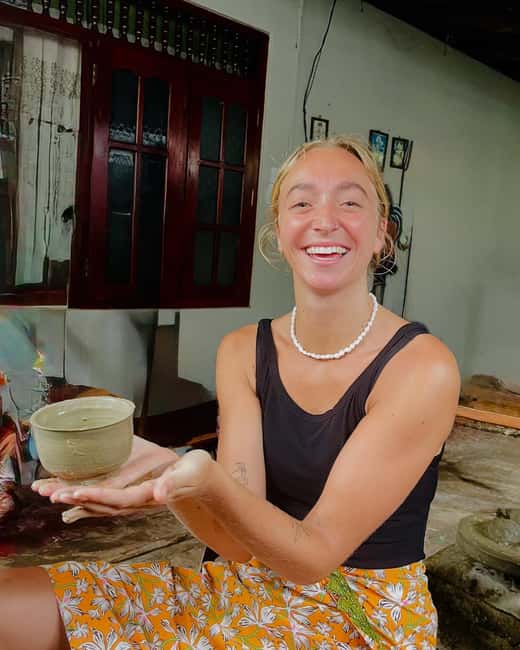
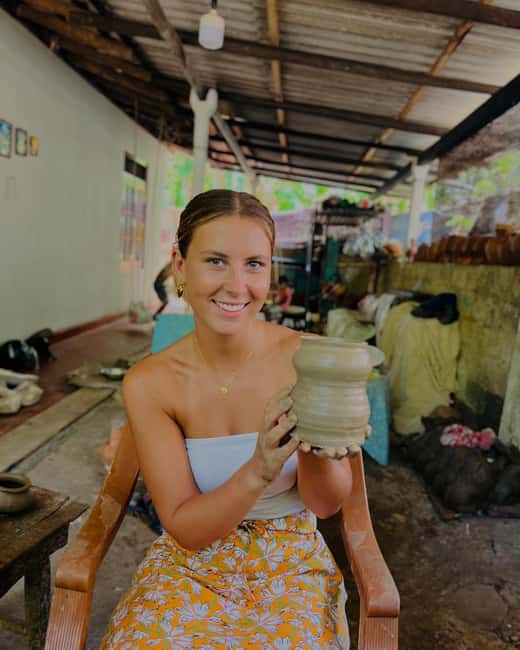
The most memorable part of this Weligama-area experience is not a polished studio or a shelf of perfect ceramics. It is the chance to sit in a traditional potter’s home, hear how the craft has been passed down, and put your own hands on the clay. The host couple have worked with pottery since their teenage years, so the class connects daily family life with an old local trade.
I like two things here. First, you get real time on the wheel rather than only watching a demonstration. Second, your $40 supports local potters directly and includes tea, sweetmeats, and a piece made by the master potters. The main consideration is simple: this is not a Western-style pottery studio. You will not glaze or instantly kiln your own work, and the setting is home-based rather than polished.
Key points at a glance
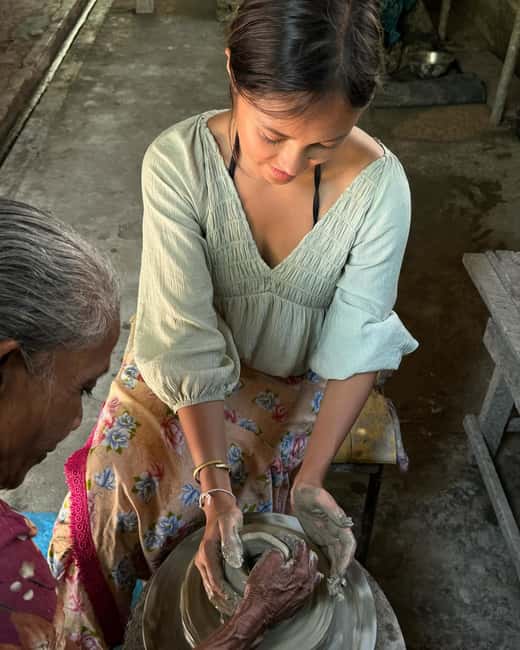
- Traditional family setting: The workshop takes place in a private potter’s home, giving you a direct look at a working local tradition.
- Hands-on wheel time: You prepare to shape clay and make your own piece on a traditional potter’s wheel.
- Patient instruction: The activity is offered in English or French, and the guide has been praised for clear English explanations.
- Tea with local sweetmeats: The final 30 minutes turn the class into a relaxed conversation over tea and Sri Lankan treats.
- A useful souvenir: You take home a pottery item made by the master potters, since your own piece is not glazed or fired on the spot.
- Family-friendly option: Children receive paint to decorate their own mini-pots, though babies under one year are not suited to the activity.
A pottery class with a family story
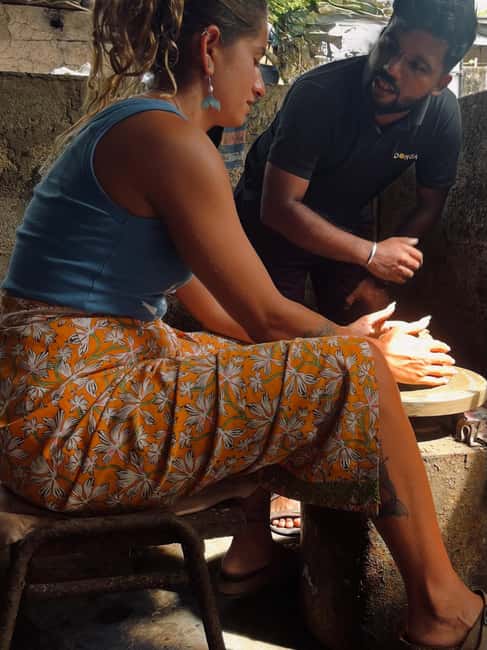
Many craft activities give you a quick demonstration, a short turn at the workbench, and a souvenir bought at the door. This one offers something more personal. You visit a potter’s family home near Weligama and learn how the work fits into the family’s life.
The host couple began making pottery as teenagers. That detail matters because the class is not only about forming a cup or bowl. You also hear about the tradition, the work involved in preparing clay, and the steps that come before and after the wheel.
The experience is private, so you are not being moved through a large group at a fixed pace. That gives you room to ask questions and try again when the clay collapses, leans, or refuses to become the shape you had in mind. Pottery has a way of humbling everyone quickly.
The language options are English and French. Clear English guidance is one of the strongest practical features here. You should be able to follow the explanation of the craft and chat with the organiser without needing specialist pottery terms.
A few more Weligama trips to weigh up
- Surf & Stay – Private Surf Lesson Experience in Weligama
★ 4.5 · 29 reviews - Ahangama: Traditional Jewellery Making Workshop
★ 4.9 · 23 reviews - Surf & Stay: Private Surf Lesson in mirissa
★ 4.4 · 15 reviews
Meeting at Kumbalgama Railway Station
The starting point is Kumbalgama Railway Station, where a representative of the host meets you. The same station is used when the activity ends, so the transport arrangement is straightforward.
The meeting point is worth noting when planning your day in the Weligama area. You should allow enough time to reach the station and confirm the meeting details before setting out. The available information does not describe a hotel pickup, so do not assume that door-to-door transport is included.
From the station, the activity moves to the workshop for two hours. The setting is a private home, not a commercial craft centre. That may feel informal, but it is also the reason the experience feels close to ordinary local life rather than staged for a passing audience.
A private setting can be especially helpful if you are new to pottery. You can concentrate on the wheel without feeling watched by a room full of people. It also suits families and couples who want an activity they can share at their own pace.
Learning how Sri Lankan pottery begins
The workshop starts with the groundwork. You learn about preparing clay for the wheel and about the later kiln process. This is useful context because the spinning wheel is only one part of pottery, and a small finished bowl hides a lot of work.
The clay preparation explanation helps you understand why the material behaves as it does. On the wheel, the clay needs to be ready before you can centre it and pull up the sides. If you have never tried pottery, this preparation gives you a better sense of why control and patience matter.
You also hear about the place of pottery in Sri Lankan tradition. The class is not presented as a modern design lesson or a technical course for professional potters. It is an introduction to a local craft, taught by people who have spent much of their lives making it.
That makes the historical part valuable even if you are mainly coming for a fun afternoon. You leave with more respect for the finished objects used in everyday life, because you have seen how much skill goes into forming, drying, and firing them.
Two hours at the traditional potter’s wheel
The central part of the activity is your turn on the wheel. You create your own piece under the direction of the host potters. The supplied information does not promise a particular object, so you should arrive ready to follow the material rather than demand a perfect mug, vase, or bowl.
A pottery wheel looks easy until the clay begins to move. The basic challenge is keeping the clay centred while using your fingers to shape the walls. A little too much pressure can flatten the form, while too little may leave it uneven. The fun comes from having time to learn instead of being expected to produce a showroom piece immediately.
One useful point from the experience details is that you are given time to practice and get the feel of the wheel. That is important. A rushed turn would make this a photo opportunity, but a patient session gives you a real chance to improve from one attempt to the next.
You may create several small vessels if your pace allows, but no exact number is promised. The class is best approached as a lesson in the process, not as a guarantee that you will return with a finished object made by you.
The hands-on part also gives children a clear way into the activity. Younger participants can receive paint for decorating mini-pots. The information does not set a general minimum age, but babies under one year are not considered suitable.
Same island, a completely different kind of day:
- ELLA to TANGALLE/MIRISSA/GALLE Shuttle & YALA Safari
★ 4.9 · 49 reviews - GALLE/MIRISSA/TANGALLE/HIRIKETIYA DROP to ELLA & YALA SAFARI
★ 4.7 · 21 reviews - Ella: Transfer to Hikkaduwa & Yala Safari Tour
★ 4.5 · 11 reviews - Ella: Shuttle to Mirissa/Galle/Hikkaduwa & Udawalawa Safari
★ 4.7 · 10 reviews
Why your own piece does not come home
The most important limitation is also the point most likely to prevent disappointment. Glazing and instant kilning are not available during the workshop.
That means your freshly shaped piece is not finished in the Western studio-class sense. You should not expect to glaze it, watch it go into a kiln, and carry it home later that day. Clay needs further work before it becomes a durable ceramic object, and this experience does not include that stage on the spot.
Instead, you take home a piece made by the master potters. This gives you a genuine souvenir while allowing the class to stay focused on learning and shaping. It also means you do not need to worry about packing a damp or fragile unfinished object into your luggage.
If your main goal is a finished personal design, this may not be the right pottery class. If your goal is to understand a local craft, try the wheel, and support the family who makes the pottery, the limitation is easier to accept.
The distinction is worth keeping clear when comparing this activity with a studio workshop elsewhere. Here, authentic setting and personal contact come before a finished custom product.
Tea, sweetmeats, and a slower finish
After the workshop, you spend about 30 minutes with tea and local sweetmeats. This is more than a snack break. It gives you time to talk with the organiser and ask the questions that often come after the practical work.
Sri Lankan sweetmeats are local sweets, and the included food adds a small cultural element without turning the activity into a full cooking class. The experience information does not specify the exact snacks or tea style, so you should treat this as a tasting of what the hosts provide rather than a fixed menu.
I like the way this ending slows the pace. After concentrating on the wheel, sitting down for tea gives the visit a social finish. You are not simply dropped back at the station as soon as the clay work ends.
The hospitality is an important part of the experience. The host couple’s warm, open manner and the chance to meet the family make this feel different from a standard paid lesson. You are still booking a structured activity, but the final conversation leaves room for a more natural exchange.
What the $40 price really covers

At $40 per person, this is not the cheapest way to spend two and a half hours in Sri Lanka. The value depends on what you want from a craft experience.
You are paying for a private 2.5-hour activity, instruction on the wheel, an explanation of clay preparation and pottery tradition, tea and local sweetmeats, and a pottery item made by the master potters. You are also helping a local family earn a better income from its craft.
That last point is not a vague donation. The activity is designed to support the potters and encourage the next generation, including their grandchildren, to see pottery as a worthwhile tradition. Your booking helps keep attention on a family skill that could otherwise become harder to pass on.
The price makes more sense if you value direct contact and cultural context. It is less compelling if you only want a finished object or a formal ceramics lesson with glazing, firing, and technical instruction.
You should also remember that personal purchases of pottery are not included. If you want to buy extra pieces, budget separately. The provided details do not state the prices of additional pottery, so ask the host before choosing anything.
Who will enjoy this most
This experience suits you if you like meeting local families, learning through your hands, and accepting a few rough edges in exchange for a more genuine setting. It is especially good for couples, small private groups, and families with children old enough to take part.
It also works well as a change from beaches and sightseeing. Weligama is known for time by the coast, but a pottery session gives your afternoon a different rhythm. You sit, listen, try, fail a little, and try again.
Children have a clear activity through the mini-pots and paint. Parents should still consider the practical side of clay work and the fact that babies under one year are not suitable. The available information does not provide a wider age policy.
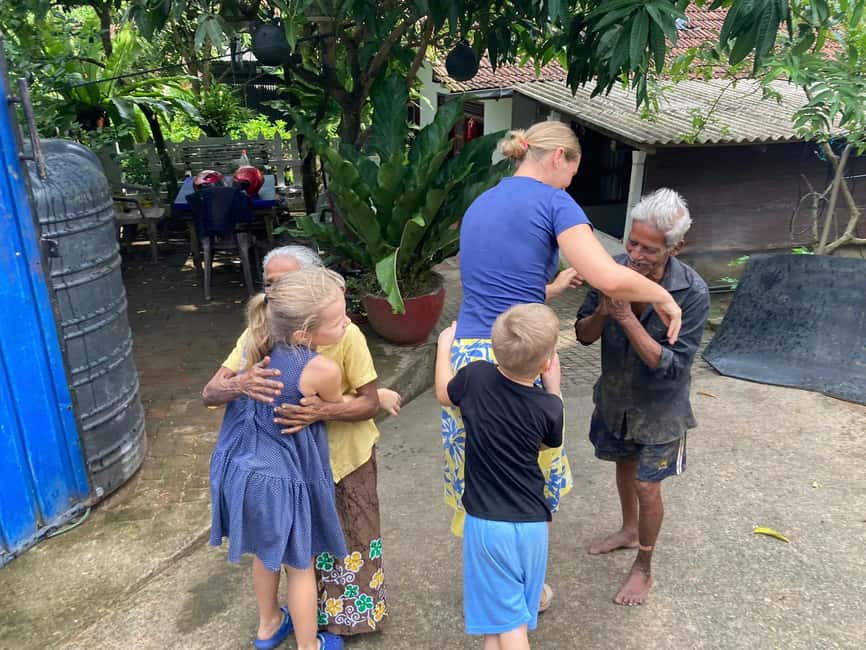
This is also a good choice if you want an activity that benefits local artisans in a direct way. The hosts are not simply demonstrating a craft from a distance. They are sharing work they have practiced since youth and encouraging the family tradition to continue.
You may prefer another option if you need a fully equipped studio, professional glazing, instant firing, or a guaranteed finished object of your own design. The warning about Western studio standards is not a minor footnote. It should shape your expectations before you book.
Accessibility, language, and group arrangements
The activity is wheelchair accessible, and the group type is private. Those are useful advantages, although the details provided do not explain the exact layout of the home or wheel area. If you use a wheelchair, it is sensible to confirm any specific access needs with the host before arrival.
Instruction is available in English and French. One particularly useful detail is that the guide’s English has been described as strong enough for clear explanations and easy conversation. That helps during a hands-on lesson, where timing and pressure need to be understood quickly.
The private format also means the pace can feel more personal than a large class. You are not competing for the wheel or waiting for a long line of participants to finish. The exact maximum group size is not provided, so ask if you are booking for a larger party.
Weapons, sharp objects, alcohol, drugs, fireworks, explosives, nudity, and see-through clothing are not allowed. These rules are basic, but they are worth knowing for a home-based activity.
Timing and booking flexibility
The total duration is 2.5 hours: two hours for the workshop and 30 minutes for tea and snacks. Starting times depend on availability, so check the schedule before fixing other plans around it.
Free cancellation is available up to 24 hours in advance for a full refund. You can also reserve now and pay later, which helps if your route through southern Sri Lanka is still shifting.
The meeting and return point is Kumbalgama Railway Station. Plan around that rather than treating the activity as a hotel-based tour. A representative of the host will meet you there.
The experience provider is DONGA. The host’s personal approach is central to the activity, so the experience is likely to feel most rewarding when you arrive with time to listen and take part rather than rush through the wheel session.
Should you book this pottery workshop?
Book it if you want a personal look at Sri Lankan pottery, hands-on wheel time, and a relaxed family welcome. The tea, sweetmeats, children’s mini-pot activity, and master-made souvenir add value to the $40 price.
Skip it if your priority is glazing your own work, instant kiln firing, or a polished Western ceramics studio. This is a traditional home workshop, and its charm depends on accepting that difference.
For most people who enjoy local craft and conversation, I would choose this over a short demonstration. You get enough time to try the wheel, learn where the clay comes from, and finish with a genuine exchange over tea. Just arrive with realistic expectations: your best souvenir will be the master potters’ piece and the memory of making your own imperfect vessel.
FAQ
Where does the pottery workshop start?
The activity starts at Kumbalgama Railway Station, where a representative of the host will meet you.
Where does the activity finish?
You return to Kumbalgama Railway Station at the end of the experience.
How long does the experience last?
The total duration is 2.5 hours. The workshop lasts two hours, followed by 30 minutes for tea and local snacks.
How much does the pottery workshop cost?
The price is $40 per person.
Is the pottery class private?
Yes. The group type is listed as a private group.
Which languages are available?
The activity is offered in English and French.
Can I glaze or fire my pottery during the workshop?
No. Glazing and instant kilning are not available.
What pottery do I take home?
You can take home a pottery piece made by the master potters. Personal purchases of additional pottery are not included.
Are tea and snacks included?
Yes. Tea and local sweetmeats are included after the workshop.
Can children take part?
Children can receive paint to decorate their own mini-pots. Babies under one year are not suitable for this activity.
Just added around Weligama
- Udawalawe National Park Safari Tour★ 4.7 · 3 reviews
- Surf & Stay: Private Surf Lesson in mirissa★ 4.4 · 15 reviews
- Mirissa/Galle/Hikkaduwa: Transfer to Ella & Udawalawa Safari★ 5.0 · 3 reviews
- Hikkaduwa/Galle/Weligama/Mirissa: Yala National Park Safari★ 3.4 · 4 reviews
- Galle/Mirissa: Yala & Udawalawe Safari Day Trip with Picnic★ 4.6 · 9 reviews
- From Weligama : Udawalawa National Park Safari Tour★ 4.9 · 8 reviews
- From Mirissa/ Weligama : Udawalawe Safari – Day Trip★ 5.0 · 7 reviews
- From Galle/Weligama/Mirissa/Matara: Day Trip to Sinharaja★ 5.0 · 5 reviews
Workshops, compared.
Organic cooking class sigiriya (kumara & family)
Read our review →
Traditional Gems & Jewellery Workshop with Transfers
Read our review →
Sri Lankan Cooking Class with Neranji at Homestay
Read our review →
Browse the lists this tour appears in