
Reviewed · COOKING CLASSES
Authentic Sri Lankan Cooking Class in Kandy by Local Family
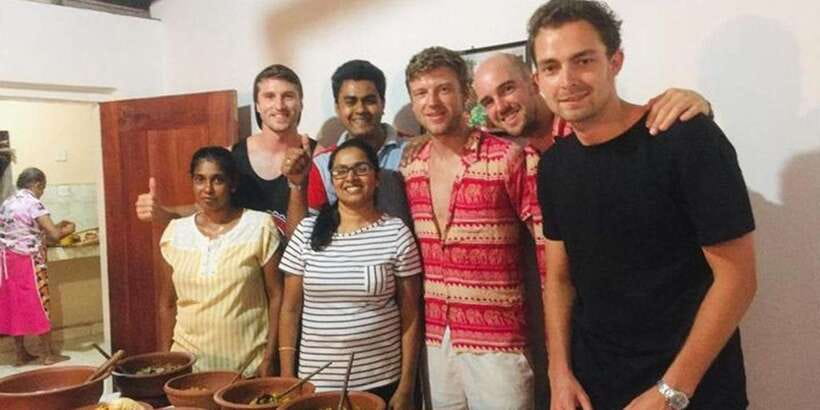
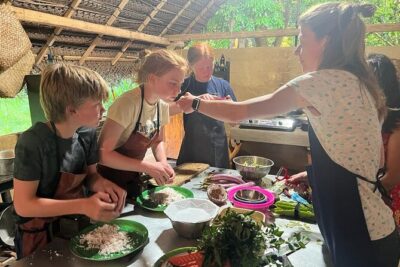
Sri Lankan cooking is at its best when it is made in a real home, not presented as a polished restaurant show. Near Kandy’s Bahirawakanda Mountain, Dinesha and her family welcome you into their kitchen for a three-hour lesson built around a serious meal: ten vegetable dishes, fish or chicken, coconut sambol, and coconut roti.
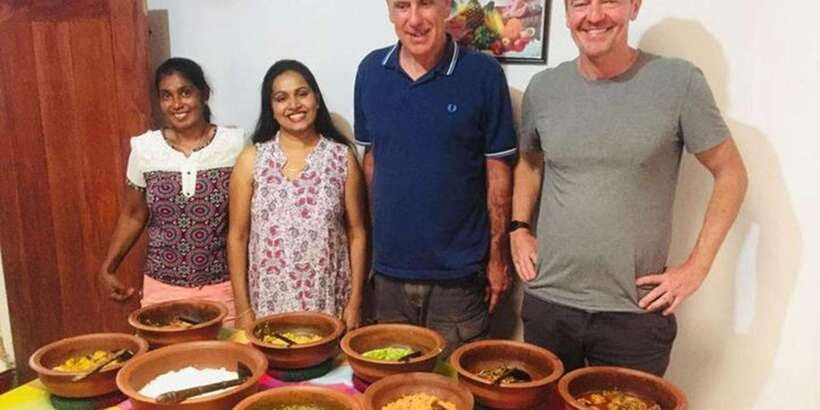
I like the family setting, where you learn from Dinesha’s wife, sister, and mother rather than from a restaurant chef. I also like the optional market visit and the old stone board used to make sambol, details that give the class a clear sense of place.
The main consideration is the sheer amount of food. Ten vegetable dishes take time, so you will season and prepare ingredients while the family handles some of the cooking. This is more about learning a household food tradition than mastering every dish from start to finish.
Key points to know before booking
- A real Kandy home near Bahirawakanda Mountain: The class takes place in a calm green area close to the large Buddha statue.
- Family teachers, not a professional chef: Dinesha’s wife, sister, and mother lead the cooking, with the children sometimes joining in.
- A market visit can be added: You can shop for ingredients and learn about Sri Lankan vegetables and spices before cooking.
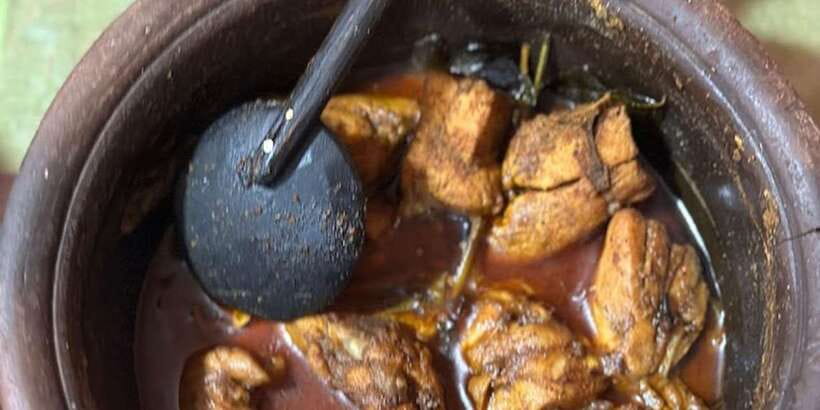
- A large meal in three hours: The planned menu includes ten vegetable dishes, fish or chicken, coconut sambol, and coconut roti.
- Small group value: The $99 price covers up to two people, making this especially appealing for a couple or two friends.
- Recipes go home with you: You receive the recipes at the end, so the meal does not have to end when you leave Kandy.
Arriving at a family kitchen near Kandy
The first pleasant surprise is the setting. This is not a cooking studio in the center of town. The family home is close to Bahirawakanda Mountain and its well-known Buddha statue, in a quiet green part of Kandy.
That location matters. Kandy can feel busy around its lake, roads, and temple area. A home away from the traffic gives the class a slower rhythm. You are not simply being shown a few dishes and sent back onto a tour bus. You are entering the family’s everyday kitchen and seeing how food fits into domestic life.
Pickup and drop-off are included around Kandy town. You should wait in your hotel lobby ten minutes before the scheduled pickup time, and you need to provide your pickup details when booking. If you are staying well outside Kandy town, confirm the transport area before you commit, since the included transfer is limited to the town area.
The activity lasts three hours. That sounds generous until you see the menu. Sri Lankan meals often include several small vegetable preparations rather than one large main course, and this class aims to make a lot of them.
A few more Kandy trips to weigh up
- Kandy Village Cooking Class
★ 5.0 · 536 reviews - Private Traditional Sri Lankan Cooking Class in Kandy with Hotel Transfers
★ 5.0 · 115 reviews - Cooking With Village Family
★ 5.0 · 104 reviews
The optional market visit and what it adds
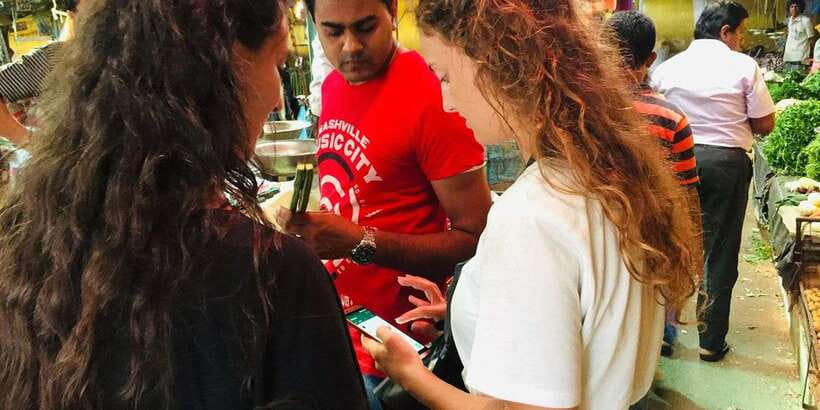
If you want more than a kitchen lesson, ask for the local market visit. The family can guide you through the market, explain the vegetables and spices, and help select ingredients for the meal.
This is one of the best parts for a first-time visitor because Sri Lankan cooking depends on combinations that are not always obvious from a recipe. At the market, you can connect the finished curry to the raw produce and spices used to make it. You also get a better sense of the daily shopping behind a traditional household meal.
The market stop is an optional part of the arrangement, so confirm that you want it included. The three-hour duration also means the market and cooking portions need to be managed sensibly. If you spend a long time shopping, the family may need to do more of the advance preparation.
One session included a warm welcome at home after a market visit, followed by tea and pancakes while the ingredients were prepared. That is a useful clue about the pace: this is not a rushed, hands-on workshop where every minute is filled with formal instruction. It has the feel of being received by a family, with time to settle in before the serious cooking begins.
Learning from the women of the household
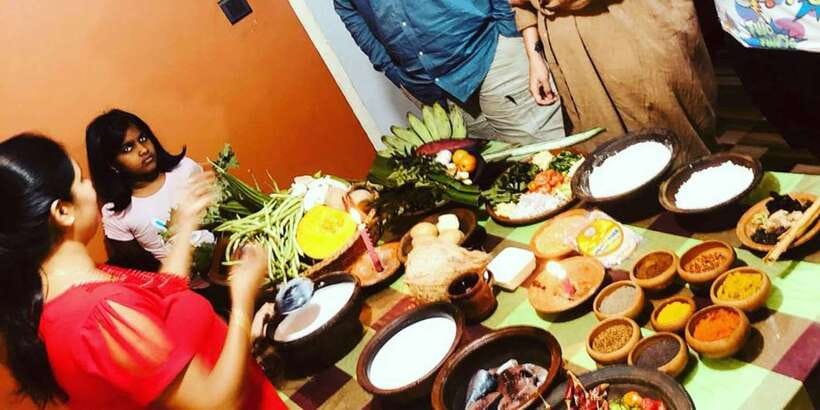
The family explains that the main teachers are the host’s wife, sister, and mother. Their point is simple: women who cook traditional food several times a day build practical knowledge through repetition. That approach shapes the class.
You are learning how a family actually cooks, not how a chef stages a demonstration. The instruction is in English, and the family encourages questions about spices, seasoning, and preparation. You can ask why an ingredient is used or how a dish fits into the wider meal.
Dinesha guides the experience and has also led visitors through the market. The family members share the work, and the children may join the class from time to time. That can make the kitchen feel lively and informal, though it also means the session may not have the tightly scripted format of a professional cooking school.
I see this as a strength if you want contact with local family life. If you prefer a silent kitchen, precise measurements, and one instructor demonstrating every step, this may feel less controlled.
What you actually cook in three hours
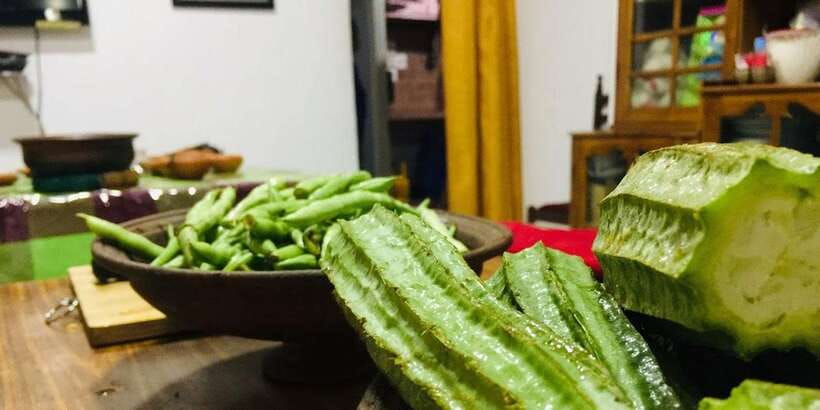
The advertised menu is substantial:
- Ten types of vegetable dishes
- Fish or chicken, depending on your choice
- Coconut sambol
- Coconut roti
- Drinking water
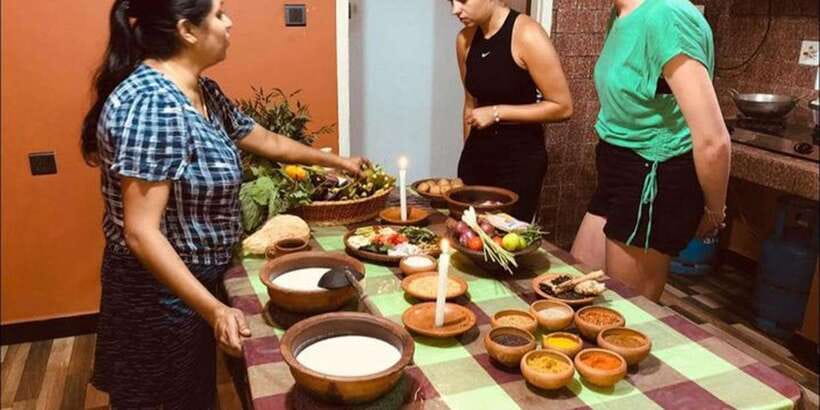
The meal is built around variety. Instead of one curry and a side dish, you work toward a table filled with separate flavors and textures. Eggplant and mushroom curry have been particular favorites, and you can expect the vegetables to play a much larger role than they do in many Western meals.
One class produced 13 dishes in roughly two to three hours. That is an impressive amount of food, but it also explains an important limitation: you may not personally cook every dish from beginning to end. With so many curries on the menu, the family does much of the actual cooking while you season, prepare, observe, and ask questions.
That is not a flaw, but you should understand the format. This is a participation and tasting class, not a strict one-recipe-per-student workshop. You get to see how a complete Sri Lankan meal comes together, but the family keeps the timing workable by taking over some tasks.
The class can also include small snacks while you cook. One session began with pancakes and tea, and participants tasted food during the preparation. You might want to skip a large lunch, since the final meal is designed to be generous.
Same island, a completely different kind of day:
- Kandy Private Guided City Tour by Tuk Tuk
★ 4.9 · 1,307 reviews - From Kandy: Sigiriya Rock & Dambulla Cave Temple Adventure
★ 4.9 · 785 reviews - Kandy to Ella Train Tickets – Reserved Seats
★ 4.5 · 523 reviews - From Kandy: Pinnawala Day Tour
★ 4.8 · 331 reviews
The old stone board and the value of traditional tools
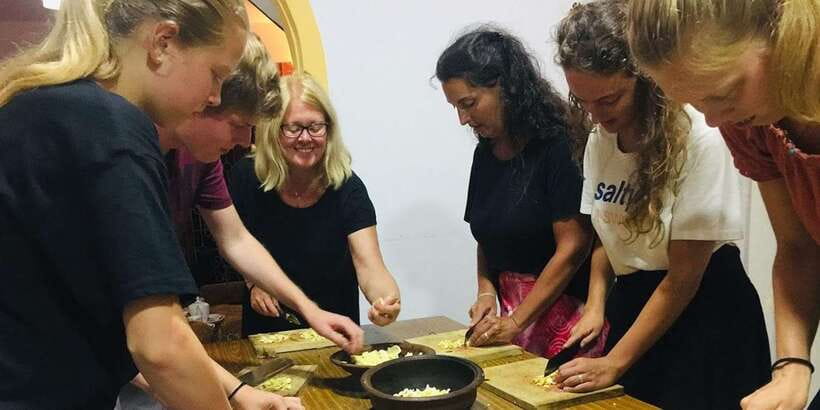
The 100-year-old sambol-making stone board is a memorable detail. Coconut sambol is not just grated coconut mixed with a few ingredients. The texture and flavor depend on how the ingredients are crushed and combined.
Using an old household tool connects the dish to the older rhythm of Sri Lankan cooking. It also gives you something more interesting to remember than a modern appliance demonstration. You can see how traditional equipment remains part of the family kitchen.
The class also covers the mix of spices used in the dishes. You may not leave able to reproduce every curry perfectly on your first attempt, but you will have a better sense of how seasoning is built. The useful lesson is not simply add this spice. It is learning to taste as the food develops.
Because the class is conducted in a home kitchen, the equipment and workflow are likely to feel domestic rather than commercial. That is exactly the appeal, though it may be less convenient for anyone who expects a large work surface and a separate station for every participant.
The meal at the end is part of the lesson
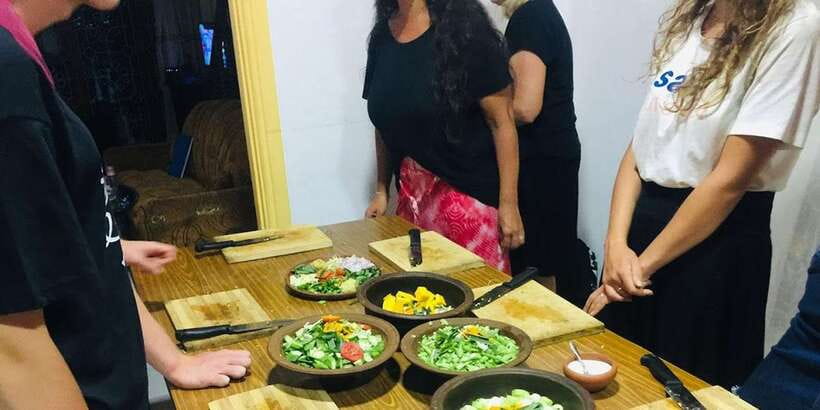
The final meal is not an afterthought. It is the point of making so many dishes.
You sit down to taste the food as a complete Sri Lankan spread, with several vegetable dishes alongside the chosen fish or chicken, coconut sambol, and roti. Eating everything together helps you understand why so many small dishes appear on one table. A mild curry, a hotter preparation, a coconut-based side, and a crisp or soft element can balance one another.
The hosts explain the food as you go, so the meal becomes another chance to ask questions. If you are unsure how to combine the dishes, this is the time to watch and copy the family’s way of eating.
The generous menu is excellent value for hungry people, but it may be too much for light eaters. Take a break from other food beforehand. You will get more from the class if you arrive ready to eat rather than already full.
Water bottles are included. The information provided does not promise specific dietary substitutions, so tell the family about food allergies, dislikes, or dietary needs before booking and confirm what can be changed.
What the $99 group price really means
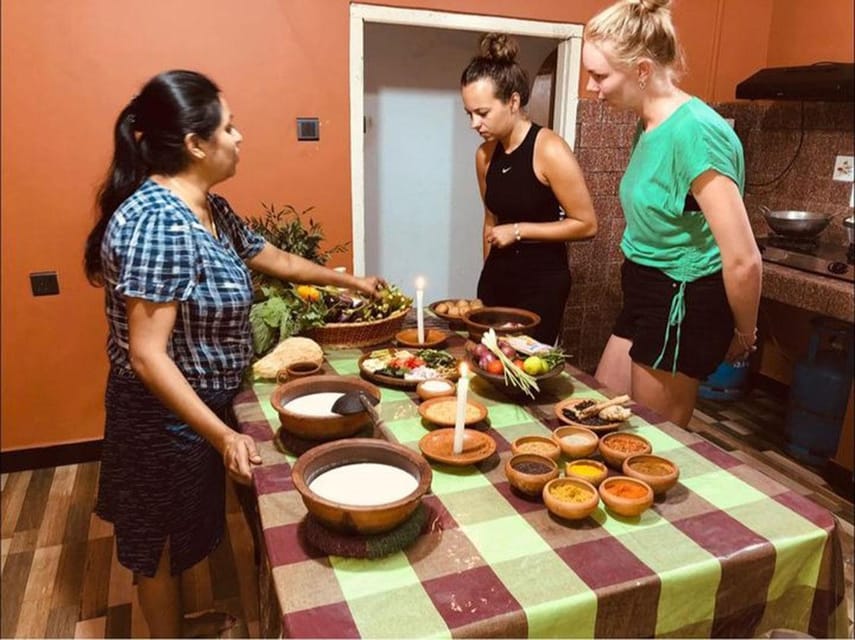
The price is $99 per group of up to two people. That is not a per-person price, so a couple or two friends pay about $49.50 each before any currency conversion.
For a private-feeling class with family instruction, a possible market visit, hotel pickup around Kandy town, a large meal, and recipes to take home, the price is reasonable. The value improves if you care about personal contact and local food traditions rather than simply learning one quick dish.
The price is less attractive if you are mainly looking for a formal cooking school with extensive individual cooking time. Since the menu is large, the family handles some of the cooking. You are paying for the whole encounter: transport, market guidance if arranged, family hospitality, instruction, food, and the chance to see a working home kitchen.
For two people, this is a stronger buy than for one person traveling alone. The group limit is two, which keeps the experience small and gives you room to ask questions. If you book alone, you still receive the same group rate, so the cost per person is higher.
Who will enjoy this class most
I would choose this experience if you want to understand how Sri Lankan food fits into family life. It suits couples, two friends, and food-focused visitors who enjoy conversation and do not need every moment to follow a formal schedule.
It is also a good match for people who want recipes they can use after returning home. The class ends with recipes, and the large menu gives you several ideas to try rather than one isolated curry.
You should also choose it if you like vegetable-heavy meals. Ten vegetable dishes is a major part of the experience, and the strongest cooking lessons may come from learning how different vegetables are seasoned and cooked.
This class may not suit wheelchair users, since it is held inside a family home and is specifically listed as not suitable for wheelchair users. Pets are not allowed, although assistance dogs are allowed.
Bring a camera, a charged smartphone, cash, and a change of clothes. The change of clothes is practical for a kitchen session, especially when cooking with spices and coconut. English is the stated teaching language.
A few practical limits to keep in mind
The class is small, but it is not described as a professional chef-led course. The family’s strength is traditional household cooking, warmth, and direct contact. The tradeoff is that the session may feel informal and the division of tasks may change as the meal comes together.
The menu is also ambitious. Ten vegetable dishes plus a protein, sambol, and roti is a lot to prepare in three hours. You will learn plenty, but you should not expect to personally complete every recipe from raw ingredients to serving plate.
The market visit is another point to clarify. It can add useful context, but it is an arrangement available on request rather than an automatic part of every booking. Ask for it when you provide your pickup details.
The class has a 4.9 rating from 15 reviews, with praise focused on the family, the food, the clear communication, and the chance to cook in a real Sri Lankan home. The most repeated strengths are the warm welcome, the generous meal, and the feeling of being included in family cooking rather than watching a staged display.
Should you book The Best Kandy Kitchen?
Book it if you want a personal, home-based food experience and are happy to share the cooking with the family. The market option, old sambol stone, multiple vegetable dishes, and family teachers give it more character than a basic curry lesson.
I would be especially keen to book for two people, since the $99 group price makes sense when shared. Arrive hungry, ask for the market visit, tell the family your food needs in advance, and expect to season and learn more than you individually cook.
Skip it if you need wheelchair access or want a highly structured chef course with a separate workstation and complete control over every recipe. For everyone else, this is a practical way to connect Kandy sightseeing with the food and daily habits of a local family.
FAQ
Where does the cooking class take place?
The class takes place in the family’s home near Kandy city center, close to the large Buddha statue at Bahirawakanda Mountain.
How long does the experience last?
The cooking class lasts three hours. Starting times depend on availability.
How many people can join?
The group is limited to two participants, and the listed price of $99 covers a group of up to two.
Who teaches the cooking class?
The teachers are the host’s wife, sister, and mother. Dinesha also helps guide the experience, including the optional market visit.
What food will be prepared?
The included menu features ten vegetable dishes, fish or chicken, coconut sambol, and coconut roti. The family provides the recipes at the end.
Is hotel pickup included?
Pickup and drop-off are included for hotels around Kandy town. You should wait in the hotel lobby ten minutes before the scheduled pickup time and provide your pickup details to confirm the booking.
Is the class suitable for wheelchair users?
The experience is listed as not suitable for wheelchair users. Pets are not allowed, although assistance dogs are allowed.
Just added around Kandy
- Udawalawe National Park Private Full-Day Safari★ 5.0 · 3 reviews
- Kandy City Tour & Famous Ambuluwawa Tower with Friendly Chauffeur★ 5.0 · 11 reviews
- From Kandy to Nuwara Eliya Day Tour★ 5.0 · 21 reviews
- White Water Rafting Kitulgala★ 4.5 · 4 reviews
- Wasgamuwa National Park Safari from Kandy★ 5.0 · 3 reviews
- Tour to the Hidden Waterfalls around Kandy (Knuckles Range)★ 5.0 · 6 reviews
- Train tickets from Kandy to Nuwara Eliya or Hatton Station★ 3.0 · 4 reviews
- Sri Lanka 4 Day Private Tour★ 5.0 · 6 reviews
Cooking Classes, compared.
Organic cooking class sigiriya (kumara & family)
Read our review →
Sri Lankan Cooking Class with Neranji at Homestay
Read our review →
Browse the lists this tour appears in