
Reviewed · WORKSHOPS
Interactive Batik Workshop and Lessons in Sri Lanka
The best part of this Kandy experience is that you do not simply watch batik being made. You make a piece yourself, from the first fabric choice through waxwork, dyeing, and finishing, in a family home studio where traditional tools are still in daily use. The instructor guides you step by step, and the small group keeps it easy to ask questions.
I like two things in particular. First, your finished cloth becomes a useful souvenir, not just a demonstration piece. Second, the three-and-a-half-hour length gives you time to understand why batik takes patience, rather than rushing through a quick craft activity.
The main consideration is the early start. You need to reach Thalapiyannawa Road in Kandy by 8:00 am, and batik includes slow, careful work with hot wax and dyes. This is hands-on craft, not a quick photo stop, so it suits you best if you enjoy making things at an unhurried pace.
Key points to know before booking
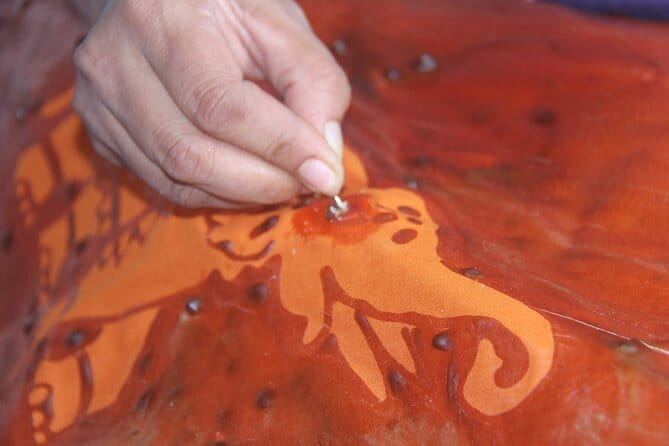
- A full batik process: Learn fabric selection, drawing, waxing, dyeing, cracking, stamping, brushwork, and wax removal.
- A small class: The maximum group size is 10, giving you room to ask for help.
- A home-based workshop: The activity takes place in a cozy studio run by an experienced batik-making family.
- Traditional tools: You may work with a funnel, tjanting, Henry tool, stamps, brushes, and wax-spraying equipment.
- A take-home creation: You make your own batik cloth, with the finished item sometimes shaped as a bag.
- Good value at $28: Tools, fabric, materials, taxes, and herbal tea are included, while transport and lunch are not.
A personal introduction to Sri Lankan batik
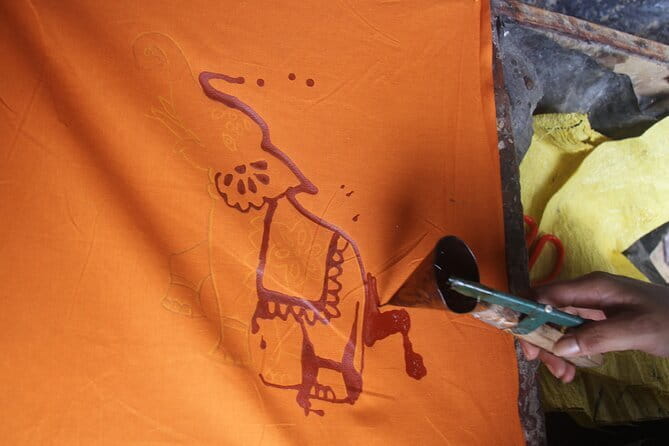
Batik is easy to admire in a shop and harder to make than it first appears. The strong patterns come from a careful sequence: wax blocks parts of the cloth, dye colors the exposed areas, and further layers build the final design.
This workshop lets you see that process from the inside. You choose or create a design, handle the tools, apply wax, work with color, and watch the cloth change as each stage is completed. The instructor, who also makes batik as part of daily work, can show you not only what to do but why each step matters.
That makes the activity more useful than a simple craft lesson. You leave with a better eye for the batik sold across Sri Lanka. You will notice the fine wax lines, layered colors, deliberate cracks, and uneven marks that show a piece was made by hand.
The setting matters, too. This is held in a family home studio rather than a large commercial classroom. It gives the session a warm, personal tone. You are learning in the kind of place where the craft is practiced, stored, discussed, and passed between family members.
A few more Kandy trips to weigh up
- Kandy Village Cooking Class
★ 5.0 · 536 reviews - Private Traditional Sri Lankan Cooking Class in Kandy with Hotel Transfers
★ 5.0 · 115 reviews - Kandy Cooking Class with Granny
★ 4.9 · 95 reviews
Arriving at Thalapiyannawa Road at 8:00 am
The meeting point is on Thalapiyannawa Road in Kandy, and the session begins at 8:00 am. Private transportation is not included, so you need to arrange your own way to the starting point.
That early hour is worth noting when planning your Kandy days. Allow enough time to reach the meeting point without rushing, especially if you are staying elsewhere in town. The activity finishes back at the same meeting point after approximately three hours and 30 minutes.
You receive booking confirmation at the time of reservation, and the experience is available as a mobile ticket. The maximum group size is 10 people. That is small enough for individual attention but large enough to work well for families, couples, or a few friends traveling together.
The first step: choosing fabric and a design
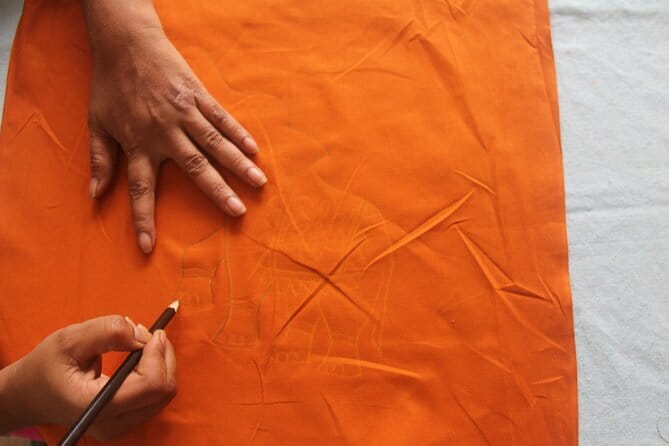
The session begins with the foundation of the piece, selecting the cloth and planning the design. This is an important stage because the final result depends on what you put down before the dye appears.
You get to create your own design rather than copying a finished souvenir exactly. If you are not used to drawing, do not worry about producing a perfect picture. Simple shapes, borders, lines, flowers, and repeated patterns can work well with batik.
The instructor guides you through the choices and helps you understand how the design will react to wax and color. The small class is useful here. You can stop and ask for help before making a mark that affects the rest of the piece.
This is also where the lesson becomes personal. Your result may be less polished than a professional batik maker’s work, but the design is yours. The finished cloth carries the marks of your own decisions, which gives it more meaning than a factory-made item.
Wax, tools, and the careful work of resisting dye
The central technique is applying wax to areas that should resist the dye. You learn about wax mixtures and waxing methods, then practice using traditional tools such as the funnel, tjanting, and Henry tool.
The names may be new, but the basic idea is clear once you handle the equipment. The tools let you place wax in lines, shapes, or larger areas. The work calls for a steady hand. Too little wax may allow color to pass through, while an uneven line can change the pattern.
You also learn about wax spraying and stamping. These methods give the cloth different textures and marks. Stamping can create repeated shapes, while spraying and brushwork allow looser effects.
Hot wax requires attention. This is not a suitable activity for careless handling, but the instructor personally guides each participant when help is needed. You are not left to guess your way through the process.
The lesson covers wax designing as well as the tools themselves. That means you get to think about how the wax becomes part of the visual design, not just a temporary coating that will be removed later.
Same island, a completely different kind of day:
- Kandy Private Guided City Tour by Tuk Tuk
★ 4.9 · 1,307 reviews - From Kandy: Sigiriya Rock & Dambulla Cave Temple Adventure
★ 4.9 · 785 reviews - Kandy to Ella Train Tickets – Reserved Seats
★ 4.5 · 523 reviews - From Kandy: Pinnawala Day Tour
★ 4.8 · 331 reviews
Cracking, brushwork, and marks made by hand
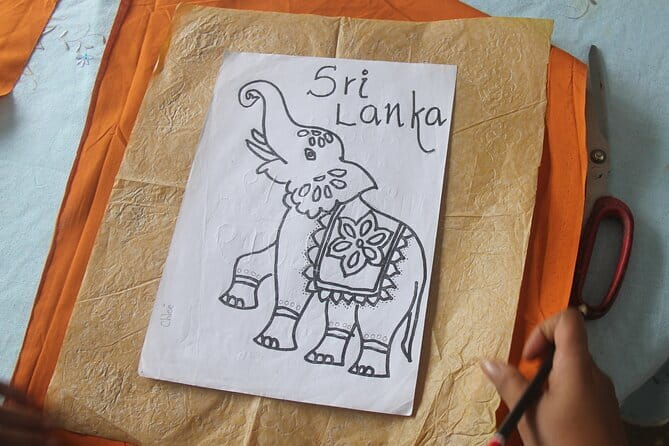
Batik is not only about clean lines. The workshop also covers cracking, brush arts, and stamping, which can add texture and character to the fabric.
Cracking creates fine lines in the wax so dye can enter in controlled patterns. It is one of the techniques that helps give batik its distinctive surface. You may find that the result is not perfectly predictable, which is part of the appeal of handmade work.
Brushwork gives you another way to apply color and design. It is more direct than using a resist tool, so you can add painted details or work with broader areas. The instructor demonstrates the process before you try it yourself.
These stages reward patience. If you prefer a craft activity where everything looks identical to the sample, this may feel demanding. If you enjoy seeing small changes produce different effects, you will find plenty to keep your attention.
Dyes and the changing colors of the cloth

The dye stage shows why batik is built in layers. You learn about dye mixtures and applications, including Naphthol dyes, vat dyes, and reactive dyes, as well as techniques for using them.
You do not need to arrive with a technical background. The instructor explains the process and demonstrates how the dyes are applied. Your job is to follow the sequence, watch the boundaries created by the wax, and see the design develop.
The cloth may look incomplete at several points. Wax can cover parts of the pattern, and colors may not reveal their final relationship until later steps are finished. That gradual change is one of the most satisfying parts of the session.
Because the dyes and wax are part of the practical lesson, expect to work rather than simply observe. Wear an attitude suited to making something by hand. The included tools, cloth, and other needed materials mean you do not need to bring a craft kit.
Removing the wax and seeing the final pattern
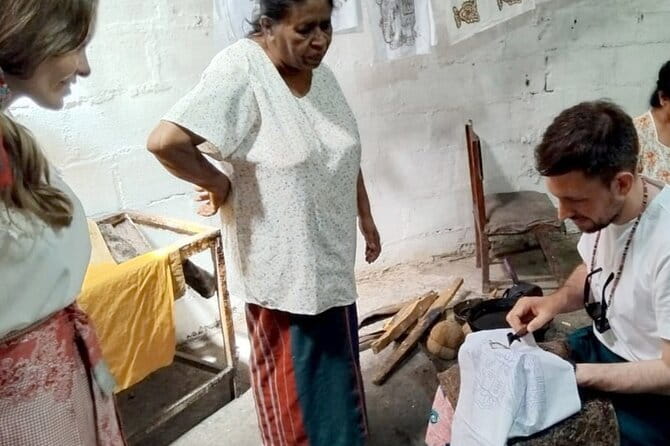
The workshop includes wax burning and wax boiling, also called de-waxing. This is the stage when much of the hidden design becomes visible.
Wax removal is not a minor cleanup step. It reveals the areas that resisted the dye and lets you see how successfully the lines, stamps, cracks, and painted sections worked together. The final cloth may surprise you because the pattern has been developing under the wax all along.
You take your own batik piece home as a souvenir. One finished project described from the workshop was a bag, so your result may be more than a flat cloth depending on the project being made that day. The exact finished form is not guaranteed, but you will create a personal batik item during the session.
This is a strong reason to pack carefully afterward. Your creation is part of the value of the experience, so protect it as you continue your journey through Sri Lanka.
Meeting Anuja, Manugi, and the family hosts
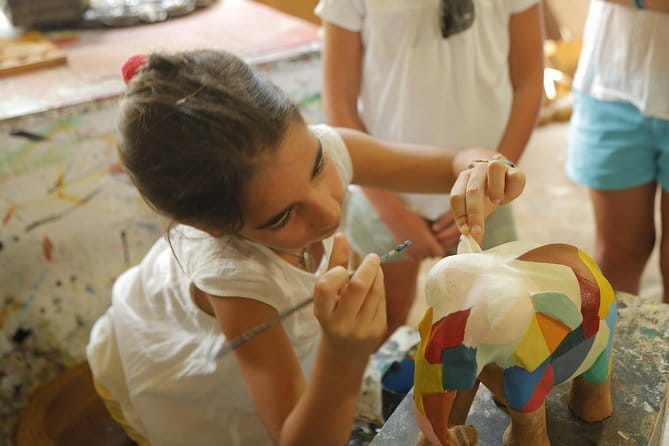
The workshop is conducted by an experienced batik-making family, with Anuja and Manugi among the people associated with the hands-on teaching. You can expect a welcoming home setting and patient instruction rather than a formal lecture.
Anuja has been described as taking participants through the steps gently and clearly. That matters because batik has several unfamiliar stages, and a rushed explanation would make the activity frustrating.
The family atmosphere is one of the strongest parts of the experience. The hosts have welcomed participants into their home, offered refreshments, and in some sessions provided food and snacks. A refreshing herbal tea is specifically included, while lunch is not part of the stated package.
You should treat the food and snacks as hospitality rather than something to plan your meal around. Have breakfast beforehand if you need a substantial meal, especially since the workshop starts early and lasts most of the morning.
Is $28 a fair price?
At $28 per person, the price is reasonable for a three-and-a-half-hour activity that includes the tools, fabric, other materials, taxes, and a finished souvenir. You are paying for instruction and time with the instructor, not just admission to a studio.
The value is strongest if you want an activity that gives you something personal to take home. A standard shopping trip may be quicker, but it does not show you the work behind Sri Lankan batik or let you create your own design.
The price does not include private transportation or lunch. That keeps the listed cost low, but you should add the cost of reaching Thalapiyannawa Road and eating afterward when planning your morning budget.
Group discounts are available, which may help if you are booking for a family or small party. With no more than 10 participants, the class should still have a personal feel even when booked as a group.
Who will enjoy this Kandy workshop?
I would recommend it most strongly to people who enjoy practical cultural activities. It works well for couples, families, friends, and solo visitors who would rather learn a local craft than spend another morning looking at displays.
It is also a good choice if you want a quieter activity in Kandy. The home studio setting and limited group size offer a change from busy sightseeing. You get conversation, demonstration, and making time in one place.
Families should consider the hot wax and dyes before booking for children. The information says most people can participate, but it does not give a specific minimum age. Young participants need to follow instructions closely.
You may want to skip it if you have only a short window in Kandy, dislike detailed handwork, or need guaranteed private transport. The early start and full 3.5-hour commitment are central to the experience, not small details.
Practical planning for the morning
Book ahead if your schedule is fixed. The activity is booked, on average, 33 days in advance, which suggests that waiting until the last day may not be wise during a busy visit.
Free cancellation is available if you cancel at least 24 hours before the local start time. A cancellation made less than 24 hours before the 8:00 am start is not refundable, and late changes are not accepted.
Bring a sense of patience and enough room in your luggage for the finished piece. The workshop supplies the required cloth and materials, but transport and lunch are your responsibility.
After the class, you finish at the same Thalapiyannawa Road meeting point. That makes it easier to plan the next part of your day, though you should arrange onward transport in advance if you are heading to another Kandy sight.
Should you book this batik experience?
Book it if you want to understand Sri Lankan batik by making it yourself. The combination of a family home studio, traditional tools, patient instruction, and a take-home creation gives the $28 price real value.
I would be especially keen to book this for a small group that enjoys learning together. Solo visitors can also fit in well, since the class is limited to 10 people and the instructor can give personal help.
Skip it only if you want a short, effortless activity or cannot manage the early meeting time. For most craft-loving visitors to Kandy, this is a thoughtful way to spend a morning and leave Sri Lanka with a souvenir that carries your own design.
FAQ
Where does the batik workshop begin?
The workshop begins at Thalapiyannawa Road, Thalapiyannawa Road, Kandy, Sri Lanka.
What time does the activity start?
The start time is 8:00 am.
How long does the workshop last?
The workshop lasts approximately three hours and 30 minutes.
Where does the activity finish?
The activity ends back at the meeting point on Thalapiyannawa Road.
What is included in the price?
The price includes all tools and equipment, cloth and other materials needed for the program, all fees and taxes, and a refreshing herbal tea.
Is transportation included?
No. Private transportation is not included, so you need to arrange your own transport to and from the meeting point.
Is lunch included?
No. Lunch is not included.
How many people can join the workshop?
The maximum group size is 10 participants. Group discounts are available.
Can I cancel for a refund?
Yes. You can cancel for a full refund up to 24 hours before the experience start time. Cancellations or changes made less than 24 hours before the start time are not accepted for a refund.
Just added around Kandy
- Udawalawe National Park Private Full-Day Safari★ 5.0 · 3 reviews
- Kandy City Tour & Famous Ambuluwawa Tower with Friendly Chauffeur★ 5.0 · 11 reviews
- White Water Rafting Kitulgala★ 4.5 · 4 reviews
- From Kandy to Nuwara Eliya Day Tour★ 5.0 · 21 reviews
- Wasgamuwa National Park Safari from Kandy★ 5.0 · 3 reviews
- Tour to the Hidden Waterfalls around Kandy (Knuckles Range)★ 5.0 · 6 reviews
- Train tickets from Kandy to Nuwara Eliya or Hatton Station★ 3.0 · 4 reviews
- Sri Lanka 4 Day Private Tour★ 5.0 · 6 reviews
Workshops, compared.
Organic cooking class sigiriya (kumara & family)
Read our review →
Traditional Gems & Jewellery Workshop with Transfers
Read our review →
Sri Lankan Cooking Class with Neranji at Homestay
Read our review →
Browse the lists this tour appears in