
Reviewed · WORKSHOPS
Kandy: Interactive Batik Workshop
Kandy’s batik workshop is more than a craft lesson. You enter a Sri Lankan family home, learn a living textile tradition, and leave with a piece you made yourself. Anuja teaches the practical work, while Manugi helps explain the process in English and keeps the session relaxed.
I like the patient, step-by-step teaching and the chance to try real tools, from a tjanting to wax stamps and brushes. I also like the personal touch: herbal tea is included, and the family has often helped arrange a tuk-tuk or offered a home-cooked meal.
The main drawback is finding the studio at 218/6 Thalapiyannawa Road in Ampitiya. Google Maps and local tuk-tuk drivers may not pinpoint it well, so contact the hosts before setting out. Wear clothes you do not mind spotting with paint, and bring a change if you can.
Key points at a glance
- Make your own souvenir: Create a personal batik cloth rather than buying a finished item in a shop.
- Learn the full process: The session covers design, waxing, dyeing, and removing the wax.
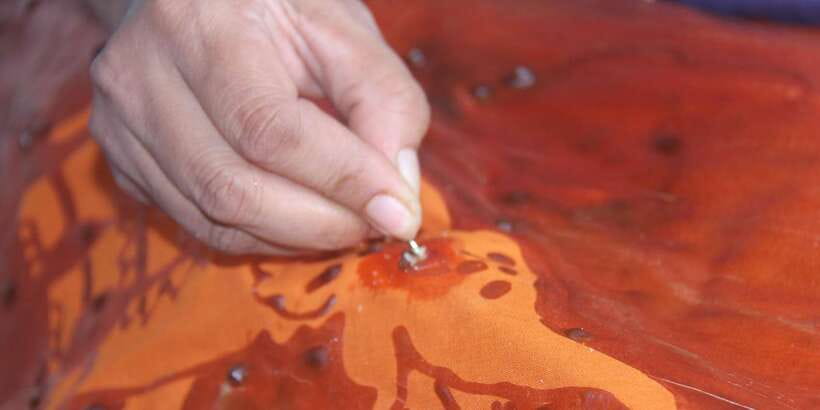
- Use traditional tools: Try a funnel, tjanting, Henry tool, stamps, brushes, and wax-spraying methods.
- Meet a local family: Anuja and Manugi host the workshop in a warm family-home setting.
- Small-group format: With no more than 10 participants, you get room to ask questions and receive help.
- Allow extra time for directions: The studio can be difficult to locate, so arrange help before your tuk-tuk ride.
Why this Kandy craft session is worth your morning
Kandy is full of major sights, from the Temple of the Sacred Tooth Relic to lake views and hill roads. A batik class gives you a different way to spend part of your visit. Instead of looking at Sri Lankan art from behind glass or buying a finished textile, you work through the same basic stages yourself.
That hands-on element matters. Batik looks simple when you see a finished cloth, but the process quickly shows its precision. Wax must go in the right place. Dye must be applied carefully. A small mistake can alter the pattern, yet the teachers help you correct errors without taking over.
The experience lasts about three and a half hours. That is long enough to understand the complete sequence without turning the activity into a full-day commitment. You can fit it into a Kandy morning or afternoon, but leave space around it rather than booking a tight connection afterward.
The group limit is 10 people. That is small enough for individual guidance, though the amount of attention you receive will still depend on how many people attend and how complex your design becomes.
A few more Kandy trips to weigh up
- Kandy Village Cooking Class
★ 5.0 · 536 reviews - Private Traditional Sri Lankan Cooking Class in Kandy with Hotel Transfers
★ 5.0 · 115 reviews - Kandy Cooking Class with Granny
★ 4.9 · 95 reviews
Entering a family home in Ampitiya
The workshop takes place at a home studio at 218/6 Thalapiyannawa Road, Ampitiya, in Kandy’s Central Province. The setting is part of the experience. You are not simply sitting in a commercial classroom with an instructor and a fixed script. You are welcomed into a family space where batik is explained through personal teaching.
Anuja is the main craft teacher, and Manugi is frequently involved in welcoming participants and explaining things in English. The family’s warmth is one of the strongest parts of the session. Their approach is friendly and patient, which helps if you have little confidence with drawing or painting.
Do not assume the address will be easy to find. Several people have had trouble with map directions, and some tuk-tuk drivers have struggled to identify the exact house. Ask the hosts for clear arrival help before leaving your accommodation. The family has assisted with drivers by phone and has also helped arrange tuk-tuks back into Kandy.
This is not a polished attraction with obvious signs and a large reception desk. That can be inconvenient, but it also explains the more personal feel. If you prefer a very simple arrival, the location may test your patience. If you are happy to make a quick call and ask nearby residents for directions, the problem is manageable.
Choosing a design before the wax work begins
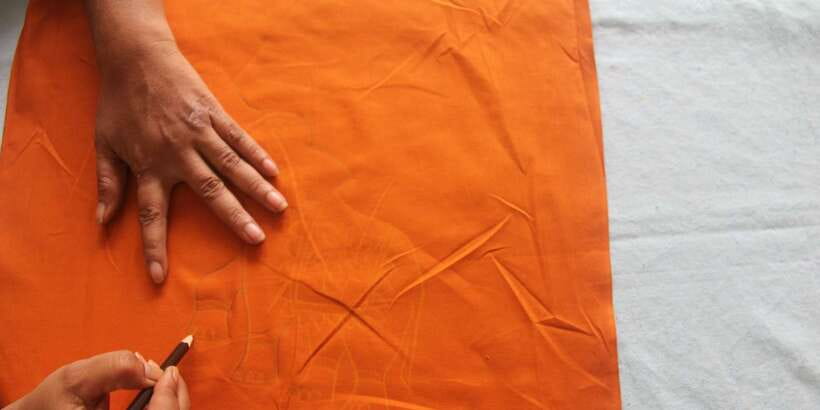
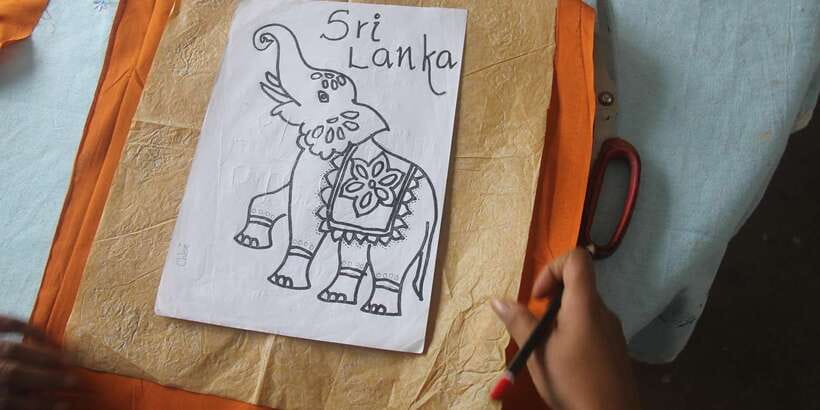
The first creative choice is your fabric and design. You can create something from your own idea or use a stencil as a guide. The stencil option is useful if you are not confident drawing, while a freehand design gives you more control over the final result.
One appealing detail is the chance to write your name in Sinhalese. That turns a standard souvenir into something personal and tied to Sri Lanka. You may also adapt a template rather than copy it exactly, giving you a middle option between strict instruction and complete improvisation.
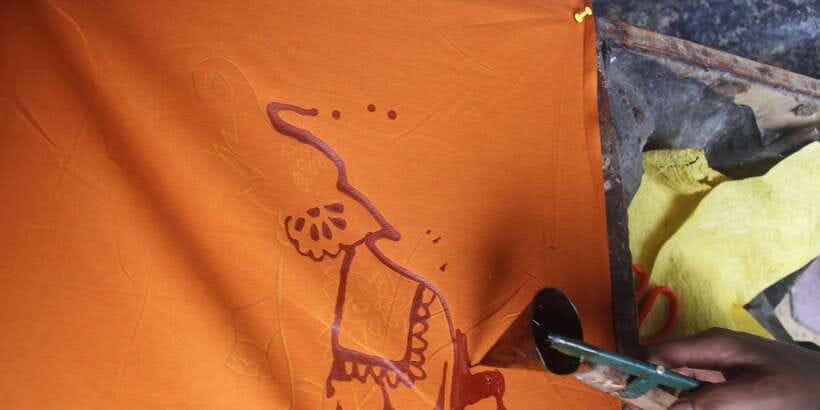
The teachers explain the traditional wax mixture and how it behaves on cloth. This preparation is important because the wax creates barriers that stop dye from reaching certain areas. The design is not painted onto the fabric in one easy step. It is built through a careful conversation between wax and color.
You should expect your first attempt to look less precise than the examples around the home. That is normal. The class is designed for beginners, and Anuja helps fix or improve mistakes. You do not need to arrive with drawing skills. Patience matters more than artistic confidence.
Trying the funnel, tjanting, and Henry tool
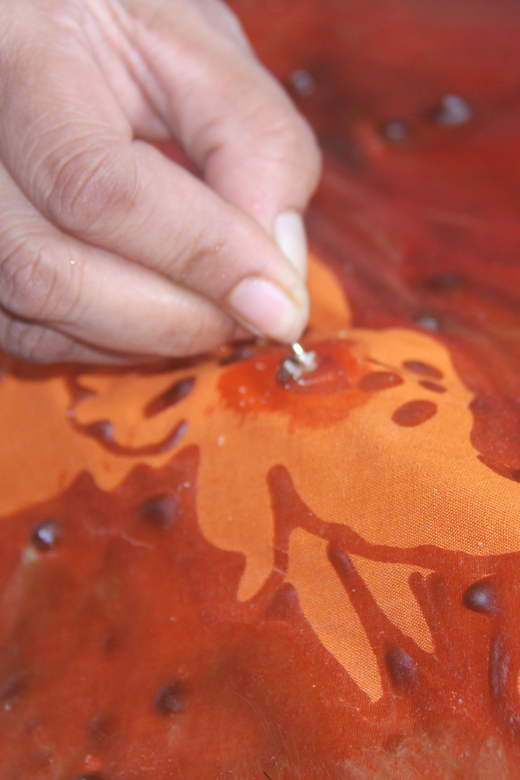
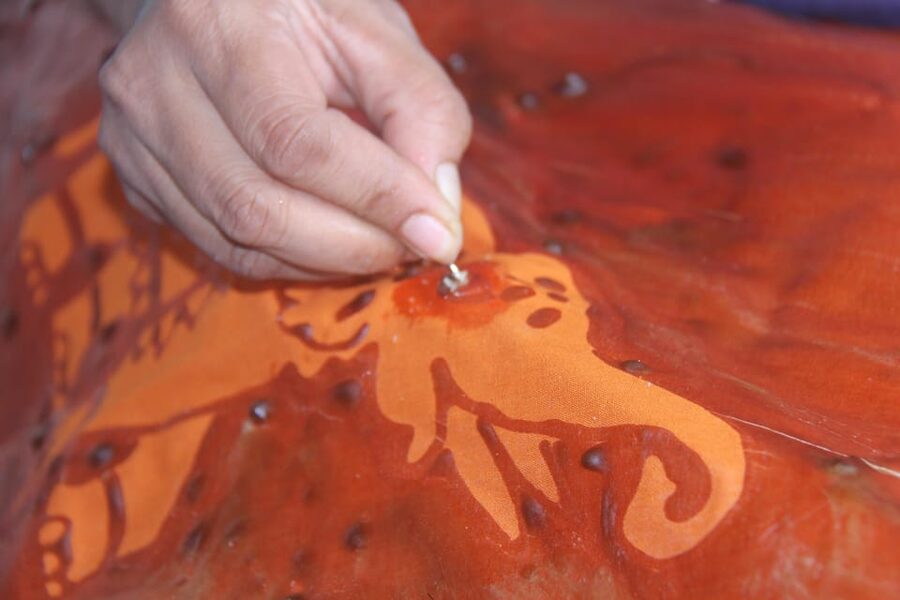
The tools give the workshop its character. You may work with a funnel, tjanting, and Henry tool to place wax on the cloth. Each tool produces a different line or mark, so the lesson becomes a practical introduction to batik technique rather than a simple painting exercise.
You can also try several surface effects:
- Wax spraying
- Stamping
- Cracking
- Brush work
- Wax pattern design
Cracking is especially useful for creating irregular lines and texture. Stamping gives you a more controlled pattern. Brushes allow broader marks, while the tjanting tool is suited to fine wax lines. The workshop lets you see how small changes in application affect the cloth.
This is where the class becomes pleasantly absorbing. Waxing requires you to slow down and watch the fabric. The work is repetitive in a good way, and the quiet setting can make the session feel calm after Kandy’s traffic and busy streets.
You should still handle the tools carefully. Hot wax is part of the process, and this is not an activity where children or adults should rush. The supplied information advises against the workshop for pregnant women and people with back problems, so consider those restrictions before booking.
Same island, a completely different kind of day:
- Kandy Private Guided City Tour by Tuk Tuk
★ 4.9 · 1,307 reviews - From Kandy: Sigiriya Rock & Dambulla Cave Temple Adventure
★ 4.9 · 785 reviews - Kandy to Ella Train Tickets – Reserved Seats
★ 4.5 · 523 reviews - From Kandy: Pinnawala Day Tour
★ 4.8 · 331 reviews
Learning how dyes change the cloth
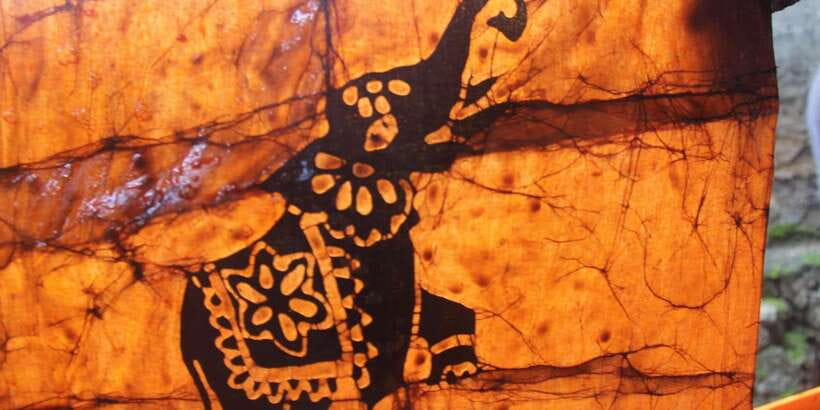
Once the wax design is in place, the focus moves to dyes and their application. You are introduced to dye mixtures and several dye types, including naphthol dyes, vat dyes, and reactive dyes.
You will not simply choose a color and brush it everywhere. The class explains how dyeing works with the wax-resist method and why the order of the stages matters. Areas protected by wax remain separate from areas that receive color, allowing the pattern to appear gradually.
This technical section gives you a better respect for finished Sri Lankan batik. A cloth that looks like a simple decorative panel may involve several decisions about line, wax, color, and timing. The workshop does not turn you into a professional textile maker in one morning, but it gives you enough understanding to see the skill behind the craft.
The final color may not be exactly what you imagined from a small sample or wet dye. That uncertainty is part of handmade work. If you want a perfectly uniform commercial product, buy one from a shop. If you want something with your own decisions and small marks in it, the workshop offers better value.
Finishing with wax boiling and dewaxing
The last major stage is removing the wax. The session explains wax burning and wax boiling, also called dewaxing. This is the point when the protected areas reveal themselves and the design becomes easier to read.
Wax removal is not just a finishing trick. It shows why each earlier step mattered. Lines that looked pale or hidden during the process begin to define the pattern. The result is a cloth that records your work from beginning to end.
You receive the batik item you create as a keepsake. Depending on your design and the project chosen during the session, it may become a cloth, bag, laptop cover, or another useful fabric piece. The exact finished item is not fixed in the information provided, so ask the hosts what format is available when you book.
Some participants have also purchased additional fabrics made by Anuja. That is optional, not part of the listed price, but it can be useful if you want a second textile souvenir without making another piece from scratch.
Tea, breakfast, and the personal welcome
Herbal tea is included. It is a small detail, but it fits the pace of the workshop and gives you a natural pause between stages.
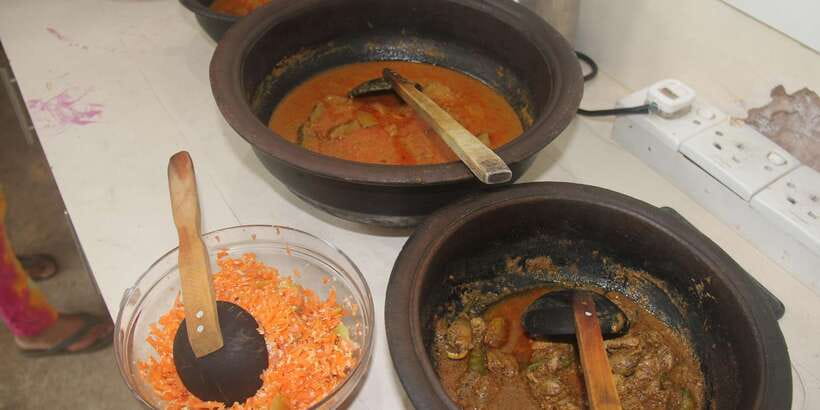
The family has also offered sandwiches, breakfast, Sri Lankan sweets, and home-cooked lunch on some occasions. Lunch is not included in the formal package, so treat any food beyond the herbal tea as an extra kindness rather than something guaranteed. If food matters to your plans, ask ahead.
The meals are one reason this feels different from a standard paid class. You may have time to talk with Anuja and Manugi about Sri Lankan culture and daily life, not just batik. A few people have also received small personal touches, such as earrings or birthday surprises, but these are individual gestures and should not be expected.
The language of instruction is English. Manugi is specifically noted for speaking excellent English, making it easier to follow the demonstrations and ask questions. Still, batik is visual and practical, so you can learn by watching even if your English is basic.
The value of a $28 Kandy activity
At $28 per person, this is a good-value half-day experience if you want more than sightseeing. The price includes the hands-on lesson, all required tools and equipment, cloth, wax, dyes, and herbal tea. Most important, it includes the piece you make.
Transportation, lunch, and any extra fabric purchases are not included. That keeps the basic cost clear, but you should budget for a tuk-tuk to and from Ampitiya. Because the address can be tricky, paying for a driver who can contact the hosts may be more useful than choosing the cheapest ride.
Compare the price with a simple textile purchase. A shop may give you a finished batik item in minutes, while this activity gives you a morning of instruction and a personal souvenir. The value is strongest if you enjoy making things and want to understand the craft. It is less attractive if you only want a quick shopping stop.
The free-cancellation policy allows a full refund when you cancel at least 24 hours ahead. You can also reserve now and pay later, which helps if your Kandy schedule is still moving around.
Who will enjoy this most
I would recommend the workshop to:
- Couples who want a shared creative activity
- Families with older children or teenagers
- Solo visitors looking for a personal cultural experience
- Anyone who likes handmade textiles and design
- People who want a quieter break from central Kandy
- Visitors who do not think of themselves as artistic but are willing to try
The class has worked well for people who describe themselves as non-creative because the teaching is broken into manageable steps. Templates are available, and the instructors help when the wax or drawing goes wrong.
It also suits teenagers particularly well. They get something tangible to take home, and the process is active enough to hold attention better than a long talk about textile history.
I would be more cautious if you have back problems, since the workshop may involve sitting and leaning over a work surface for extended periods. Pregnant women should not book this activity according to the stated restrictions. Wear comfortable clothes, and bring a change in case paint reaches what you are wearing.
What I would plan before booking
First, send a message to the hosts and confirm the starting time and directions. Availability varies, and the activity does not list one fixed daily start. Ask for a location pin or arrival instructions that you can show your driver.
Second, allow more time than the direct distance might suggest. Ampitiya is close to Kandy, but traffic and the hard-to-find address can delay you. A tuk-tuk driver may need to call the family, and local neighbors may be able to point you toward the house.
Third, decide how much creative freedom you want. If you are nervous, choose a stencil and adapt it. If you enjoy drawing, bring a simple idea in mind, but do not make it too detailed. The wax tools and the time available favor clear shapes and patterns.
Finally, plan what you will do with the finished cloth. It may be damp or require care after the session. The family has provided instructions for looking after finished batik, so listen carefully before packing it into your luggage.
Should you book the Kandy batik workshop?
I would book this if you want a friendly, hands-on morning with a real local connection. The strongest reasons are the patient teaching from Anuja and Manugi, the full batik process, and the handmade souvenir that carries your own marks.
I would skip it only if you dislike craft work, need an easy-to-find commercial venue, or have limited mobility for a seated activity. For most visitors, $28 is a fair price for three and a half hours of instruction, materials, tea, and a personal piece of Sri Lankan art.
Contact the hosts about the address, wear old comfortable clothes, and keep your schedule loose. Do that, and this can become one of the more memorable parts of your time in Kandy.
FAQ
Where does the batik workshop take place?
The studio is at 218/6 Thalapiyannawa Road, Ampitiya, in Kandy, Sri Lanka.
How long does the workshop last?
The activity lasts approximately 3.5 hours.
How much does the workshop cost?
The listed price is $28 per person.
What does the price include?
It includes the hands-on batik session, all tools and equipment, cloth, wax, dyes, and herbal tea.
Is transportation included?
No. You must arrange and pay for transportation to and from the workshop.
Is lunch included?
No. Lunch is not included. Food such as sandwiches, breakfast, desserts, or a home-cooked meal may be offered, but it is not part of the listed package.
What language is the workshop taught in?
The workshop is taught in English.
How many people can join?
The group is limited to 10 participants.
What should I wear or bring?
Wear comfortable clothes. A change of clothes may be useful in case paint gets onto what you are wearing.
Can I cancel the booking?
Yes. You can cancel up to 24 hours in advance for a full refund. You can also reserve now and pay later.
Who should not take this activity?
The workshop is not suitable for pregnant women or people with back problems.
Just added around Kandy
- Udawalawe National Park Private Full-Day Safari★ 5.0 · 3 reviews
- Kandy City Tour & Famous Ambuluwawa Tower with Friendly Chauffeur★ 5.0 · 11 reviews
- From Kandy to Nuwara Eliya Day Tour★ 5.0 · 21 reviews
- White Water Rafting Kitulgala★ 4.5 · 4 reviews
- Wasgamuwa National Park Safari from Kandy★ 5.0 · 3 reviews
- Tour to the Hidden Waterfalls around Kandy (Knuckles Range)★ 5.0 · 6 reviews
- Train tickets from Kandy to Nuwara Eliya or Hatton Station★ 3.0 · 4 reviews
- Sri Lanka 4 Day Private Tour★ 5.0 · 6 reviews
Workshops, compared.
Organic cooking class sigiriya (kumara & family)
Read our review →
Traditional Gems & Jewellery Workshop with Transfers
Read our review →
Sri Lankan Cooking Class with Neranji at Homestay
Read our review →
Browse the lists this tour appears in