
Reviewed · WALKING TOURS
Colombo Social and Political Walk
Colombo’s story is not told through grand monuments alone. This information-heavy evening walk links markets, government buildings, financial towers, and national landmarks to explain how modern Sri Lanka took shape and why the country has faced shortages of food, fuel, and electricity. Guide Chami leads the discussion in a balanced, non-partisan style.
I like the route’s mix of everyday Colombo and official Colombo, from Pettah market to the World Trade Center and Old Parliament. I also like that the walk treats current events as part of a longer story, rather than presenting the crisis as an isolated headline. The main drawback is clear: this is not a light sightseeing stroll. You need a genuine interest in politics and enough focus for two and a half hours of discussion.
Key points to know before booking
- Chami leads a politics and economics lesson on foot, with modern Sri Lankan history tied to the places around you.
- The route moves from Colombo Port City and Pettah market to national institutions, giving you both street-level and state-level views.
- The 5 pm start suits Colombo’s evening rhythm, but the experience requires good weather.
- The maximum group size is 25, so this is small enough for a guided discussion, though not a private walk.
- The $35.99 price buys about 150 minutes of focused interpretation, making it best value for visitors who want context rather than a quick photo tour.
- The walk ends at BMICH, not back at the Kingsbury Colombo, so plan your onward route from Bauddhaloka Mawatha.
Why this Colombo walk is different
Many city tours give you a name, a date, and a photo stop. This one asks you to connect the dots. The route uses Colombo itself as a set of evidence: a port development, a market, a tea brand, a financial district, a former parliamentary building, a national square, and a conference hall.
That structure gives the experience the flow of a documentary. You are not only looking at buildings. You are being asked what they reveal about trade, government, national identity, and economic pressure.
The timing matters. Starting at 5 pm places the walk in the early evening, when Colombo is shifting from the working day toward night. The experience lasts about two hours and 30 minutes, so you should arrive ready to listen, walk, and absorb a lot of material in one sitting.
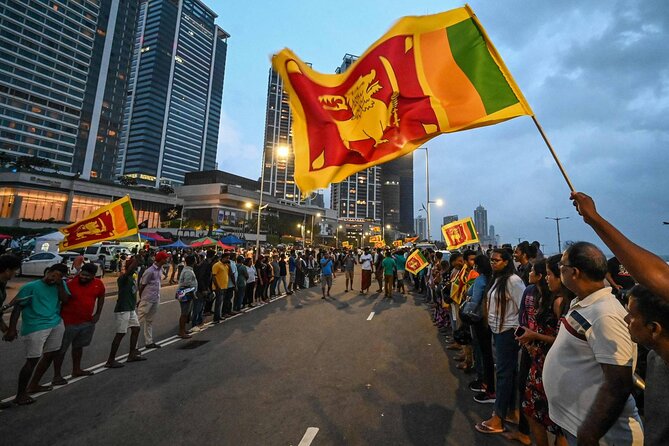
The subject is current and sometimes difficult. Sri Lanka has faced serious shortages of essential supplies, including food, fuel, and electricity, with effects on businesses and health care. The walk addresses that crisis while also reaching back to the formation of the modern state. That wider frame is useful because it helps you consider causes and consequences instead of reducing the country to a single economic emergency.
A few more Colombo trips to weigh up
- Colombo Walking Tour with Ajeet De Soyza
★ 5.0 · 43 reviews - Galle Fort Walking tour
★ 4.9 · 285 reviews - Galle Fort Walking Tour with a Resident
★ 5.0 · 88 reviews
From Colombo Port City to the capital’s changing face
The first listed stop is Colombo Port City. This is an effective place to begin a discussion about development, investment, and the city Colombo hopes to become.
You can expect the conversation here to set up questions about how a modern capital grows, who benefits from major projects, and how new construction fits into the older city. Since the walk is built around explanation, the value of this stop comes less from entering a site and more from hearing how the project fits into the country’s political and economic story.
For you, that means the first part may feel more like a guided briefing than a conventional attraction visit. If you want a tour packed with interiors and formal sightseeing, this may feel restrained. If you prefer to understand why a city is changing, it gives the rest of the route a useful starting point.
Pettah market brings the discussion down to street level
Pettah market shifts the focus from large-scale development to daily commerce. This is one of the most useful contrasts on the route. After considering a major urban project, you see a part of Colombo connected to ordinary buying and selling.
The stop helps ground the political discussion in practical life. Shortages of food, fuel, and other essentials are not abstract matters when you are looking at a market district. The walk’s subject becomes easier to grasp because it connects national decisions and economic conditions with the places where people work and shop.
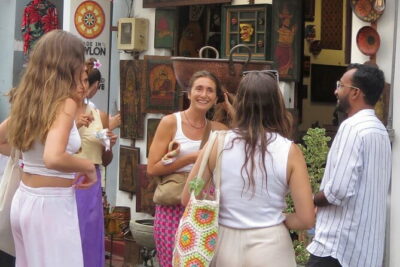
You should expect the market section to be active and full of visual detail, but do not book this as a dedicated food tour or shopping tour. The goal is interpretation, not a long market visit or a series of tastings. I like that distinction because it keeps the route focused, though visitors seeking a relaxed stroll may find the pace and amount of information demanding.
Good Market adds a social and economic angle
Good Market follows Pettah with another look at commerce and society. The two market stops are useful together because they let you consider different parts of Colombo’s public and economic life.
The supplied details do not specify tastings, purchases, or demonstrations here, so you should treat Good Market as a discussion point rather than assume a special activity. Its role is to help widen the conversation about people, products, commerce, and the social forces shaping the capital.
This is also where the walk’s balance matters. It is presented as non-biased, with the aim of helping you form your own view of Sri Lanka. That does not mean the subject is free of strong opinions or difficult questions. It means Chami’s job is to give you background and competing factors rather than tell you what conclusion to reach.
Same island, a completely different kind of day:
- Colombo: Private Tuk-Tuk City Tour with All Entry Fees
★ 4.9 · 2,154 reviews - Sri Lanka Personal Tour Driver in private vehicle
★ 5.0 · 747 reviews - Colombo Tuk Tuk City Tour -Sightseeing Entry Fees & Food Included
★ 5.0 · 678 reviews - Udawalawe National Park: Elephant Safari with Expert Guide
★ 4.9 · 641 reviews
Tea Avenue and the Dilmah building connect Sri Lanka to tea
The stop at Tea Avenue and the Dilmah building brings tea into the story. Tea is one of the most recognizable parts of Sri Lanka’s image abroad, so this point gives the walk a way to connect national identity, business, and international trade.
You may find this especially useful if you know Sri Lanka mainly through its tea. The stop can help you see that a familiar export is also part of a broader story about brands, business, work, and the country’s place in the world economy.
Again, the published details do not promise a tasting or a building tour. Go for the context. The value is in how Chami uses a recognizable Sri Lankan name to explain larger social and economic themes.
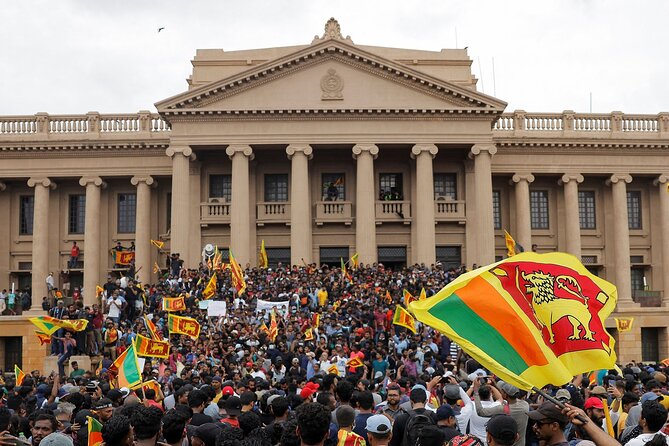
The World Trade Center and Old Parliament show two kinds of power
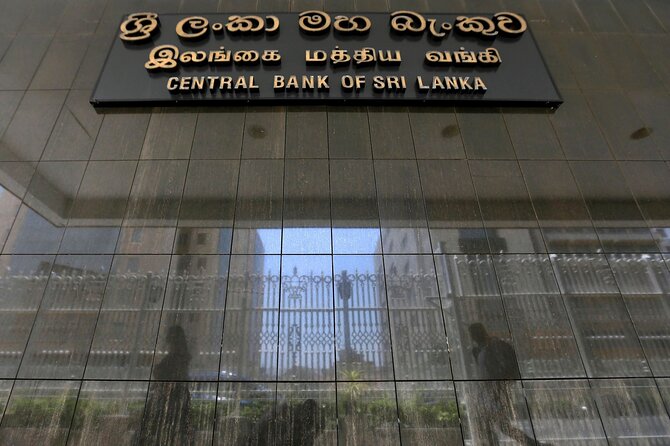
The World Trade Center represents modern finance and commercial Colombo. Old Parliament points toward the machinery of government and the country’s political past. Putting these stops on the same route creates one of the clearest comparisons of the walk.
You can expect the discussion to move between economic power and political power. That pairing helps explain why the tour visits both new business landmarks and older state buildings. Colombo’s identity is not contained in one period. It is built from institutions, trade, public decisions, and changing ideas about the future.
The route is strongest when it makes you compare places. A tower associated with international business and a former seat of government tell different stories, yet they operate within the same capital. I find that more useful than visiting either place in isolation.
Do not expect a formal inside visit to every stop. The information provided describes a route through these Colombo landmarks, not guaranteed entry, tickets, or private access. Your experience is mainly about seeing the sites and hearing the explanation that joins them.
Independence Square puts national identity at the center
Independence Square shifts the discussion toward national identity and the creation of the modern state. It is one of the route’s key historical stops, and it gives the walk a quieter place to consider how Sri Lanka presents its independence and public memory.
This is a good moment to connect earlier subjects. Port development, markets, tea, finance, and government are not separate chapters. They all sit within the larger story of how a country defines itself, manages resources, and deals with pressure.
I would pay close attention here if you are interested in the difference between a national symbol and the lived experience of a country. A polished civic site can express ideals, while the market stops show the practical challenges of daily life. That contrast is part of what makes the route more than a collection of Colombo photo stops.
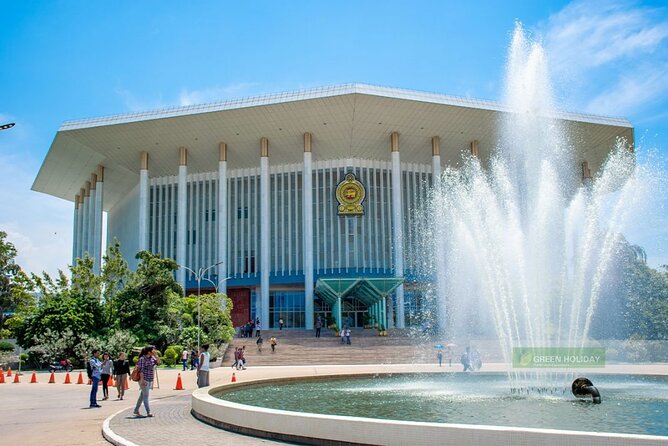
BMICH ends the route with a major public forum
The walk finishes at the Bandaranaike Memorial International Conference Hall, commonly called BMICH, on Bauddhaloka Mawatha. Its role as the endpoint gives the experience a fitting close: the route moves through places of commerce, government, national memory, and public discussion before ending at a major conference venue.
The end point also affects your planning. You begin at The Kingsbury Colombo, at 48 Janadhipathi Mawatha, and finish at BMICH. Since the experience does not return you to the starting hotel, you need to arrange your next step from the endpoint.
The supplied information does not state the exact walking distance between stops, transport arrangements, or the precise finish time. You should allow a little flexibility after the listed 2.5-hour duration. That is sensible for any experience built around conversation, where questions and explanations can affect the pace.
What $35.99 gets you
At $35.99 per person, this is not the cheapest way to see Colombo’s landmarks. It can still be good value if you want a concentrated lesson in Sri Lankan politics, economics, and modern history.
The tour lasts about 150 minutes, which works out to roughly $14.40 per hour before considering the guide’s preparation and the small-group setting. The maximum is 25 people. That is not a private tour, but it is limited enough to support a shared discussion rather than a huge crowd.
The price makes less sense if you mainly want quick introductions to Colombo sights. You can see several important places, but the main product is the explanation. I would spend the money if you want to understand the country’s current situation and are willing to give the subject your full attention.
The strongest value comes from the route’s range. In a single evening, you move from markets to major commercial buildings, from Old Parliament to Independence Square, and from current economic concerns to the formation of the modern state. You would need several separate sightseeing stops to gather the same set of themes on your own, though you would not receive the same guided connections.
Who will get the most from this experience
I would recommend this walk to people who read the news, study politics, work in international business, or simply want more than a surface view of Sri Lanka. It also suits visitors who prefer asking how a place works rather than collecting a checklist of monuments.
You should be comfortable with a serious subject and an information-heavy format. The walk is designed for people with a real interest in politics and those who want to conduct some first-hand research into Sri Lanka’s situation. That wording matters. This is not designed as entertainment with a small amount of history added on.
The experience is open to most participants, and the group can include up to 25 people. No special physical restriction is stated, but it is still a walking activity lasting about two and a half hours. If you need detailed information about the walking distance, surfaces, seating, or rest stops, you should ask Planetwonk before booking.
Guide Chami is the named guide associated with the experience, and the strongest praise centers on his command of Sri Lankan politics and economics. You can expect the quality of the walk to depend heavily on how much you engage with his explanations and the questions raised along the route.
Practical advice for the 5 pm start
The meeting point is The Kingsbury Colombo, 48 Janadhipathi Mawatha. Arrive with your mobile ticket ready, since the experience uses mobile admission and confirmation is issued at booking.
The walk requires good weather. If poor weather causes cancellation, you are offered another date or a full refund. The experience also has a minimum number of participants, so a cancellation for that reason brings the same choice of another date or a refund.
You can cancel for a full refund up to 24 hours before the start time. Inside that 24-hour window, refunds are not provided and changes are not accepted. The cut-off follows Colombo local time, so check the clock carefully if you are booking from another country.
Because the walk starts at 5 pm and ends at BMICH, I would avoid scheduling a tight dinner reservation or airport transfer immediately afterward. The stated duration is approximate, and the route has several stops with substantial discussion.
Should you book the Colombo Social and Political Walk?
Book it if you want politics, economics, and context more than conventional sightseeing. The route is unusually purposeful, and its best feature is the way it links Colombo’s markets, commercial towers, civic sites, and government landmarks into one argument about Sri Lanka.
Skip it if you want food samples, museum interiors, shopping time, or a relaxed photo walk. The experience asks you to listen closely, and the subject includes a serious national crisis. At $35.99, it earns its price through Chami’s interpretation rather than through entry tickets or physical attractions.
For the right audience, this is a useful first lesson in Sri Lanka 101. You leave with more questions, which is often the mark of a good political walk.
FAQ
Where does the Colombo Social and Political Walk start?
It starts at The Kingsbury Colombo, 48 Janadhipathi Mawatha, Colombo, Sri Lanka.
Where does the walk finish?
The experience ends at BMICH, the Bandaranaike Memorial International Conference Hall, on Bauddhaloka Mawatha, Colombo 00700.
What time does the experience begin?
The start time is 5:00 pm.
How long does the walk last?
The experience lasts approximately two hours and 30 minutes.
How much does the walk cost?
The listed price is $35.99 per person.
How many people can join the experience?
The maximum group size is 25 participants.
What happens if I need to cancel?
You can cancel up to 24 hours before the start time for a full refund. Cancellations or changes made less than 24 hours before the experience are not refunded or accepted.
Just added around Colombo
- Private Wilpatu National Park Leopard safari from Colombo/Negambo★ 5.0 · 13 reviews
- Private Trip to Sigiriya, Dambulla & safari from Colombo/ Negombo★ 5.0 · 44 reviews
- Private Multi Day Sri Lanka Tour with Chauffeur★ 5.0 · 25 reviews
- Udawalawe National Park Safari With Transfers From Colombo★ 4.5 · 6 reviews
- Cooking class in Srilanka★ 5.0 · 8 reviews
- Best Of Sri lanka Tour (06 Days 05 Nights) – Kandy- N.Eliya -Bentota-Colombo★ 5.0 · 19 reviews
- Colombo to Trincomalee Shuttle & Safari Drive★ 4.5 · 7 reviews
- Private Day Trip to Yala National Park from Colombo★ 4.5 · 11 reviews
Walking Tours, compared.
Galle Fort Heritage Walk by a Certified Heritage Interpreter
Read our review →
Browse the lists this tour appears in