
Reviewed · SIGIRIYA ROCK FORTRESS TOURS
Night Hike to see Elusive & Rare Loris in Sigiriya
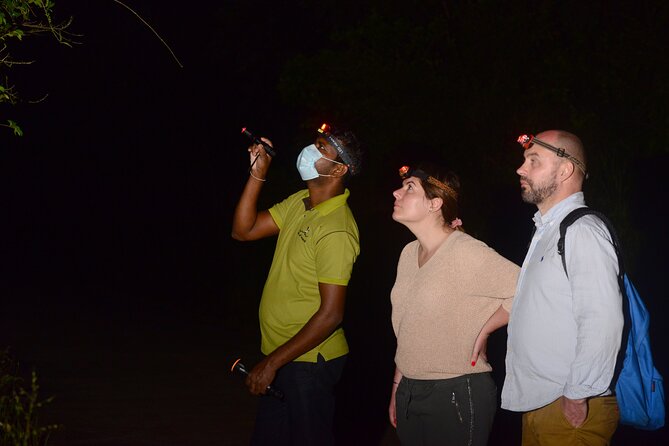
The main attraction here is simple and special: after dark, you walk through the Pidurangala jungle looking for wild lorises, Sri Lanka’s wide-eyed, slow-moving night primates. The reported success rate is above 90 percent, though sightings depend on rain, moonlight, and the animals’ own plans.
I like two things right away. First, the tour treats the loris as a wild animal, not a prop for a photo. Second, the small groups and naturalist guides make room for quiet watching, along with talk about birds, insects, geckos, and the wider forest. The main drawback is that a loris sighting is never guaranteed, even with the money-back promise, and a full moon or heavy rain can make the search harder.
Key points for your Sigiriya night
- Search Pidurangala after dark: This is a real jungle walk, not a drive-through safari.
- High chance, not certainty: The advertised success rate is over 90 percent, but weather and moonlight matter.
- Small groups help: The maximum group size is eight, with two guides sometimes leading a very small party.
- Headlamps are supplied: You still need long trousers, long sleeves, and closed-toe shoes.
- Expect more than lorises: Sleepy birds, unusual nests, geckos, mouse deer, lizards, and glowing insects may appear.
- Good conservation value: Back of Beyond presents the activity as part of its work to protect lorises and their habitat.
Why this little primate is worth a night out
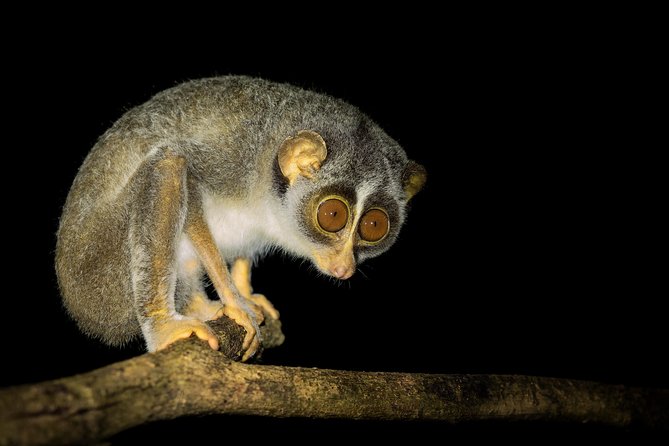
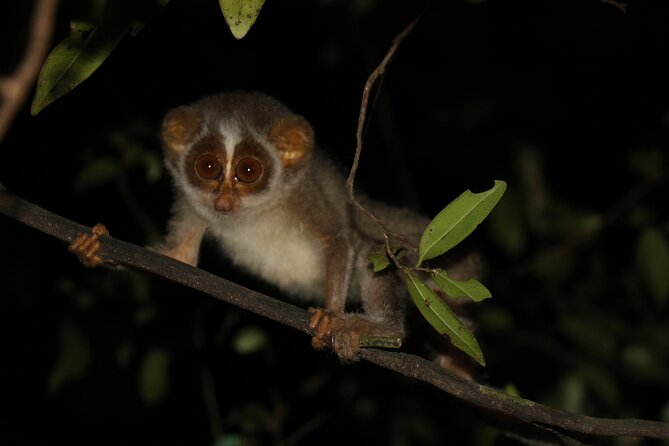
The loris is not a big, flashy animal. It does not roar, leap across a canyon, or pose on command. You are looking for a small primate high in the trees, often identified first by the reflection of its large eyes in a beam of light.
That is exactly what makes the walk appealing. You are not ticking off a famous monument. You are paying attention to branches, leaves, tiny movements, and sounds that would pass unnoticed during the day. The guide’s job is crucial, since an experienced eye can spot a loris long before you do.
The guides also use the walk to explain how nocturnal animals share the forest. You might hear crickets and owls, see sleeping birds, or notice insects that seem to glow. One outing also produced a kangaroo lizard, a gecko, and an adult mouse deer with its young. Those sightings are not promised, but they show why the walk is more than a single-animal hunt.
I would set your expectations correctly. The lorises may be visible only for a few moments, partly hidden in leaves, or high above your head. One account describes a close sighting where the animal appeared to pose for photographs. Another describes a long search after rain, followed by one loris moving through the branches just when hope was fading. That is the rhythm of wildlife watching: patience first, reward second.
More Sigiriya Rock Fortress Tours in Sigiriya
- From Colombo: Sigiriya and Dambulla Day Trip with Safari
★ 4.7 · 842 reviews - Organic cooking class sigiriya (kumara & family)
★ 5.0 · 650 reviews - From Sigiriya: Minneriya National Park Private Jeep Safari
★ 4.9 · 415 reviews
Starting at Rocko’s Vegetarian Cafe in Pidurangala
The meeting point is given as Rocko’s Vegetarian Cafe in Pidurangala, near Sigiriya. The supplied map link displays a point on Sigiriya Road, so I would check the exact meeting instructions before setting off. That small bit of planning matters at night, when a nearby café and a road pin can feel less obvious than they do in daylight.
The setting is part of the charm. The activity begins near a jungle lodge or café area rather than at one of Sigiriya’s grand archaeological entrances. You receive an introduction before walking, and the program includes a presentation about lorises and their protection work.
One visitor found the presentation especially useful, while another felt it could be more playful. I think that is a fair way to see it. If you already know a lot about primates, the briefing may feel basic. If you are new to lorises, it gives you a useful frame for the night and helps you understand why the guides avoid disturbing them.
You may also receive a drink before heading out. The important point is to arrive ready for a short briefing, rather than treating the meeting place as only a point where you collect a ticket.
The short briefing gives the walk a purpose
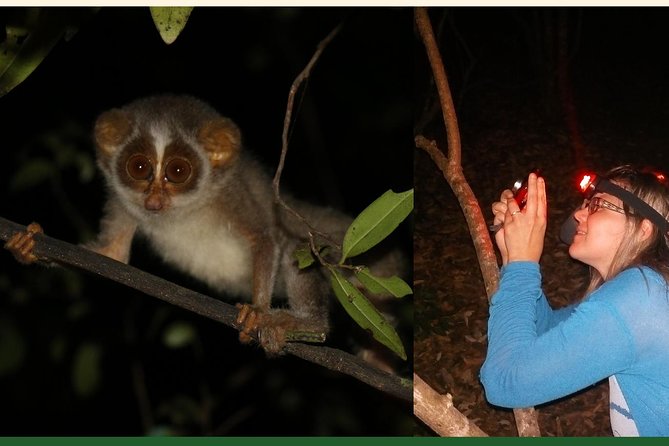
The opening talk explains what makes lorises unusual and what the local conservation effort is trying to protect. This is one of the strongest parts of the experience because it changes the way you watch.
Without that context, you might simply hope for a cute animal in a tree. With it, you begin to understand the value of habitat, darkness, and careful observation. The guides explain the animals and the forest ecosystem, then provide the gear needed for the search.
The guides speak English, and the activity is limited to eight participants. That group limit matters in a dark forest. A quieter group creates less noise, gives everyone a better chance to see when a guide points upward, and avoids turning the walk into a crowded line of headlamps.
Small groups are not always guaranteed to mean private walks. Still, the maximum of eight is modest, and very small parties may receive two guides. One couple who arrived late ended up with a private outing, and the guides continued working hard to find animals for them. I would not count on a private tour, but the example shows that group size can vary in practice.
Following the headlamps into Pidurangala
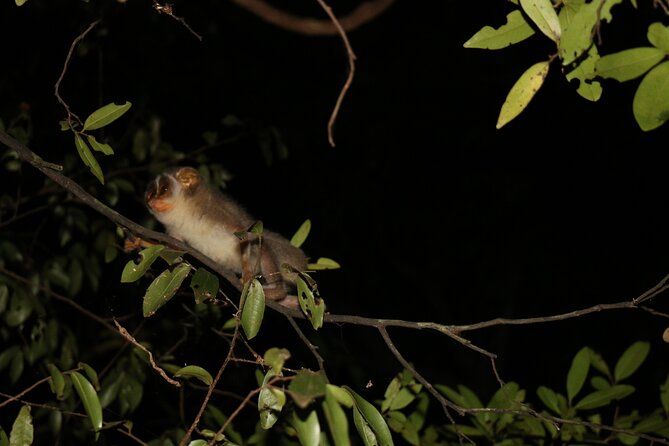
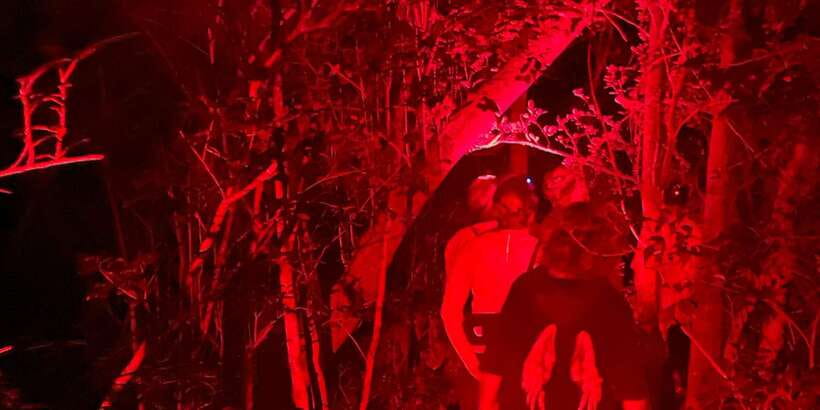
After the briefing, you walk into the nearby Pidurangala jungle. The route is described as a guided hike, not a paved attraction with fixed viewing platforms. You should expect uneven ground, darkness, vegetation, and the need to watch where you place your feet.
The walk is not long by adventure-tour standards. The booking information gives a duration of about 1.5 hours, while the itinerary describes the hike as lasting two hours. I would allow roughly two hours from start to finish and confirm the current timing when you book. That is enough time to feel that you have gone somewhere, but not so much that the evening becomes exhausting.
This is a walking search, so the pace is controlled by sightings. You may stop often while a guide scans the trees. You may spend several minutes looking at one branch before the animal is finally located. The quieter you are, the more useful those pauses become.
The company supplies necessary gear, including headlamps. Bring your own practical clothing: long sleeves, long trousers, and closed-toe shoes are required advice for this jungle route. Those clothes protect you from branches and insects and give you better footing than sandals.
Do not dress for a glamorous evening near Sigiriya. Dress for a damp walk in the dark. The jungle can feel very different after rain, and wet weather may cause lorises to hide.
Same island, a completely different kind of day:
- From Sigiriya: Minneriya National Park Elephant Safari
★ 4.8 · 365 reviews - Private Jeep Safari at Minneriya National Park to Visit Elephants
★ 5.0 · 338 reviews - Minneriya National Park halfday Safari
★ 5.0 · 293 reviews - Sajee’s Place Cooking Class
★ 5.0 · 237 reviews
How good are your chances of seeing a loris?
The stated success rate is over 90 percent, which is unusually encouraging for a wild-animal walk. The money-back guarantee if no loris is spotted adds some financial protection, but it does not make the sighting automatic.
A good example is a rainy evening when the animals stayed hidden for much of the search. The group saw birds, insects, and nests, then eventually found one loris above their heads. On another wet night, the lorises appeared after the rain stopped, with five or six animals located during the second attempt.
Moonlight also matters. A full moon can make lorises retreat farther into the forest, so you may see them at a greater distance or only briefly. This is useful information if you have flexible dates. A dark night may offer better viewing conditions, but the animal’s behavior still comes first.
The best attitude is to see the high success rate as a strong likelihood, not a contract with nature. You may see one loris. You may see several. Sightings of three, four, or five have occurred, and one walk found two, including one excellent close view. But you should be pleased with a careful sighting rather than expect a long photo session.
The guides do the hard work of locating the animals. Your part is to stay patient, keep your light controlled, listen carefully, and avoid rushing toward the tree.
What else you might see under the trees
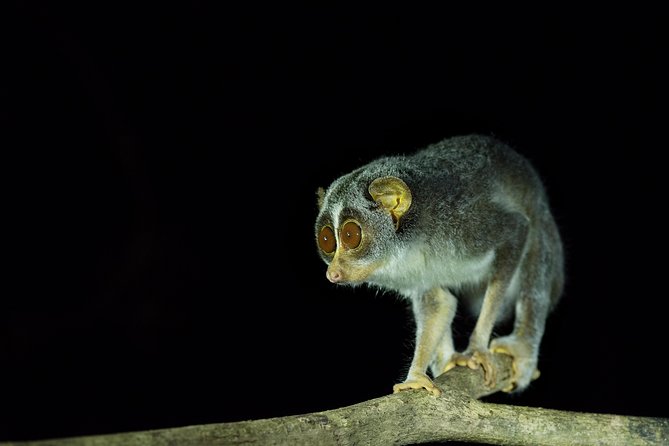
A loris is the star, but the supporting cast gives the walk much of its character. The forest becomes more noticeable at night because your attention narrows. A sleeping bird in a branch can suddenly seem as interesting as a large animal in daylight.
Recorded sightings include a kangaroo lizard hanging asleep from a branch, an unusual gecko, adult and baby mouse deer, bioluminescent insects, and distinctive nests. These are not included as a fixed checklist. They are reminders that the Pidurangala jungle continues working after visitors finish with the day’s sightseeing.
The sounds matter too. Crickets provide the steady background, while owls and other unseen animals add the occasional call. You may spend part of the walk seeing very little and still feel surrounded by life.
This is why I would not book the outing only if you want a photograph of a loris. The better reason is that you want to learn how to notice a forest at night. If the guide finds other animals along the way, they become part of the evening rather than consolation prizes.
A conservation-minded way to watch wildlife
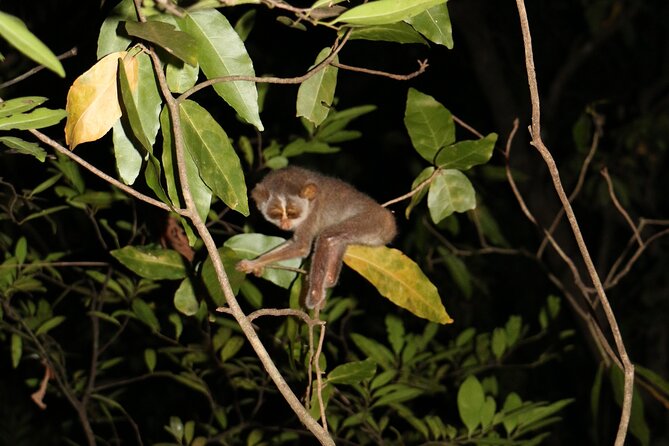
The strongest ethical feature is the emphasis on habitat protection. Back of Beyond describes itself as a conservation organization as well as a tour provider, and part of the ticket money supports maintaining habitat for lorises.
The guides also appear to approach sightings with care. The goal is to show you the animal in its natural setting, not handle it, bait it, or force it into a better position. That distinction matters in Sri Lanka, where close animal encounters can sometimes be arranged in ways that are not good for wildlife.
One unusual incident involved a loris found on a road after being knocked from a tree. It is a reminder that conservation is not an abstract subject here. Roads, development, and fragmented forest can affect small nocturnal animals directly.
You should still follow the guide’s instructions around light, noise, and distance. A headlamp is useful for finding your footing, but shining a bright beam directly at an animal for a long time is not considerate. The best sighting is one where you see the loris without making it change its behavior.
Is $64 good value for two people?
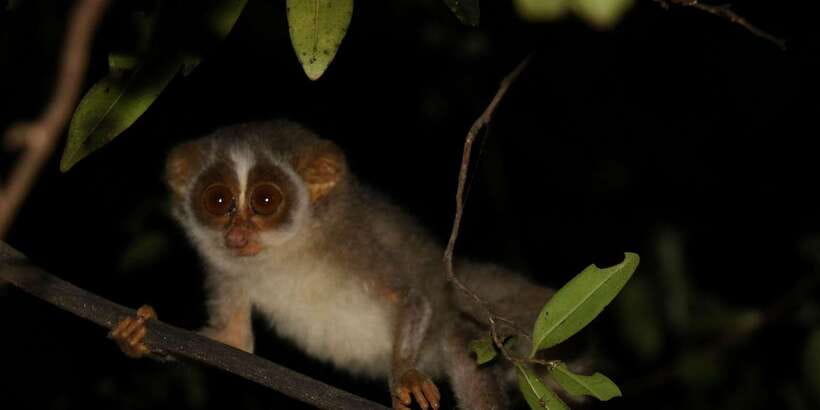
The price is $64 per group of up to two, rather than $64 per person. That makes the value quite good for a couple, especially if the outing is handled as a very small private or near-private walk. It also includes the guide, the introductory talk, supplied equipment, and the possibility of a money-back refund if no loris is found.
The value is not just the number of animals seen. You are paying for someone who knows where to look, can interpret what you see, and can help you move through the jungle after dark. For a pair interested in wildlife, that is more useful than wandering into the forest alone with a phone flashlight.
The comparison with Sigiriya’s more famous attractions is also worth considering. One person felt the loris walk was a better use of money than spending an extra $30 on Lion Rock. I would not treat those as interchangeable experiences. Sigiriya Rock gives you archaeology and major views. This walk gives you a close look at living wildlife and a quieter night in the forest.
If you are traveling alone, the value depends on the booking terms for one participant. The published price is for a group of up to two, so check how solo reservations are handled before paying.
Free cancellation is available up to 24 hours before the activity for a full refund, and you can reserve now and pay later. Those policies are useful if your Sigiriya plans may shift because of weather.
Who will enjoy this most?
I would recommend the walk to nature lovers, photographers who are comfortable with imperfect conditions, families with older children, and anyone who wants a break from temples and viewpoints. It suits people who enjoy a slow search more than a fast attraction.
It is also a good choice if you care about conservation and want your wildlife activity to support habitat protection. The introduction helps make the evening educational, not just entertaining.
You may want to skip it if you dislike walking on uneven ground in darkness, need guaranteed close photographs, or have no patience for waiting while a guide scans the trees. The walk is short, but it is still a jungle hike. Long sleeves, long trousers, and closed-toe shoes are not optional style suggestions.
Rain is another consideration. Wet weather can make the route less comfortable and can reduce sightings for a while. Still, rain does not always end the evening. The lorises may appear once conditions improve, so a flexible mindset helps.
Practical advice before you book
Wear lightweight long trousers, a long-sleeved shirt, and sturdy closed-toe shoes. Bring only what you need, since a large bag will be awkward on a dark trail.
Confirm the meeting point, since the activity information names Rocko’s Vegetarian Cafe while the map link points to Sigiriya Road. Arrive with enough time for the briefing, especially if you are relying on a tuk-tuk or other local transport.
Keep your phone ready for a quick photograph, but do not let photography take over. A loris may be visible for only a short time, and watching the animal directly is often more rewarding than trying to capture a perfect image.
Ask about the night’s moon and weather if you have flexible plans. A cloudy or darker evening may be preferable to a bright full moon, while heavy rain can delay sightings. The guide can tell you how conditions are affecting the search.
The operator lists the group limit as eight, but a smaller party may be possible. If a private-feeling wildlife outing matters to you, ask what size group is expected for your date.
Should you book the Pidurangala loris walk?
Yes, if you want a short, unusual wildlife experience near Sigiriya and can accept that nature sets the schedule. The high sighting rate, small groups, supplied headlamps, conservation focus, and strong guiding make this a worthwhile addition to a Sigiriya stay.
Book it for the chance to see a rare nocturnal primate, but stay for the whole forest. The crickets, sleeping birds, geckos, mouse deer, and glowing insects help turn a single-animal search into a proper night adventure.
I would be most careful about the timing and meeting point, and I would not promise children a guaranteed close encounter. For two adults who enjoy wildlife and quiet observation, $64 for the group is a fair price, especially with the refund policy if no loris appears.
FAQ
Where does the loris night hike meet?
The stated meeting point is Rocko’s Vegetarian Cafe in Pidurangala. The supplied map link shows a location on Sigiriya Road, so confirm the exact point before the evening begins.
How long does the activity last?
The booking information gives a duration of 1.5 hours. The walking itinerary describes the hike as two hours, so allow about two hours and confirm the current schedule when booking.
How likely am I to see a loris?
The advertised success rate is over 90 percent, and a money-back guarantee applies if no loris is spotted. Sightings can still be affected by rain, full moon conditions, and the animals’ behavior.
What should I wear?
Wear long trousers, a long-sleeved shirt, and closed-toe shoes. The walk takes place through jungle areas at night.
Is equipment provided?
Necessary equipment is provided, including headlamps for the walk.
What language is the tour offered in?
The tour has a live English-speaking guide. The group is limited to a maximum of eight participants.
More Evening Experiences in Sigiriya
- Sigiriya: Sunrise or Sunset Kayaking Tour
★ 4.8 · 11 reviews - Sigiriya Sunrise/Sunset Guided Boat Ride
★ 5.0 · 8 reviews - Sigiriya: Sigiriya or Pidurangala Sunrise/Sunset Hike
★ 5.0 · 5 reviews - Pidurangala Rock: Sunrise/Sunset Picnic Hike
★ 3.6 · 4 reviews
More Hiking & Trekking in Sigiriya
- Sunrise or Sunset Hike Pidurangala Rock with Scenic Views
★ 4.6 · 125 reviews - Sigiriya Lion Rock Hike & Minneriya National Park Safari
★ 4.8 · 55 reviews - Night Hike to see Elusive & Rare Loris in Sigiriya
★ 4.5 · 43 reviews - Sigiriya Rock Hike & Minneriya Elephant Safari – Day Tour
★ 4.3 · 15 reviews
Just added around Sigiriya
- Private Safari Tours in Minneriya National Park★ 5.0 · 18 reviews
- Organic Cooking Class Sigiriya TASTY TASKS★ 5.0 · 17 reviews
- Night Hike to see Elusive & Rare Loris in Sigiriya★ 4.5 · 43 reviews
- Malee Cookery Lessons★ 5.0 · 26 reviews
- Sigiriya Rock Climb, Village Tour+Cooking Class & Elephant Safari★ 5.0 · 9 reviews
- Sigiriya and Dambulla Day Tour from Kandy★ 5.0 · 6 reviews
- Sigiriya Village Tour and Lunch with Hotel Pick up from Sigiriya★ 5.0 · 10 reviews
- Private Polonnaruwa Sightseeing Day Tour from Sigiriya★ 5.0 · 31 reviews
Sigiriya Rock Fortress Tours, compared.
Organic cooking class sigiriya (kumara & family)
Read our review →

Kandy to Sigiriya Day Tour and Dambulla cave temple with private vehicle
Read our review →
Private Day Trip to Sigiriya & Dambulla from Kandy – Aaliya Tours
Read our review →Browse the lists this tour appears in