
Reviewed · COOKING CLASSES
Kandy Village Cooking Class
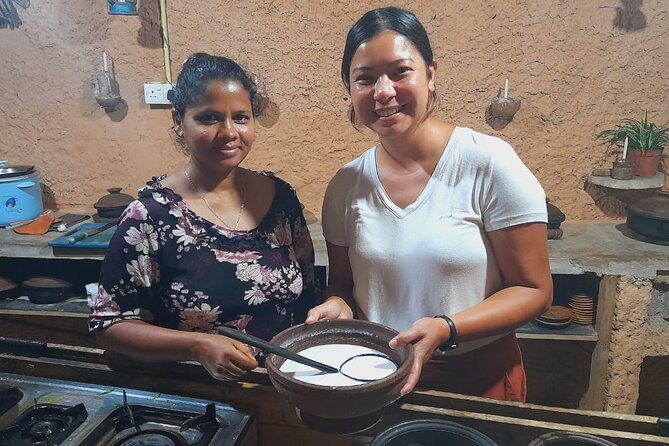
The best part of this Kandy cooking class happens before you reach the kitchen. You begin at Kandy Municipal Central Market, choosing five vegetables and either chicken or fish while learning how local spices and ingredients are used. Then Shyama and her family guide you through a full Sri Lankan meal in their village home.
I like the market visit because it gives the cooking real context, not just a list of recipes. I also like the generous, hands-on format: depending on your choices, you may prepare eight to eleven dishes, including curries, sambal, coconut milk, and a sweet finish. The main thing to check is transport, since pickup is offered but return travel may cost extra.
At a glance: five useful things to know
- You shop before you cook: Select five vegetables, then choose chicken or fish at Kandy Municipal Central Market.
- Shyama leads the lesson: She and her family teach practical methods, spice use, coconut milk preparation, and several curry recipes.
- The meal is substantial: Past menus have included eight to eleven dishes, rice and curry, sambal, several vegetable curries, chicken, fish, and caramel pancakes.
- The setting is rural: After the market, you travel to a village kitchen near Kandy, often described as a peaceful countryside setting surrounded by nature.
- It suits different group sizes: You can book alone, as a couple, or with a group of up to 15 people.
- The price is strong value: At $25 per person, you get the market visit, cooking instruction, ingredients, and the meal you prepare.
Why this is more than a curry lesson
Sri Lankan food is easy to enjoy and harder to understand from a restaurant menu. A plate of rice and curry can contain several separate dishes, each with its own balance of coconut, chili, sourness, salt, and spice. This class helps you see how those parts fit together.
The experience starts with a walk through the Kandy Municipal Central Market, at 144 Central Market, Kandy 20000. This is the stated meeting point, so plan to arrive there unless your pickup arrangement says otherwise. The market stop is not just a quick shopping errand. Shyama explains the vegetables and spices, helps you choose the ingredients, and lets you decide what will appear in your meal.
That choice matters. You are not simply handed a fixed menu with ingredients already measured. You select five vegetables from the produce available, then choose chicken or fish. The result is a meal shaped partly by your own taste and partly by what looks fresh that day.
I especially like this approach for first-time visitors to Sri Lanka. You learn that vegetables used in local cooking may not look familiar, and you see spices in their everyday setting rather than only in small jars arranged for tourists. It also gives you useful shopping skills if you plan to cook at home later.
The market can be busy, and the class is not designed as a long guided tour of every corner of Kandy. Think of it as a focused ingredient lesson. You will spend time learning what to buy and why, then move on to the village kitchen.
A few more Kandy trips to weigh up
- Private Traditional Sri Lankan Cooking Class in Kandy with Hotel Transfers
★ 5.0 · 115 reviews - Cooking With Village Family
★ 5.0 · 104 reviews - Kandy Cooking Class with Granny
★ 4.9 · 95 reviews
From central Kandy to a village kitchen
After the market, the experience continues in a nearby village district outside central Kandy. The exact transfer arrangement should be confirmed when you book. Pickup is offered, and several booking details describe a tuk-tuk or driver collecting participants, but the class begins officially at the central market meeting point.
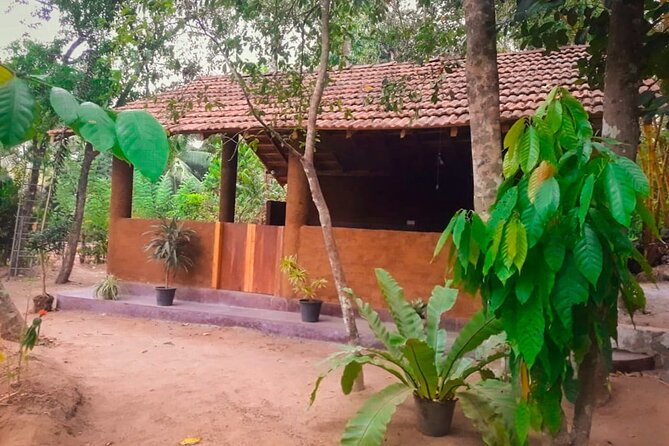
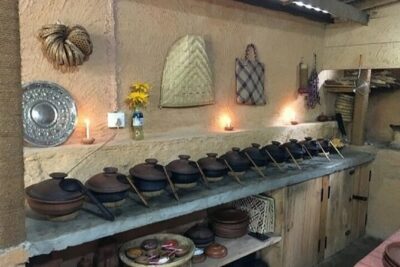
The village setting changes the feel of the afternoon. Instead of cooking in a restaurant school or a polished demonstration kitchen, you work beside a family home in a traditional kitchen setting. Descriptions of the venue refer to a countryside house, a traditional clay house, and an outdoor kitchen surrounded by tropical vegetation.
I like that the setting connects the food to ordinary home life. The point is not only to reproduce a curry but to see the tools, methods, and pace behind the meal. You may also have a brief visit to the nearby village, giving you a look at local life beyond the kitchen.
Do not expect a major sightseeing circuit here. The village visit is brief, and the cooking remains the main event. Still, this small change of scene adds something that a city-center lesson cannot easily provide.
The listed itinerary also names Kandy City Center, Kandy Lake, Kandy View Point, Kandy Lake Club’s cultural dance show, Kandy District, Kandy, and the Temple of the Sacred Tooth Relic. These are associated Kandy locations, but the detailed activity description focuses on the market, village visit, and cooking class. I would not assume that a full sightseeing tour of all seven places is included in the three-hour schedule. If you want temple entry, a viewpoint stop, or a cultural dance performance, ask before booking.
Choosing vegetables, spices, and chicken or fish
At the market, you choose five vegetables from the available selection. This is one of the most useful parts of the class because Sri Lankan curry is not one fixed recipe. The vegetables determine cooking time, spice balance, and the amount of coconut milk or other liquid needed.
You can also choose chicken or fish. That gives couples and small groups an easy way to tailor the meal, though the information does not promise that every participant receives a separate dish. If you have a strong preference, state it clearly before the cooking begins.
The market lesson includes explanations of spices and other ingredients. You will learn how they are used in Sri Lankan cooking, rather than simply watching someone cook from start to finish. The class also covers how to make coconut milk from scratch, an especially worthwhile skill because coconut gives many Sri Lankan curries their soft, rounded flavor.
The food may be spicy, but the supplied details do not promise a particular heat level. Tell Shyama about your preferences and dietary needs early. One person with celiac disease was able to avoid certain ingredients, including soy sauce, mustard, papadam, and pancakes, but did not receive a fully separate gluten-free menu. If you have an allergy or strict dietary requirement, contact the provider before the class and ask exactly what can be changed.
A hands-on lesson with Shyama and her family
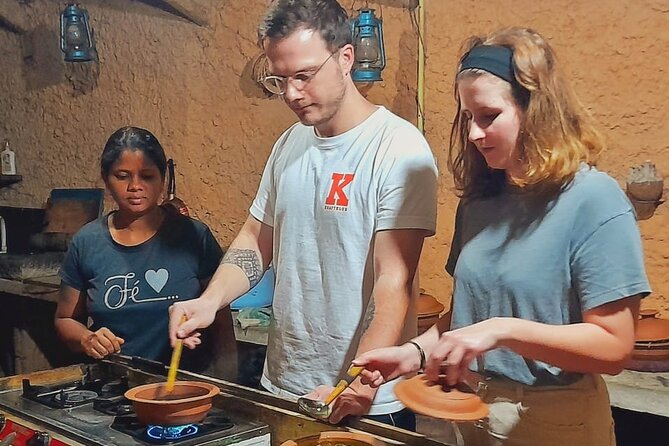
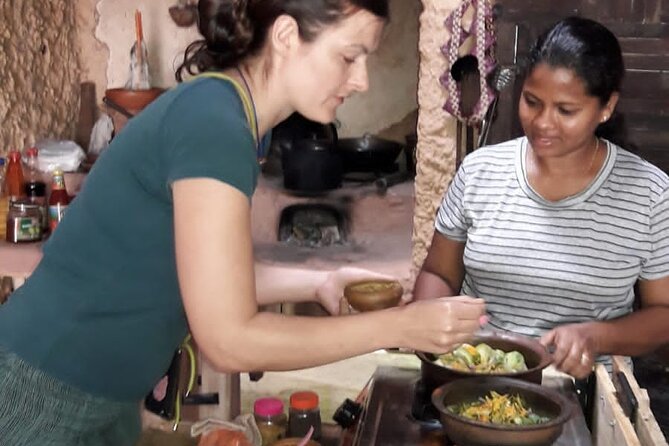
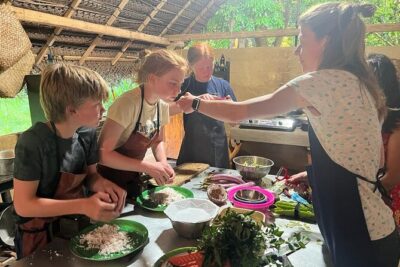
Shyama is the main teacher named in the feedback, and her husband and other family members may also help in the kitchen. The teaching style is practical. You prepare ingredients, take part in the cooking, ask questions, and follow the recipes as the meal comes together.
The number of dishes varies. Descriptions of past sessions include five curries, eight dishes, nine dishes, and as many as eleven varied dishes. That range likely reflects the size of the group, menu choices, and the ingredients selected at the market. It is safer to expect a broad meal with several dishes rather than a fixed number.
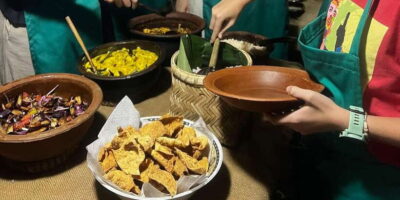
Typical elements have included vegetable curries, chicken curry, fish, sambal, rice, coconut milk, aubergine curry, and caramel pancakes with coconut. The sweet course is a nice touch. It turns the class into a complete meal instead of ending once the savory dishes are ready.
The lesson is especially good for people who want to cook rather than watch. You will not just sit near a stove while someone else handles the difficult parts. At the same time, the supplied details do not specify that every person uses an individual cooking station. In a larger group, you may share tasks, so solo participants who want constant one-to-one instruction should consider booking on a quieter date.
The maximum group size is 15. That is manageable for a family-style lesson, but it is not the same as a private class. A large family group can work well here, and the format accommodates children through grandparents, according to the supplied experience details. Solo participants can also join and take part with the wider group.
Same island, a completely different kind of day:
- Kandy Private Guided City Tour by Tuk Tuk
★ 4.9 · 1,307 reviews - From Kandy: Sigiriya Rock & Dambulla Cave Temple Adventure
★ 4.9 · 785 reviews - Kandy to Ella Train Tickets – Reserved Seats
★ 4.5 · 523 reviews - From Kandy: Pinnawala Day Tour
★ 4.8 · 331 reviews
The meal is the reward at the end
Once the dishes are ready, you sit down and eat what you have made. This is where the class pays off. Sri Lankan rice and curry is meant to be enjoyed as a collection of flavors, not as one bowl of sauce, and preparing several dishes helps you understand that contrast.
You might have a mild vegetable curry beside a sharper sambal, a rich chicken or fish preparation, rice, and a sweet pancake course. The exact menu depends on your choices at the market. The food is described as generous, and some groups prepared so many dishes that lunch became the main event of the day.
Plan your meals around this class. A three-hour session that includes shopping, transport, preparation, cooking, and eating can be filling. The advertised duration is approximately three hours, though the village transfer and the number of dishes may affect the pace.
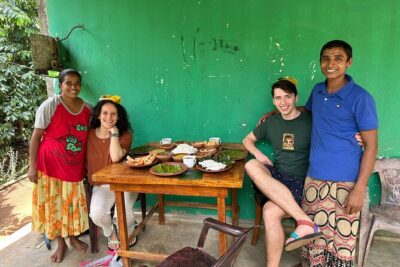
The family hospitality is another important part of the experience. You are welcomed into a home setting, not simply processed through a commercial kitchen. That does not mean the class is formal or luxurious. Its appeal is the personal setting, the family connection, and the chance to ask questions while the food is being made.
Recipes are provided according to the supplied information. Keep them somewhere safe, because the real value of a cooking class appears after your holiday, when you try to make the curry again with ingredients available at home.
What the $25 price really buys you
At $25 per person, this is a strong-value activity in Kandy. The fee covers a market visit, ingredient selection, instruction, the cooking session, and the meal. You also get a short village visit and the chance to learn recipes you can use later.
The value is better for people who care about food and local life than for those seeking a long list of Kandy sights. You are paying for access to a family kitchen and for guided participation, not for a full city tour or a high-end culinary school.
Transport is the one cost that needs attention. Pickup is offered from a designated point for the market visit, and the activity ends back at the meeting point according to the booking information. However, booking details also indicate that some participants had to arrange and pay for their return from the village, roughly 10 kilometers outside Kandy. Confirm the return fare and drop-off plan before you set out.
That detail does not ruin the value, but it can create an avoidable surprise. If you are staying at a hotel outside central Kandy, ask if pickup and return are both available, where the pickup occurs, and what extra transport charges apply.
The class accepts individuals, couples, and groups of up to 15. For a large family, $25 per person can be a sensible way to fill an afternoon while giving different ages something to do. For a solo visitor, it offers a social activity with a clear focus and no need to organize a private group.
Timing, meeting point, and practical planning
The official start point is Kandy Municipal Central Market. You should treat that as the firm meeting location unless the provider confirms hotel pickup in writing. The activity ends back at the meeting point, but the village transport arrangement deserves a direct question.
Confirmation is received at booking. Service animals are allowed, and the meeting point is near public transportation. The maximum group size is 15 people.
Wear clothes you can cook in and shoes suitable for a market and village setting. The supplied information does not give a dress code, but you should be ready for food preparation rather than a formal meal. If you have allergies, avoid certain foods for religious or medical reasons, or need a low-spice meal, explain that before ingredients are purchased.
The cancellation policy is simple: you can cancel at least 24 hours before the start time for a full refund. Changes or cancellations inside 24 hours are not accepted for a refund, and the cut-off uses local Sri Lankan time.
Who will enjoy this class most
I would choose this experience if you want Sri Lankan food explained from the ingredient up. It suits curious cooks, food-focused couples, solo visitors, families, and anyone who prefers meeting local people to ticking off another viewpoint.
It is also a good choice if you have already visited Kandy’s main sights and want an activity with more participation. The market, village, family kitchen, and shared meal offer a different view of the city and its surroundings.
I would be more cautious if you want a tightly timed sightseeing tour, a private kitchen, or a fixed menu with guaranteed dishes. The number of recipes varies, group size can reach 15, and the transport details should be clarified. Strict dietary needs also require advance discussion because substitutions may be limited.
Should you book the Kandy Village Cooking Class?
Book it if your idea of a good afternoon includes choosing produce, learning how coconut milk is made, cooking several Sri Lankan dishes, and eating the results in a family setting. At $25, the combination of ingredients, instruction, meal, and village access offers very good value.
Before paying, confirm three things: the return transport, the likely menu, and how the class will handle any dietary restrictions. If those points work for you, this is one of Kandy’s most useful food experiences, especially for anyone who wants to take a little Sri Lanka home in a recipe book.
FAQ
Where does the Kandy Village Cooking Class begin?
The stated meeting point is Kandy Municipal Central Market at 144 Central Market, Kandy 20000, Sri Lanka.
How long does the cooking class last?
The experience lasts approximately three hours, including the market visit, transfer to the village, cooking, and meal.
What do I choose at the market?
You choose five vegetables from those available at the market. You can also choose either chicken or fish, while learning about local spices and other ingredients.
How many people can join the class?
The class accepts individuals, couples, and groups. The maximum group size is 15 participants.
Is pickup available?
Yes. Pickup is offered from a designated point for the market visit. Confirm the exact pickup location and whether return transport is included, since return travel may need to be paid for separately.
What is the cancellation policy?
You can cancel at least 24 hours before the experience start time for a full refund. Cancellations or changes made less than 24 hours in advance are not accepted for a refund.
Just added around Kandy
- Udawalawe National Park Private Full-Day Safari★ 5.0 · 3 reviews
- Kandy City Tour & Famous Ambuluwawa Tower with Friendly Chauffeur★ 5.0 · 11 reviews
- White Water Rafting Kitulgala★ 4.5 · 4 reviews
- From Kandy to Nuwara Eliya Day Tour★ 5.0 · 21 reviews
- Wasgamuwa National Park Safari from Kandy★ 5.0 · 3 reviews
- Tour to the Hidden Waterfalls around Kandy (Knuckles Range)★ 5.0 · 6 reviews
- Train tickets from Kandy to Nuwara Eliya or Hatton Station★ 3.0 · 4 reviews
- Sri Lanka 4 Day Private Tour★ 5.0 · 6 reviews
Cooking Classes, compared.
Organic cooking class sigiriya (kumara & family)
Read our review →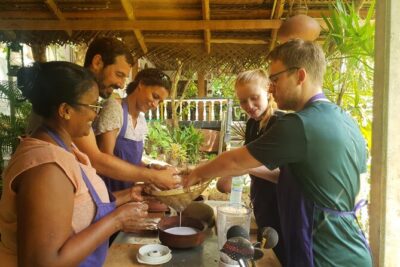
Sri Lankan Cooking Class with Neranji at Homestay
Read our review →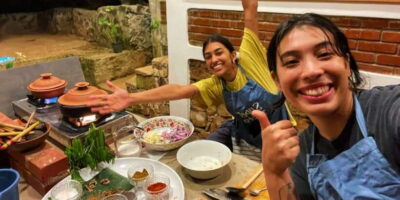
Browse the lists this tour appears in