
Reviewed · COOKING CLASSES
Organic Cooking Class with Garden Visit by Sinhagiri
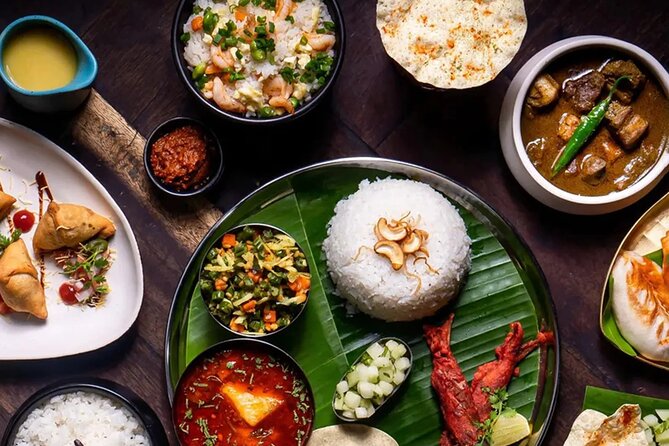
The best part of this Sigiriya experience is that your meal begins in the garden, not at the kitchen counter. You walk among the plants, choose vegetables, then carry them into a traditional kitchen to make a Sri Lankan curry with an experienced local home cook. It is a small, personal way to get beyond simply ordering rice and curry at a restaurant.
I like the farm-to-plate flow and the small group limit of five. I also like the practical teaching style: you cook the food yourself, then sit down to eat it, so the lesson has a useful payoff. A fresh mango juice welcomes you at the start, too.
The main consideration is value. At $28 per person, this is not Sri Lanka’s cheapest meal, and the garden may look a little thin or untidy rather than perfectly kept. You are paying for the personal instruction and cooking experience, not a polished farm tour.
Key points to know before you book
- Pick your vegetables first: The activity starts with a walk through the garden, where you choose produce for the meal.
- Cook with a local home chef: An experienced Sri Lankan housewife leads you through the preparation of an authentic rice-and-curry dish.
- Small group, maximum five people: This keeps the class more personal and should give you room to follow the cooking.
- A three-hour evening activity: The class starts at 4 pm and ends back at Green Hut Nature Resort.
- Taste what you prepare: The final meal is made from the food you helped cook, with further tips from the cooking tutor.
- Garden quality can vary: The cooking is the main event, while the garden visit may feel modest if it is not at its best.
Starting at 4 pm near Sigiriya
The meeting point is Green Hut Nature Resort on Temple Road in New Town, Sigiriya. The class begins at 4 pm, a useful time if you have spent the earlier part of the day visiting Sigiriya Rock or exploring the area. You do not need to give up a full morning for this activity, and the experience ends where it began.
The location is near public transportation, but the information provided does not include a hotel pickup service. Plan to make your own way to the resort and allow enough time to arrive before the start. Your mobile ticket is accepted for the activity, which keeps the check-in simple.
The three-hour length gives the class enough room for more than a rushed demonstration. You have time to walk through the garden, prepare the food, cook it, and eat. That said, the exact pace may depend on the size of your group and how much time you spend asking questions.
With a maximum of five people, this is not a large cooking school where you watch from the back of the room. You should have a better chance to see what the cook is doing and take part in the preparation. If you prefer a busy social class with many participants, this format may feel quiet. If you want direct guidance, the small size is a clear benefit.
A few more Sigiriya trips to weigh up
- Organic cooking class sigiriya (kumara & family)
★ 5.0 · 650 reviews - Sajee’s Place Cooking Class
★ 5.0 · 237 reviews - Cooking Class: Sajee’s Place Cooking Class sigiriya
★ 5.0 · 117 reviews
Choosing vegetables in the organic garden
Your first task is to walk through the garden and pick vegetables for cooking. This gives you a quick introduction to the ingredients before you sit down at the stove. Instead of receiving a fixed basket of produce, you take part in the early decision about what will go into the meal.
That small step matters. Sri Lankan cooking depends heavily on fresh produce, and seeing the ingredients before they are chopped helps you understand the connection between the garden and the plate. You are not just learning a recipe in isolation. You are seeing where part of the meal begins.
Keep your expectations sensible, though. The garden is described as exotic and organic, but it may not look like a formal demonstration garden. The condition can vary, and it has been described as not fully well kept. If you are hoping for a large, carefully labeled agricultural tour, this may feel brief.
I would treat the garden walk as a useful introduction rather than the main attraction. The value is in choosing the vegetables and learning how they are used, not in spending a long time studying every plant. The cooking that follows is where the experience earns most of its price.
The garden also gives the class a relaxed start. You are moving around outdoors before settling into the kitchen, and the activity begins with a simple task rather than a long talk. If you enjoy food markets, home gardens, or seeing ingredients in their natural setting, you will likely appreciate this part even though it is modest.
A fresh mango juice welcome
You can expect a fresh mango juice drink when you arrive. It is a small detail, but it sets a friendly tone before the work begins. In a hot part of Sri Lanka, a cold fruit drink is also a practical welcome.
The juice is not the reason to book the class, but it adds to the sense that you are being received in a home-style setting rather than processed through a large commercial kitchen. The experience is built around personal hospitality, cooking, and eating together.
The available details do not specify other drinks, snacks, or dishes served before the class. It is best to regard the mango juice as a welcome drink, not as a full refreshment service.
Cooking a Sri Lankan rice-and-curry meal
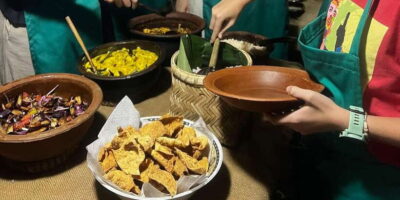
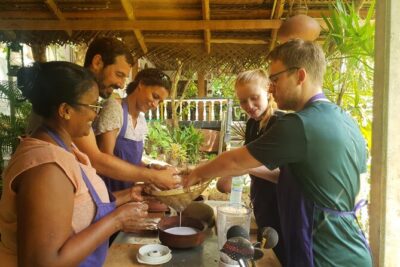
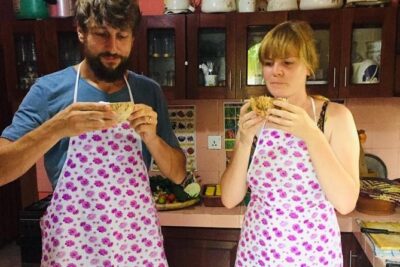
After the garden visit, you move into the kitchen and begin cooking with the local home chef. The lesson centers on an authentic Sri Lankan rice-and-curry dish, with step-by-step guidance from an experienced housewife.
This format suits you if you want to learn by doing. You are not simply watching someone prepare a plate while trying to remember the recipe later. You help prepare the food and can ask questions as the process moves along. The tutor also shares additional cooking tips while you work and eat.
The kitchen is described as traditional, clean, and well prepared. That is important. A rustic cooking setting can be appealing, but only when the basic working area feels orderly. Here, the traditional character adds local flavor without suggesting that cleanliness has been sacrificed.
The class is also a good match for people who enjoy informal instruction. The home cook is described as friendly and funny, with excellent English. Clear communication matters in a cooking lesson, especially when you are learning unfamiliar methods or trying to understand how several ingredients come together.
The supplied details do not name the cook, so you should not expect a celebrity chef or a formal culinary instructor. The appeal is the local home-cooking perspective. You are learning how a Sri Lankan household prepares food, rather than attending a professional chef school.
Because the group is capped at five, you should have a more direct role in the kitchen. The details do not state whether everyone prepares every part of the meal, so the exact hands-on tasks may vary. Still, the structure clearly puts you in the kitchen and gives you a chance to cook under guidance.
Same island, a completely different kind of day:
- From Colombo: Sigiriya and Dambulla Day Trip with Safari
★ 4.7 · 842 reviews - From Sigiriya: Minneriya National Park Private Jeep Safari
★ 4.9 · 415 reviews - From Sigiriya: Minneriya National Park Elephant Safari
★ 4.8 · 365 reviews - Private Jeep Safari at Minneriya National Park to Visit Elephants
★ 5.0 · 338 reviews
Eating what you helped prepare
The class ends with the most satisfying lesson of all: you taste the food you cooked. This turns the session into a complete meal rather than a cooking demonstration followed by a separate dinner plan.
Eating the finished curry also helps you understand the result of each step. You can connect the fresh vegetables from the garden with the texture, aroma, and flavor on your plate. If you want ideas to recreate Sri Lankan food at home, this is more useful than taking a few photographs and walking away.
The available information does not promise a particular number of dishes or list the exact menu. You should book for the experience of preparing a local rice-and-curry meal, not for a guaranteed multi-course feast. The ingredients are chosen from the garden, so the final dish may depend on what is available.
This is also where the $28 price needs a fair look. The fee covers about three hours, the garden visit, instruction, the ingredients you cook, and the meal you eat. For someone who only wants dinner, $28 may feel high compared with local restaurant prices. For someone who values a small-group lesson and a personal connection with a home cook, the price is easier to justify.
I would compare it with the cost of a standard meal plus a separate cooking class. You are getting both food and an activity, but the garden is not a major agricultural attraction and the class is not designed as an advanced culinary course. The value is strongest when you want a relaxed cultural activity in Sigiriya.
What makes this different from a restaurant meal
A restaurant lets you sample Sri Lankan flavors with no effort. This class asks you to take part, which changes how you experience the food. You see the vegetables, handle the preparation, follow the cooking, and then eat the result.
That process can make familiar dishes easier to understand. Rice and curry may arrive at your table as a complete meal, but the class shows you some of the work behind it. You also receive cooking tips that may help you adapt the techniques at home.
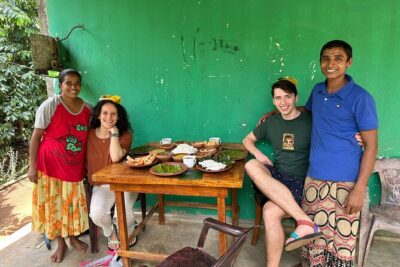
The setting adds another layer. You are visiting a small nature resort and working with a local housewife, not sitting in a dining room designed for a quick meal. The mood is described as relaxed and friendly, with humor and good English helping the class feel approachable.
Still, this is not the right choice if you want a formal chef-led workshop with detailed culinary theory. The experience focuses on preparing a tasty local meal in a home kitchen. Its strength is warmth and participation, not technical specialization.
Who will enjoy the three-hour class
I would recommend this activity to you if you want to learn about Sri Lankan food in a low-pressure setting. It suits people who like cooking, small groups, and meals with a personal story behind them.
It is especially useful for:
- First-time visitors to Sri Lankan cuisine: You get a guided introduction to local rice and curry.
- Home cooks: The techniques and tips may give you ideas to try after returning home.
- Couples and small groups: The five-person maximum keeps the activity intimate.
- Food-focused visitors in Sigiriya: The class adds a local meal to a day of sightseeing.
- People who prefer participation: You pick vegetables and cook instead of only watching.
You may want to skip it if you are looking only for the cheapest possible meal, dislike cooking, or expect a large and highly maintained garden. You should also consider the start time if your day already includes a late visit to another attraction.
The activity ends back at the meeting point, so you do not need to arrange a separate return destination through the provider. The details do not include transportation to hotels or onward destinations, so plan your evening from Green Hut Nature Resort.
Practical value at $28 per person
The listed price is $28 per person. With five or fewer people, that fee buys a more personal class than you would get in a large group. It also covers the garden visit, the cooking session, the ingredients, and the meal you prepare.
The strongest part of the value is the complete sequence. You begin with fresh produce, learn from a local cook, and finish by eating your own work. The welcome mango juice and clean traditional kitchen add small comforts.
The weaker part is the garden visit. If you expect a carefully managed organic farm with a long guided explanation, you may feel the experience is expensive. The garden is best seen as the source of your ingredients and the opening chapter of the class.
At $28, I would book this for the personal contact and practical cooking lesson, not simply for dinner. If you already plan to eat rice and curry elsewhere, ask yourself if learning how to make it is worth the extra cost. For many people, that is the real decision.
Booking and cancellation details
You receive confirmation at the time of booking, and the activity uses a mobile ticket. The class starts at 4 pm at Green Hut Nature Resort, Temple Road, New Town, Sigiriya 21120, Sri Lanka.
Free cancellation is available if you cancel at least 24 hours before the scheduled start time. Cancellations made less than 24 hours ahead are not refundable, and changes within that period are not accepted. The cut-off follows local time in Sri Lanka.
The activity is recommended by all recorded ratings and has a five out of five overall score from 66 reviews, with one four-out-of-five assessment noting that the class felt expensive and the garden was not fully maintained. That combination gives you a useful picture: the cooking and hospitality are the main reasons to go, while the price and garden quality deserve a realistic look.
Should you book this Sigiriya cooking class?
Book it if you want a small, friendly cooking lesson rather than another restaurant dinner. The garden-to-kitchen format is easy to follow, the home cook provides step-by-step help, and you finish with a meal you prepared yourself. The excellent English, clean traditional kitchen, fresh mango juice, and five-person limit all support a comfortable experience.
Think twice if your main goal is a low-cost meal or a polished garden tour. At $28, the class is best value for people who enjoy the activity as much as the food. If that sounds like you, the three-hour session offers a practical and personal way to spend a Sigiriya afternoon.
FAQ
Where does the cooking class take place?
It takes place at Green Hut Nature Resort on Temple Road in New Town, Sigiriya, Sri Lanka.
What time does the activity start?
The class starts at 4 pm.
How long does the experience last?
The activity lasts approximately three hours.
What happens first during the class?
You begin by walking through the garden and picking vegetables to use in the cooking.
What food will I prepare?
You will prepare an authentic local rice-and-curry dish with guidance from an experienced local housewife.
Do I eat the food I cook?
Yes. The experience ends with you tasting the food you prepared.
How many people can join?
The activity has a maximum of five travelers.
Is transportation included?
The meeting and ending point is Green Hut Nature Resort. The provided details mention nearby public transportation but do not state that hotel pickup is included.
Can I cancel for a refund?
Yes. You can receive a full refund if you cancel at least 24 hours before the experience start time. Cancellations made less than 24 hours before the start are not refundable.
Just added around Sigiriya
- Private Safari Tours in Minneriya National Park★ 5.0 · 18 reviews
- Organic Cooking Class Sigiriya TASTY TASKS★ 5.0 · 17 reviews
- Night Hike to see Elusive & Rare Loris in Sigiriya★ 4.5 · 43 reviews
- Malee Cookery Lessons★ 5.0 · 26 reviews
- Sigiriya Rock Climb, Village Tour+Cooking Class & Elephant Safari★ 5.0 · 9 reviews
- Sigiriya and Dambulla Day Tour from Kandy★ 5.0 · 6 reviews
- Sigiriya Village Tour and Lunch with Hotel Pick up from Sigiriya★ 5.0 · 10 reviews
- Private Polonnaruwa Sightseeing Day Tour from Sigiriya★ 5.0 · 31 reviews
Cooking Classes, compared.
Organic cooking class sigiriya (kumara & family)
Read our review →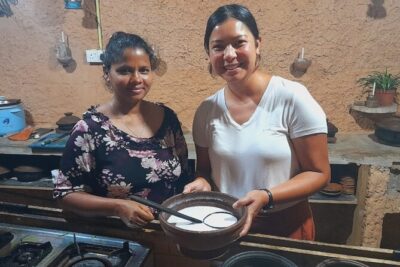
Sri Lankan Cooking Class with Neranji at Homestay
Read our review →
Browse the lists this tour appears in